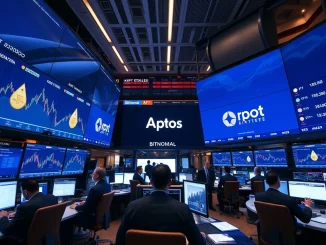
DAVOS, SWITZERLAND – January 2026. In a significant disclosure that underscores the accelerating convergence of traditional finance and blockchain technology, Binance founder Changpeng Zhao confirmed he is engaged in advanced discussions with a dozen national governments regarding the large-scale tokenization of sovereign assets. Speaking exclusively during a panel at the 2026 World Economic Forum annual meeting, the prominent crypto executive outlined a vision where governments could leverage this innovative process to secure funding and catalyze industrial growth, marking a potential paradigm shift in public finance and economic development strategies.
Changpeng Zhao Outlines the Global Tokenization Vision
Changpeng Zhao, commonly known as CZ, chose the prestigious Davos platform to make this pivotal announcement. He deliberately withheld the names of the twelve involved nations, citing ongoing diplomatic and regulatory sensitivities. However, his statement provides concrete evidence that sovereign states are moving beyond theoretical exploration of blockchain. They are now actively negotiating frameworks for its practical application in national treasury management. This development follows a multi-year trend of central bank digital currency (CBDC) pilots, suggesting a maturation of government blockchain strategies into more complex asset classes.
Furthermore, the core proposition from Zhao centers on capital formation and strategic reinvestment. Governments could tokenize a portion of state-owned assets—such as infrastructure projects, natural resource royalties, or sovereign debt—to create digital securities. These tokens would then be offered to global investors on regulated digital asset platforms. The capital raised could subsequently be funneled into priority sectors like renewable energy, technology hubs, or transportation networks. This mechanism presents a modern alternative to traditional bond issuance or international loans, potentially offering greater efficiency, transparency, and access to a broader investor base.
The Mechanics and Motivations Behind Sovereign Asset Tokenization
The process of asset tokenization involves converting the rights to a physical or financial asset into a digital token on a blockchain. For a government, this could mean issuing digital tokens representing a share in future revenue from a national highway toll system or a stake in a publicly owned telecommunications company. The blockchain ledger provides an immutable, transparent record of ownership and transactions. This transparency can reduce administrative costs and mitigate corruption risks, two factors often attractive to developing economies and international funding bodies alike.
Industry analysts point to several driving forces behind this governmental interest. Firstly, the search for novel funding avenues persists, especially for nations facing high borrowing costs or limited access to international capital markets. Secondly, the success of tokenized real-world assets (RWAs) in private markets has demonstrated the model’s viability. Finally, there is a strategic imperative not to fall behind in financial innovation. Nations fear missing out on the potential efficiency gains and competitive advantages offered by blockchain-based systems.
Contextualizing the Move Within Global Financial Trends
Changpeng Zhao’s revelation does not exist in a vacuum. It aligns with a series of macro-trends reshaping global finance in the mid-2020s. The tokenization of private equity, real estate, and commodities has seen exponential growth, with major financial institutions like BlackRock and JPMorgan launching dedicated platforms. Concurrently, regulatory frameworks for digital assets have crystallized in key jurisdictions like the European Union (with MiCA) and parts of Asia, providing clearer rules for compliant operations.
The involvement of a figure like CZ, despite his complex regulatory history, is also noteworthy. It signals that governments are willing to engage with seasoned crypto-native entrepreneurs for their technical expertise and network reach, even as they work within new regulatory perimeters. This pragmatic approach suggests a focus on the technological solution rather than the provenance of its advocates, provided legal compliance is assured.
The potential impacts of widespread sovereign tokenization are multifaceted:
- Capital Access: Democratizing investment in national projects for global retail and institutional investors.
- Market Liquidity: Creating fractional, tradeable interests in otherwise illiquid state assets.
- Process Efficiency: Automating coupon payments, distributions, and compliance via smart contracts.
- Transparency & Trust: Providing verifiable, on-chain audit trails for public finance.
| Mechanism | Traditional Bond Issuance | Public-Private Partnership (PPP) | Asset Tokenization (Proposed) |
|---|---|---|---|
| Primary Investor Base | Institutional, Sovereign | Consortium of Large Firms | Global, Fractional (Retail & Institutional) |
| Settlement Time | Days (T+2) | Months (Negotiation) | Minutes (On-Chain) |
| Transparency Level | Moderate (Periodic Reports) | Variable (Contract Dependent) | High (Real-Time Ledger) |
| Administrative Overhead | High | Very High | Potentially Lower (Automation) |
Expert Analysis and Cautious Optimism
Financial technology experts greeted the news with cautious optimism. Dr. Elena Rodriguez, a professor of Fintech at the London School of Economics, noted, “The theoretical benefits for public finance are compelling—liquidity, efficiency, and new investor pools. However, the execution risks are substantial. These include defining the legal rights of token holders with absolute clarity, ensuring robust cybersecurity for national assets, and navigating complex cross-border regulatory recognition.” She emphasized that success would depend less on the blockchain technology itself and more on the legal and governance structures built around the tokenized assets.
The path forward will likely involve pilot projects in smaller, more agile economies or for specific, non-critical asset classes. Success in these pilots could create a blueprint for larger economies. Conversely, a high-profile failure due to technical flaws, market volatility, or regulatory missteps could set the entire concept back for years. The undisclosed identity of the twelve nations adds an element of suspense to the market, with analysts speculating about likely candidates based on their previous digital asset initiatives.
Conclusion
Changpeng Zhao’s disclosure at the World Economic Forum marks a definitive moment in the integration of blockchain into the highest levels of global economic planning. The active discussions with twelve countries on asset tokenization signal a transition from speculative cryptocurrency trading to the pragmatic use of blockchain for solving real-world economic challenges. While significant technical, legal, and market hurdles remain, the pursuit of this model by sovereign states validates the long-held belief within the crypto industry that tokenization could redefine capital markets. The coming years will reveal whether this vision of government-led asset tokenization, as championed by figures like CZ, becomes a cornerstone of 21st-century public finance or a complex experiment that yields more lessons than solutions.
FAQs
Q1: What does ‘asset tokenization’ mean for a government?
Asset tokenization involves a government converting rights to a physical or financial asset, like infrastructure revenue or sovereign debt, into digital tokens on a blockchain. These tokens can then be sold to investors globally to raise capital, with ownership and transactions recorded transparently on the digital ledger.
Q2: Why would a country choose tokenization over issuing traditional bonds?
Governments might explore tokenization for potential benefits like access to a wider, global pool of fractional investors, increased transaction speed and settlement efficiency through automation, enhanced transparency to build investor trust, and possibly reduced administrative costs over time.
Q3: What are the biggest risks associated with sovereign asset tokenization?
Key risks include establishing watertight legal frameworks that define digital token ownership rights, ensuring robust cybersecurity for critical national assets, managing the price volatility of the secondary trading market for the tokens, and achieving international regulatory recognition and compliance across different jurisdictions.
Q4: Did Changpeng Zhao name the 12 countries involved in the talks?
No, Changpeng Zhao explicitly did not disclose the specific nations involved. He cited the sensitive and ongoing nature of the discussions with various governments as the reason for keeping their identities confidential at this stage.
Q5: How does this relate to Central Bank Digital Currencies (CBDCs)?
While both involve governments using blockchain technology, they serve different purposes. A CBDC is a digital form of a nation’s fiat currency, used for payments. Sovereign asset tokenization involves creating digital securities backed by specific state-owned assets or revenue streams, used for raising investment capital. They could be complementary initiatives within a nation’s digital finance strategy.
Updated insights and analysis added for better clarity.
This article was produced with AI assistance and reviewed by our editorial team for accuracy and quality.