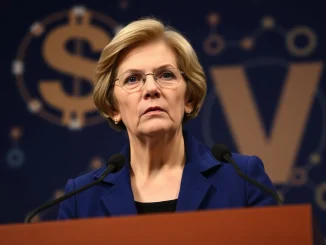
A significant development has recently shaken the landscape of U.S. financial oversight. The **White House nomination** of Brian Quintenz to chair the U.S. Commodity Futures Trading Commission (**CFTC**) has been officially withdrawn. This pivotal decision sends ripples across the financial and cryptocurrency sectors, signaling potential shifts in regulatory approaches.
Understanding the **CFTC** and Its Regulatory Role
The **CFTC** stands as a crucial independent agency within the U.S. government. Its primary mission involves overseeing commodity futures and options markets. Furthermore, it plays a significant role in regulating certain aspects of the burgeoning cryptocurrency market, particularly concerning futures contracts. Therefore, the leadership of this commission directly influences the regulatory environment for digital assets.
The CFTC’s responsibilities are extensive. For example, it:
- Ensures market integrity and prevents manipulation.
- Protects market participants from fraud and abuse.
- Fosters open, competitive, and financially sound markets.
- Exercises jurisdiction over derivatives on commodities, including certain cryptocurrencies.
Consequently, the appointment of its chair holds immense weight for the future direction of **crypto regulation**.
The Withdrawal of **Brian Quintenz**’s Nomination
Politico initially reported the **White House nomination** withdrawal of **Brian Quintenz**. This move came after mounting scrutiny and controversy surrounding his suitability for the top regulatory position. Quintenz, a former Republican commissioner, had been a prominent figure in discussions around digital asset oversight. His previous experience provided a deep understanding of market mechanisms, yet his nomination ultimately faced significant hurdles.
The withdrawal highlights the complex and often contentious nature of high-level government appointments, especially in sectors undergoing rapid technological change. Stakeholders across the financial spectrum closely watched the nomination process, recognizing its potential implications for policy direction.
Conflict of Interest: The **Kalshi** Controversy
At the heart of the controversy was a significant conflict of interest involving **Brian Quintenz** and Kalshi, a decentralized prediction market. Prediction markets allow users to bet on the outcome of future events, ranging from political elections to economic indicators. Kalshi operates under CFTC oversight, making Quintenz’s past involvement particularly problematic.
Specifically, Quintenz had served as an advisor to Kalshi. He also held an equity stake in the company. Critics argued that these ties created a clear conflict of interest. If confirmed as chair, Quintenz would have been in a position to regulate a company in which he had a financial interest. This situation raised serious questions about impartiality and ethical conduct, ultimately contributing to the decision to withdraw his nomination.
The conflict underscored a critical principle:
- **Impartiality:** Regulators must make decisions free from personal financial gain.
- **Public Trust:** Conflicts erode public confidence in regulatory bodies.
- **Ethical Standards:** High ethical standards are paramount for those in public service, particularly in oversight roles.
This controversy demonstrates the intense scrutiny faced by potential regulators with ties to emerging financial technologies.
Industry Backlash and the Future of **Crypto Regulation**
Beyond the specific conflict with **Kalshi**, the nomination also faced broader industry backlash. Various stakeholders expressed concerns regarding Quintenz’s potential impact on **crypto regulation**. Some feared his approach might favor traditional financial institutions over the innovative, decentralized aspects of the crypto ecosystem. Others simply desired clearer, more consistent guidance from regulators.
The withdrawal now leaves a vacancy at a critical time for the digital asset space. Policymakers are actively grappling with how to effectively regulate cryptocurrencies without stifling innovation. This decision means the Biden administration must now seek a new nominee. The next individual will undoubtedly face intense scrutiny regarding their stance on digital assets, market structure, and consumer protection.
The implications for the broader crypto industry include:
- **Delayed Clarity:** A new nomination process means further delays in establishing stable regulatory frameworks.
- **Uncertainty:** The industry will continue to operate under a degree of regulatory ambiguity.
- **Opportunity for New Perspectives:** A new nominee could bring fresh ideas and approaches to **crypto regulation**.
The ongoing search for CFTC leadership underscores the complex interplay between innovation, policy, and public interest in the rapidly evolving financial world.
What’s Next for the **White House Nomination** Process?
The **White House nomination** process will now restart for the **CFTC** chair. This requires identifying a new candidate who can gain bipartisan support and pass rigorous ethical reviews. The administration will likely prioritize finding an individual with a strong understanding of financial markets, particularly those involving digital assets. Moreover, the new candidate must demonstrate a clear commitment to avoiding conflicts of interest.
The withdrawal of **Brian Quintenz** serves as a stark reminder of the challenges inherent in staffing key regulatory positions. It also highlights the growing importance of transparent and ethical conduct in public service. As the digital asset market continues to mature, the need for robust and fair regulatory oversight becomes ever more critical. The crypto community, therefore, awaits the next nominee with keen interest, hoping for leadership that fosters both innovation and stability.
FAQs
Q1: Why was Brian Quintenz’s CFTC nomination withdrawn?
A1: The nomination was withdrawn due to a conflict of interest controversy. Quintenz had ties to Kalshi, a decentralized prediction market regulated by the CFTC, serving as an advisor and holding an equity stake.
Q2: What is the CFTC, and why is its chair important for crypto?
A2: The CFTC (Commodity Futures Trading Commission) regulates commodity futures and options markets. Its chair is crucial for crypto because the CFTC oversees crypto futures and plays a significant role in broader crypto regulation, impacting market integrity and consumer protection.
Q3: What is Kalshi, and why was its connection to Quintenz problematic?
A3: Kalshi is a decentralized prediction market operating under CFTC oversight. Quintenz’s advisory role and equity stake in Kalshi created a conflict of interest, raising concerns about his impartiality if he were to chair the regulatory body overseeing the company.
Q4: How does this withdrawal impact the future of crypto regulation in the U.S.?
A4: The withdrawal introduces further uncertainty and potential delays in establishing clear crypto regulatory frameworks. It means the White House must find a new nominee, whose stance on digital assets will be closely watched by the industry.
Q5: What are the key ethical considerations for a CFTC chair?
A5: Key ethical considerations include ensuring impartiality in decision-making, avoiding conflicts of interest, maintaining public trust, and adhering to high ethical standards to prevent any appearance of impropriety or personal financial gain from regulatory actions.