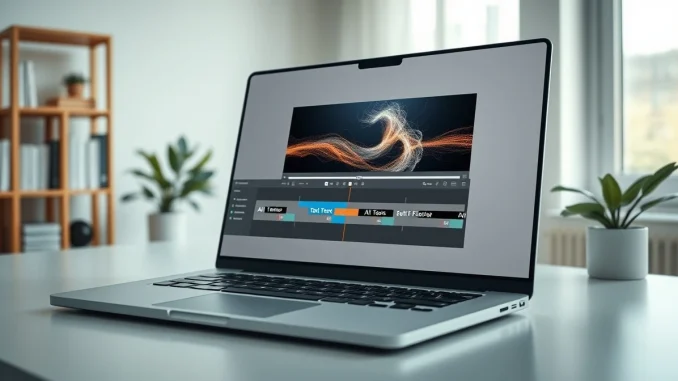
ByteDance confirmed the integration of its advanced AI video generation model, Dreamina Seedance 2.0, into its popular editing platform CapCut on March 26, 2026. This launch arrives as competitor OpenAI scales back its video generation efforts, marking a significant shift in the competitive AI landscape. The model allows creators to draft, edit, and synchronize video and audio using simple text prompts, images, or reference videos.
Dreamina Seedance 2.0 Capabilities and Initial Rollout
ByteDance’s new model enables video creation from minimal input, such as a few descriptive words, without requiring reference images. The company highlights the model’s proficiency in rendering realistic textures, movement, and lighting across various perspectives. Consequently, creators can use it to edit, enhance, or correct existing footage. Another key application involves testing concepts from early sketches before committing to full-scale production.
The phased rollout began in seven markets: Brazil, Indonesia, Malaysia, Mexico, the Philippines, Thailand, and Vietnam. ByteDance plans to add more regions over time. In China, the model is available through ByteDance’s Jianying app. This limited geographic release follows reports of a paused global rollout as ByteDance addresses intellectual property concerns raised by Hollywood studios regarding potential copyright infringement.
Technical Specifications and Use Cases
Dreamina Seedance 2.0 supports clips up to 15 seconds long across six aspect ratios. The model integrates into several CapCut areas, including AI Video editing features and the Video Studio generation tool. It will also be available on ByteDance’s AI platform, Dreamina, and its marketing platform, Pippit.
The company identifies several practical use cases where AI video models have traditionally struggled:
- Cooking Recipes: Generating step-by-step instructional footage.
- Fitness Tutorials: Creating accurate motion demonstrations.
- Business Overviews: Producing professional product or service explainers.
- Action Content: Simulating complex movement sequences.
Safety Measures and Copyright Compliance
Given the model’s ability to create realistic content, ByteDance implemented specific safety restrictions. The model cannot generate videos from source material containing real faces. Furthermore, CapCut will block the unauthorized generation of copyrighted intellectual property. All output from Dreamina Seedance 2.0 includes an invisible watermark to help identify AI-generated content when shared off-platform. This measure aims to assist rights holders with takedown requests if copyrighted material is inadvertently produced.
ByteDance stated it will collaborate with experts and creative communities to iterate and improve the model’s capabilities during the rollout. The current restrictions and limited market availability suggest ongoing adjustments to these safety and copyright systems.
Industry Context and Competitive Landscape
The launch occurs amid notable activity in the AI video sector. Previously, OpenAI introduced its Sora text-to-video model but later discontinued its dedicated Sora app, signaling a potential strategic pullback. Meanwhile, other tech firms continue investing heavily in generative video technology. ByteDance’s move to embed this capability directly into CapCut, a tool with a massive existing user base, represents a strategic push for widespread, practical adoption rather than purely experimental release.
Analysts note the focus on emerging markets first allows ByteDance to stress-test the technology, gather user feedback, and refine its compliance frameworks in diverse creative environments before confronting the stringent copyright and regulatory landscapes of markets like the United States or European Union.
Conclusion
ByteDance’s rollout of Dreamina Seedance 2.0 within CapCut marks a pivotal step in making advanced AI video generation accessible to everyday creators. The targeted initial launch, coupled with stated safety protocols, reflects the company’s cautious approach to the significant intellectual property challenges inherent in this technology. As the model evolves through partnerships and user feedback, its integration into a mainstream editing suite could fundamentally alter how video content is prototyped and produced globally.
FAQs
Q1: What is Dreamina Seedance 2.0?
Dreamina Seedance 2.0 is ByteDance’s AI model for generating and editing video and audio content using text prompts, images, or reference videos. It is now integrated into the CapCut editing platform.
Q2: Where is Dreamina Seedance 2.0 available?
As of March 26, 2026, the model is rolling out to CapCut users in Brazil, Indonesia, Malaysia, Mexico, the Philippines, Thailand, and Vietnam. It is also available in China via the Jianying app.
Q3: What are the main safety features of the AI model?
ByteDance has restricted the model from generating videos using images or videos containing real faces. It also blocks the unauthorized generation of copyrighted IP and adds an invisible watermark to all output to identify AI-generated content.
Q4: How does this launch relate to OpenAI’s Sora?
This launch comes as OpenAI has scaled back its consumer-facing Sora app. ByteDance’s move represents a continued investment in making AI video tools directly accessible within a widely used creative application.
Q5: What video length does Dreamina Seedance 2.0 support?
The model currently supports the generation of video clips up to 15 seconds in length across six different aspect ratios.
This article was produced with AI assistance and reviewed by our editorial team for accuracy and quality.