Global cryptocurrency traders are closely monitoring a critical market sentiment indicator in early 2025: the BTC perpetual futures long/short ratio across the world’s largest derivatives platforms. Recent 24-hour data reveals a consistent, albeit narrow, bullish bias among leveraged traders on Binance, OKX, and Bybit. This collective tilt toward long positions provides a vital snapshot of institutional and retail trader psychology as Bitcoin navigates a complex macroeconomic landscape. Consequently, understanding these ratios offers more than just numbers; it decodes the underlying confidence and risk appetite shaping the digital asset market’s immediate trajectory.
Decoding the BTC Perpetual Futures Long/Short Ratio
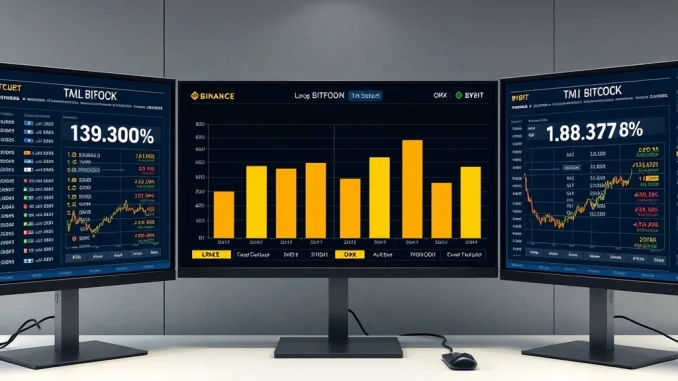
The long/short ratio for Bitcoin perpetual futures serves as a fundamental gauge of market sentiment. Specifically, it measures the proportion of open leveraged positions betting on price increases (longs) versus those betting on declines (shorts). Unlike traditional futures, perpetual contracts lack an expiry date, making them a preferred instrument for continuous speculation. The aggregated data from the top three exchanges by open interest—Binance, OKX, and Bybit—shows a market leaning cautiously optimistic. The overall ratio stands at 50.48% long positions against 49.52% short positions. This marginal majority suggests traders anticipate upward momentum, yet the near-parity indicates significant underlying caution and a balanced opposing view.
Exchange-specific data further refines this picture. Binance, the global leader in crypto trading volume, reports 51.61% long positions. Similarly, OKX shows 51.34% long, and Bybit follows closely with 51.11% long. The remarkable consistency across these major venues underscores a unified, if tentative, bullish sentiment. Importantly, this metric reflects real-money positions, not mere opinion polls, giving it substantial weight in market analysis. Analysts often correlate sustained periods of extreme long/short ratios with potential market reversals, making current balanced readings particularly noteworthy for volatility forecasting.
The Mechanics and Impact of Perpetual Futures Trading
Perpetual futures contracts have revolutionized cryptocurrency derivatives trading since their popularization. They allow traders to use significant leverage, often up to 100x or more, to amplify gains or losses based on Bitcoin’s price movements. A key mechanism within these contracts is the funding rate, a periodic payment between long and short positions designed to tether the contract price to the underlying spot price. When long positions overwhelmingly outnumber shorts, the funding rate typically turns positive, meaning longs pay shorts to maintain their positions. The current near-even ratio suggests relatively neutral funding rates, reducing one source of external pressure on trader positions and potentially contributing to market stability.
The concentration of open interest on these three exchanges highlights their dominance in the crypto derivatives sphere. According to data from sources like CoinGlass and Coingape, Binance, OKX, and Bybit collectively represent over 70% of the global Bitcoin futures open interest. Therefore, their long/short ratios provide a highly representative sample of global leveraged trader sentiment. This data becomes especially crucial during periods of regulatory announcements, macroeconomic shifts, or major Bitcoin network developments, as it quantifies how professional money is positioning itself in real-time.
Historical Context and Market Cycle Analysis
Placing current ratios in a historical context reveals insightful patterns. For instance, during the bull market peaks of late 2021, long/short ratios on these exchanges frequently exceeded 70% long, signaling extreme greed and often preceding significant corrections. Conversely, during the bear market troughs of 2022, ratios sometimes fell below 30% long, indicating pervasive fear and capitulation. The current reading near 50% aligns more with transitional or accumulation phases observed in past market cycles. Veteran analysts reference this data alongside other on-chain metrics like exchange reserves and Miner’s Position Index to build a multi-faceted view of market health.
Furthermore, the slight bullish tilt coincides with several macroeconomic factors in early 2025. These include evolving monetary policies from major central banks, the maturation of Bitcoin spot ETF products, and continued institutional adoption. The ratio’s stability, despite these variables, suggests a market that is digesting information methodically rather than reacting impulsively. This tempered sentiment can be a constructive foundation for healthier price discovery, as it is less prone to the violent liquidations that occur during extremes of optimism or pessimism.
Interpreting Divergences and Trader Behavior
A nuanced analysis looks beyond the top-line numbers. While the ratios are similar, subtle divergences between exchanges can signal different trader demographics or regional sentiments. Binance’s slightly higher long ratio may reflect its vast global user base, while OKX and Bybit’s figures could incorporate specific regional trading flows. Seasoned market participants also cross-reference this data with other metrics like liquidations data and order book depth. For example, a high long ratio coupled with a cluster of nearby liquidation levels for long positions can create a precarious setup for a rapid, short-squeeze-induced price move.
The behavior of large holders, often called “whales,” significantly impacts these ratios. Their positioning is tracked through large transaction flows into and out of derivatives exchanges. When whale accounts increase their long exposure concurrently with a rising aggregate long/short ratio, it often carries more predictive weight than retail-driven moves. Current market structure reports from analytics firms indicate a balanced approach from large entities, mirroring the overall ratio and suggesting a lack of strong directional conviction from the most capitalized players. This alignment typically results in lower volatility and range-bound trading until a new catalyst emerges.
| Exchange | Long % | Short % | Notable Trend |
|---|---|---|---|
| Binance | 51.61% | 48.39% | Highest long bias |
| OKX | 51.34% | 48.66% | Close alignment with Binance |
| Bybit | 51.11% | 48.89% | Most balanced of the three |
| Aggregate | 50.48% | 49.52% | Slight bullish consensus |
Conclusion
The latest BTC perpetual futures long/short ratio presents a market in a state of equilibrium with a gentle lean toward optimism. The consistent 51% long bias across Binance, OKX, and Bybit indicates a shared, cautious belief in Bitcoin’s near-term prospects among leveraged traders. This data point, essential for any comprehensive market analysis, reflects the complex interplay of sentiment, leverage, and risk management in modern crypto markets. As the 2025 landscape evolves, monitoring shifts in this ratio will remain crucial for identifying changes in trader conviction and anticipating potential volatility. Ultimately, the current balanced sentiment provides a stable, if unexciting, foundation for the next phase of Bitcoin price discovery.
FAQs
Q1: What does a BTC perpetual futures long/short ratio above 50% mean?
A ratio above 50% indicates that more open leveraged positions are betting on a price increase (long) than on a decrease (short). It is generally interpreted as a bullish, or optimistic, market sentiment among derivatives traders.
Q2: Why are Binance, OKX, and Bybit specifically highlighted in this analysis?
These three platforms consistently rank as the top global cryptocurrency exchanges by futures open interest. Their combined data provides a highly representative and influential snapshot of worldwide leveraged trading sentiment.
Q3: How does the funding rate relate to the long/short ratio?
The funding rate is a mechanism to anchor the perpetual futures price to the spot price. When long positions significantly outnumber shorts, longs typically pay a funding fee to shorts. A balanced ratio near 50% often leads to a neutral or low funding rate.
Q4: Can the long/short ratio predict Bitcoin’s price direction?
While not a standalone predictor, it is a key sentiment indicator. Extreme readings (very high or very low) have historically coincided with market tops or bottoms, making it a valuable tool for assessing potential overbought or oversold conditions.
Q5: How frequently does this data update?
The long/short ratio is typically calculated and reported every 24 hours by major data aggregators and the exchanges themselves, providing a daily pulse on trader positioning and sentiment shifts.
This article was produced with AI assistance and reviewed by our editorial team for accuracy and quality.