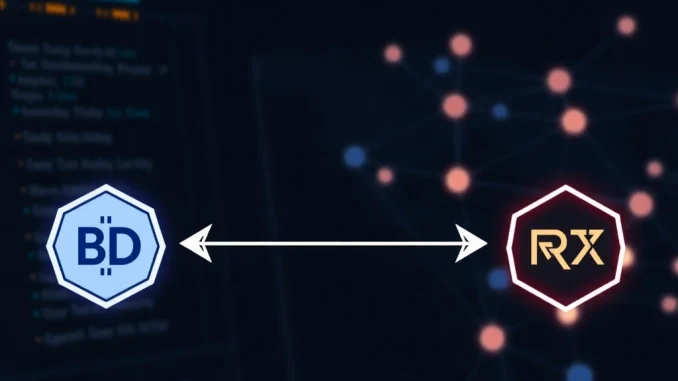
Global, May 2025: A significant migration of cryptocurrency holders is unfolding on the blockchain. Recent on-chain data analysis reveals that thousands of wallets previously holding BlockDAG (BD) tokens are actively acquiring Remittix (RMTX) tokens. This movement coincides with Remittix’s ongoing incentive program, which includes a substantial 300% bonus on purchases, the launch of a live wallet, and the imminent debut of its PayFi platform—a system explicitly designed for real-world payment applications.
On-Chain Data Reveals a Clear Holder Migration Pattern
Blockchain analytics firms and independent researchers have identified a notable trend over recent weeks. By tracing wallet addresses and transaction histories, they observed a cluster of activity where assets were moved from BlockDAG-related contracts and decentralized exchanges into the Remittix ecosystem. This is not merely speculative trading but appears to be a coordinated rotation of capital by a substantial base of existing crypto holders. On-chain data provides a transparent, verifiable record of these movements, offering a factual basis for analyzing market behavior without relying on promotional claims. The scale suggests this is one of the more significant holder migrations observed in the decentralized finance (DeFi) sector this quarter.
Understanding the Remittix Value Proposition: Beyond the 300% Bonus
While the 300% purchase bonus serves as a powerful initial incentive, the data indicates holders are motivated by a broader technological roadmap. The bonus structure, typically executed through smart contracts that automatically allocate additional tokens to qualifying purchases, is a common user-acquisition strategy in crypto. However, analysts note that sustained holder interest usually depends on underlying utility. For Remittix, this utility is articulated through two key developments:
- Live Wallet Deployment: The project has launched a functional, non-custodial wallet, allowing users to securely store, send, and receive RMTX tokens. This marks a transition from theoretical token to a usable asset with basic infrastructure.
- The PayFi Launch Roadmap: The upcoming PayFi platform represents the core utility proposition. It aims to bridge cryptocurrency with tangible commerce by facilitating fast, low-cost payments for goods and services, addressing a long-standing challenge in crypto adoption.
This combination of immediate incentive and promised future utility appears to be the catalyst driving the on-chain activity from BlockDAG holders.
Contextualizing the BlockDAG to Remittix Shift
Holder migration between projects is a recurring phenomenon in the dynamic cryptocurrency landscape. It often reflects a community’s search for enhanced functionality, improved returns, or more active development. BlockDAG, which utilizes a directed acyclic graph structure as an alternative to traditional linear blockchains, has its own community and technological focus. The movement of a portion of its holders to Remittix does not inherently critique the former but highlights the competitive and fluid nature of investor allegiance in DeFi. Holders may be diversifying portfolios or reallocating resources based on the specific appeal of Remittix’s payment-focused narrative and time-sensitive bonus offer.
The Significance of Real-World Payment Solutions in Crypto
The emphasis on “real payments” within Remittix’s PayFi launch taps into a major industry trend. For years, a primary critique of many cryptocurrencies has been their limited use as mediums of exchange outside speculative trading. Projects that successfully enable everyday transactions—such as buying coffee, paying for subscriptions, or settling invoices—are closely watched. If PayFi delivers a seamless payment experience, it could position Remittix in a growing niche alongside other payment-oriented cryptocurrencies and stablecoins. This potential for tangible, everyday use provides a fundamental rationale that sophisticated holders might be evaluating, beyond short-term bonus gains.
Analyzing the Mechanics and Risks of Bonus Incentives
The 300% bonus mechanism warrants objective examination. Such programs are designed to rapidly increase the token’s circulating supply held by new users, aiming to bootstrap liquidity and community. For holders, the effective immediate increase in token count can be attractive. However, market analysts consistently advise that the long-term value depends entirely on adoption, demand, and the project’s execution. Large bonuses can sometimes lead to increased sell pressure later if recipients choose to liquidate their additional tokens. The on-chain data showing holder acquisition is a snapshot; subsequent data will be crucial to see if these tokens remain held or are quickly circulated on exchanges.
Conclusion: A Data-Driven Snapshot of Evolving Holder Sentiment
The on-chain data provides a clear, empirical signal of changing holder behavior within the cryptocurrency market. The migration of thousands of BlockDAG holders to acquire Remittix tokens underscores the powerful combination of a substantial 300% bonus and a credible roadmap toward real-world utility with the PayFi launch. This movement is less about hype and more about a calculated reallocation of assets by a segment of the crypto community toward a project emphasizing payment solutions. As the PayFi platform launches, its adoption and performance will be the ultimate test of whether this on-chain migration was a prescient shift or a temporary reaction to a generous incentive. The transaction history remains permanently on the blockchain for future analysis.
FAQs
Q1: What does “on-chain data” show in this context?
On-chain data refers to the transparent, public record of all transactions on a blockchain. In this case, it shows wallet addresses moving funds from BlockDAG (BD) tokens to purchase or interact with Remittix (RMTX) token contracts, indicating a shift in holder allocation.
Q2: How does a 300% bonus work in cryptocurrency?
Typically, a bonus is distributed via a smart contract. When a user purchases tokens during a promotional period, the contract automatically sends additional bonus tokens to their wallet. A 300% bonus means for every 1 token bought, the user receives 3 extra, totaling 4 tokens.
Q3: What is PayFi, and why is it significant?
PayFi is Remittix’s proposed payment platform. Its significance lies in its focus on enabling real-world transactions, aiming to move cryptocurrency beyond speculative trading and into practical use for buying goods and services.
Q4: Is holder migration between crypto projects common?
Yes, it is a common occurrence. Crypto holders often rebalance their portfolios based on new technological developments, incentive programs, market conditions, or shifts in a project’s development momentum.
Q5: What are the risks associated with chasing high bonus offers?
Risks include potential price volatility after the bonus period ends, the possibility that the project may not deliver on its roadmap, and the dilution of token value if many bonus recipients sell simultaneously. Due diligence on the project’s fundamentals is always advised.
This article was produced with AI assistance and reviewed by our editorial team for accuracy and quality.