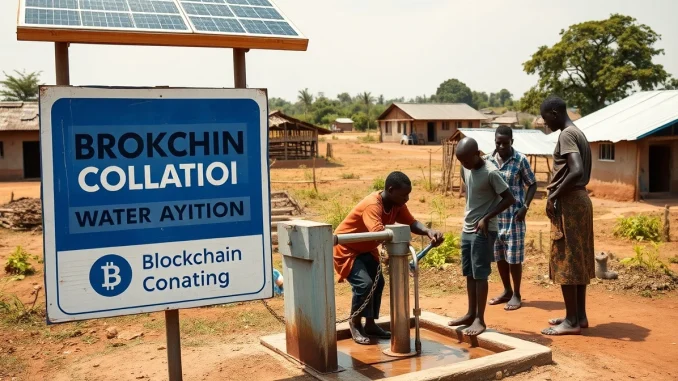
Blockchain philanthropy faces significant implementation challenges across African development projects, with numerous initiatives failing to deliver sustainable outcomes despite substantial cryptocurrency donations exceeding $1 billion in 2024. Recent analysis reveals systemic issues in how blockchain-based charity models translate digital transparency into real-world impact.
Blockchain Philanthropy’s African Implementation Gap
The rapid growth of cryptocurrency donations has created unprecedented funding opportunities for African development projects. According to data from The Giving Block, crypto philanthropy reached record levels in 2024, with donations surpassing $1 billion globally. However, this financial scale has not consistently translated into lasting infrastructure or community benefits across African nations.
Many blockchain philanthropy initiatives follow predictable patterns: token launches, NFT campaigns, and time-limited fundraising drives generate immediate attention and capital. These approaches typically prioritize visibility over durability, creating what development experts describe as “hype cycles” rather than sustainable systems. Consequently, projects often deliver short-term relief without establishing the governance structures necessary for long-term operation.
The Transparency Illusion in Crypto Charity
Blockchain technology provides unprecedented transaction transparency through immutable on-chain records. Donors can trace fund movements with cryptographic certainty, creating theoretical accountability advantages over traditional charity models. However, this digital transparency frequently fails to address physical reality verification.
Digital Records Versus Physical Outcomes
Academic research from development studies indicates that blockchain’s traceability improvements don’t automatically guarantee project accountability or effectiveness. A transaction hash can confirm fund movement but cannot verify whether infrastructure remains functional months after installation. This gap between digital transparency and physical outcomes represents a fundamental challenge for blockchain philanthropy.
Development economists note that without continuous on-the-ground oversight and verification mechanisms, blockchain transparency risks becoming performative rather than substantive. Projects may show perfect fund allocation records while failing to deliver meaningful, lasting community benefits. This discrepancy highlights the need for hybrid systems combining blockchain verification with traditional monitoring and evaluation frameworks.
Local Ownership Deficits in Crypto Projects
The most persistent failure pattern in blockchain philanthropy involves inadequate community engagement and ownership structures. Numerous initiatives have been designed and executed by remote teams lacking direct experience with local conditions. This approach consistently produces infrastructure that deteriorates once initial implementation phases conclude.
Development specialists emphasize that community ownership represents more than cultural consideration—it forms the operational foundation for sustainable projects. When local populations participate as stewards rather than mere beneficiaries, infrastructure maintenance and governance become integrated into community systems. Conversely, projects treating communities as passive recipients typically collapse when external funding diminishes.
| Failure Pattern | Typical Manifestation | Common Outcome |
|---|---|---|
| Hype-Cycle Funding | Time-limited campaigns without sustainability planning | Infrastructure abandonment post-launch |
| Transparency-Outcome Gap | Perfect fund tracking with poor physical verification | Documented success with actual failure |
| Remote Design | Solutions created without local input | Cultural/technical mismatch and rejection |
| Maintenance Funding Gaps | Capital for installation but not operation | Functional deterioration within 12-24 months |
Sustainability Challenges in Charity Token Models
Charity tokens and similar crypto fundraising mechanisms often excel at rapid capital mobilization but struggle with long-term sustainability. These models typically prioritize immediate relief over structural development, inadvertently reinforcing dependency dynamics rather than creating self-sustaining systems.
Development analysts identify several critical shortcomings:
- Temporary intervention focus rather than permanent infrastructure development
- Inadequate maintenance funding provisions in initial project designs
- Absence of local governance structures for ongoing management
- Overemphasis on technological novelty rather than proven development practices
When clean water systems, educational facilities, or healthcare infrastructure remain operational over extended periods, they reduce external dependency. Sustainable projects transform charitable interventions into economic infrastructure, creating local employment and skill development opportunities beyond initial implementation.
Industry-Wide Implications of Repeated Failures
Each unsuccessful blockchain philanthropy project generates skepticism that extends beyond individual initiatives to affect broader cryptocurrency adoption. Failed experiments leave communities with broken infrastructure and diminished trust, creating barriers for subsequent responsible projects seeking local acceptance.
The credibility challenge extends throughout the cryptocurrency industry. If blockchain technology aims to contribute meaningfully to global development, it must demonstrate discipline and accountability rather than prioritizing technological novelty. Development experts argue that philanthropy should never serve as experimental case studies when human wellbeing represents the primary concern.
Moving Toward Mature Implementation
Industry observers suggest several pathways for improvement rather than abandonment of blockchain philanthropy. These include integrating blockchain as governance infrastructure within broader development frameworks rather than treating it primarily as fundraising technology. Successful models typically share several characteristics:
- Multi-year planning horizons with clear sustainability roadmaps
- Local partnership development from project conception through implementation
- Hybrid verification systems combining blockchain transparency with physical monitoring
- Maintenance funding allocation as core budget components rather than afterthoughts
Conclusion
Blockchain philanthropy faces significant implementation challenges in African development contexts, with transparency advantages frequently failing to translate into sustainable outcomes. The critical failure points involve inadequate local ownership, maintenance planning gaps, and disconnect between digital records and physical verification. For blockchain to contribute meaningfully to African development, projects must prioritize governance infrastructure over fundraising novelty, ensuring community stewardship and long-term sustainability become central design principles rather than peripheral considerations.
FAQs
Q1: What percentage of blockchain philanthropy projects fail in African contexts?
While comprehensive failure rate data remains limited, development analysts estimate that approximately 60-70% of blockchain-based charity projects experience significant sustainability challenges within two years of implementation, with many becoming non-functional due to maintenance and governance issues.
Q2: How does blockchain transparency differ from traditional charity accountability?
Blockchain provides immutable transaction records showing fund movements with cryptographic certainty, while traditional charities typically offer periodic reports and audits. However, blockchain transparency often ends at the transaction level, lacking physical outcome verification that traditional monitoring systems sometimes provide.
Q3: What are the main advantages of blockchain for philanthropy despite these challenges?
Blockchain offers borderless transfers with reduced intermediary costs, faster settlement times, and immutable donation records. These advantages can improve efficiency when integrated within comprehensive development frameworks that address sustainability and local governance requirements.
Q4: How can blockchain philanthropy projects improve local ownership?
Successful models typically involve community representatives in project design, allocate resources for local capacity building, establish clear custodianship agreements, and create governance structures with meaningful community decision-making authority from project inception.
Q5: What role should cryptocurrency companies play in improving philanthropy outcomes?
Industry experts recommend that crypto companies partner with established development organizations, fund independent monitoring and evaluation, prioritize multi-year sustainability planning, and treat philanthropy as core governance infrastructure rather than marketing opportunities.
This article was produced with AI assistance and reviewed by our editorial team for accuracy and quality.