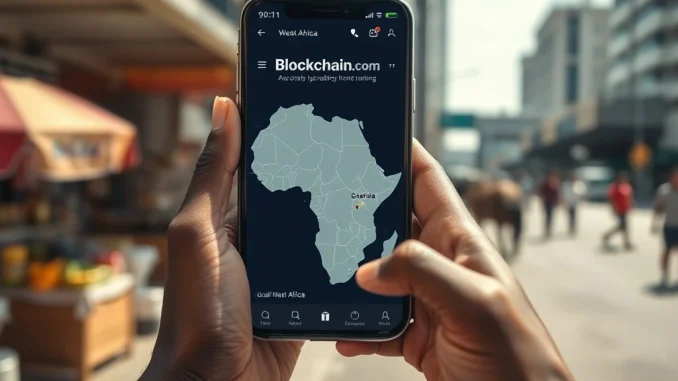
ACCRA, Ghana — March 15, 2026: Cryptocurrency brokerage giant Blockchain.com has officially launched retail trading services in Ghana, capitalizing on explosive 700% transaction volume growth in neighboring Nigeria over the past year. The London-based platform confirmed its West African expansion today following months of regulatory engagement and infrastructure development. This strategic move positions Blockchain.com to capture market share in one of the world’s fastest-growing cryptocurrency regions, where demand is driven by cross-border payments, currency volatility, and limited traditional banking access. The company’s entry into Ghana follows careful observation of user activity patterns across Sub-Saharan Africa, where crypto adoption continues to accelerate despite regulatory uncertainties.
Blockchain.com’s Strategic Ghana Entry Following Nigeria Success
Blockchain.com’s formal Ghana launch comes after the company reported staggering growth metrics from its Nigerian operations. According to internal data shared with Cointelegraph, the platform witnessed a more than 700% increase in brokerage transaction volume in Nigeria since launching retail services there last year. Nigerian users predominantly traded Bitcoin (BTC), Tether (USDT), and Tron (TRX), reflecting both speculative investment and practical utility for remittances. Meanwhile, Ghana showed promising organic growth even before the official launch, with active users increasing 140% and transaction volumes climbing 80% over the past twelve months. The company has already established local compliance representation in Accra and is actively collaborating with Ghanaian officials to help shape regulatory frameworks for digital assets.
Company executives emphasize that Ghana represents more than just another market entry. “We’re building regional infrastructure with Ghana as a strategic hub,” a Blockchain.com spokesperson explained. “Given how widely used mobile money is in Ghana, integration with the mobile money ecosystem is a key focus.” The company recognizes that successful penetration requires adapting to local financial behaviors rather than imposing foreign models. Consequently, Blockchain.com is assembling local teams to manage operations, forge partnerships with mobile money providers like MTN Mobile Money and AirtelTigo Cash, and maintain ongoing regulatory dialogue. This approach mirrors strategies deployed in other emerging markets where the company has achieved significant traction.
West Africa’s Crypto Boom: Drivers and Demographic Shifts
The expansion signals broader transformation across West Africa’s financial landscape. Data from blockchain analytics firm Chainalysis reveals Nigeria consistently ranks among global leaders for grassroots crypto adoption. Between July 2024 and June 2025, Sub-Saharan Africa received over $205 billion in on-chain crypto value—a 52% annual increase that makes it the world’s third-fastest-growing crypto market. Nigeria dominated this activity with more than $92 billion during that period, while Ghana ranked among the next largest markets alongside South Africa, Ethiopia, and Kenya. Analysts identify three primary drivers: expensive cross-border remittances, persistent local currency volatility, and a large unbanked population embracing mobile-first solutions.
- Remittance Revolution: Traditional money transfers cost approximately $6 per $100 sent across African corridors. Stablecoins like USDT slash these fees and settle transactions in minutes rather than days.
- Inflation Hedge: With several African economies experiencing double-digit inflation, citizens increasingly view dollar-pegged cryptocurrencies as more reliable stores of value than local currencies.
- Financial Inclusion: Mobile penetration exceeds banking access across much of Africa, creating natural pathways to crypto wallets via smartphones.
Expert Perspectives on Africa’s Crypto Trajectory
Former UN under-secretary-general Vera Songwe highlighted these trends during January’s World Economic Forum in Davos. “Stablecoins are becoming the default for remittances and cross-border payments in several African corridors,” Songwe stated. “The cost differential is too significant for users to ignore.” Meanwhile, Africa Bitcoin Corporation executive chairman Stafford Masie observed more fundamental shifts during a recent Coin Stories podcast appearance. “In some African communities, Bitcoin functions as everyday money rather than primarily as a store of value,” Masie explained. “We see merchants in local circular economies accepting payments in satoshis instead of fiat currencies.” These observations align with Borderless.xyz data showing Africa recorded the highest median stablecoin-to-fiat conversion spreads among tracked regions in February 2026, indicating both high demand and developing infrastructure challenges.
Comparative Analysis: Africa’s Crypto Landscape Versus Global Markets
Africa’s crypto adoption pattern differs markedly from developed markets. While North America and Europe focus largely on institutional investment and speculative trading, African usage emphasizes practical utility for daily economic activities. This distinction creates unique regulatory challenges and opportunities. Ghana’s approach to Blockchain.com’s entry—focusing on collaboration rather than restriction—contrasts with more cautious stances elsewhere on the continent. The following table compares key metrics across leading African crypto markets:
| Country | Annual Crypto Value Received (2024-25) | Primary Use Cases | Regulatory Stance |
|---|---|---|---|
| Nigeria | $92+ billion | Remittances, inflation hedge, trading | Restrictive (bank ban) |
| Ghana | Data not specified | Mobile money integration, savings | Collaborative (framework building) |
| Kenya | Significant volume | Peer-to-peer transfers, micro-savings | Monitoring cautiously |
| South Africa | Second highest in region | Formal investment, institutional | Progressive licensing |
What’s Next for Blockchain.com and African Crypto Markets
Blockchain.com’s expansion roadmap extends beyond Ghana. The company plans to enter additional African markets as part of its long-term growth strategy, though executives declined to specify which countries are next in line. Success in Ghana—particularly regarding mobile money integration—will likely serve as a template for future entries. Meanwhile, regulatory developments across the continent will shape the pace of expansion. The African Union recently established a working group to develop harmonized crypto regulations, recognizing that fragmented national approaches create arbitrage opportunities and compliance complexities. Industry observers will watch whether Ghana’s collaborative model with Blockchain.com influences this pan-African regulatory conversation.
Local Reactions and Market Implications
Initial reactions from Ghana’s tech community have been cautiously optimistic. “Professional platforms like Blockchain.com bring legitimacy and security features that peer-to-peer markets lack,” noted Kofi Mensah, founder of Accra-based fintech startup Nsesa. “But they must compete on fees and local currency pairs.” Some users expressed concerns about potential regulatory crackdowns following Nigeria’s restrictive approach, though Blockchain.com’s proactive engagement with Ghanaian authorities aims to prevent such outcomes. The company’s entry may pressure existing platforms like Binance and LocalBitcoins to enhance their Ghana offerings, potentially benefiting consumers through improved services and competitive pricing. Meanwhile, traditional banks are monitoring developments closely, as crypto platforms increasingly compete for remittance and savings business.
Conclusion
Blockchain.com’s Ghana expansion represents a strategic bet on West Africa’s accelerating cryptocurrency adoption. The move follows demonstrated success in Nigeria, where 700% trading growth revealed substantial demand for digital asset services. As the company integrates with Ghana’s dominant mobile money ecosystems and collaborates on regulatory frameworks, its experience will provide valuable insights for other platforms considering African expansion. The broader story extends beyond one company’s growth—it reflects how cryptocurrencies are addressing real economic needs across Sub-Saharan Africa, from expensive remittances to currency instability. With Blockchain.com now operational in over 70 jurisdictions worldwide, its African progress will test whether global platforms can successfully adapt to locally specific financial behaviors and regulatory environments.
Frequently Asked Questions
Q1: Why is Blockchain.com expanding into Ghana now?
The expansion follows 700% trading growth in neighboring Nigeria and 140% active user growth in Ghana over the past year. The company sees West Africa as one of the world’s fastest-growing crypto markets, driven by remittance needs and currency volatility.
Q2: What makes Ghana attractive for cryptocurrency platforms?
Ghana combines high mobile penetration, widespread mobile money usage, and a collaborative regulatory approach. The country also serves as an economic hub for West Africa with relatively stable infrastructure compared to some neighbors.
Q3: How will Blockchain.com integrate with Ghana’s financial system?
The company plans deep integration with mobile money providers like MTN Mobile Money and AirtelTigo Cash, recognizing that most Ghanaians use these services rather than traditional bank accounts for daily transactions.
Q4: What risks does Blockchain.com face in Ghana?
Potential regulatory changes, currency conversion challenges, competition from established platforms, and ensuring security for new users unfamiliar with cryptocurrency are key challenges the company must navigate.
Q5: How does Ghana’s approach differ from Nigeria’s crypto regulation?
Ghana is collaborating with companies to build regulatory frameworks, while Nigeria has taken more restrictive measures including banning banks from crypto transactions. This difference reflects varying national strategies toward digital assets.
Q6: What does this expansion mean for everyday Ghanaians interested in crypto?
Users gain access to a regulated international platform with enhanced security features, potentially lower remittance costs, and educational resources. However, they should still exercise caution and understand cryptocurrency volatility before investing.