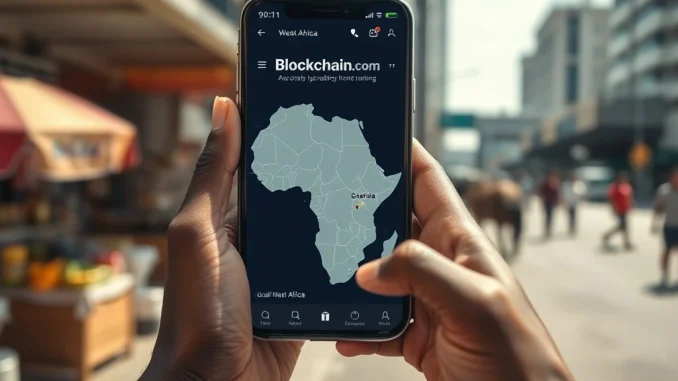
LONDON & ACCRA, March 15, 2026 — Cryptocurrency brokerage giant Blockchain.com has officially launched its retail trading platform in Ghana, capitalizing on explosive growth across West Africa. This strategic expansion follows the company’s reported 700% increase in brokerage transaction volume in Nigeria over the past year. The move signals a deepening commitment to Sub-Saharan Africa, a region now recognized as the world’s third-fastest-growing crypto market. Company executives cite rising demand for digital dollar alternatives, driven by cross-border payments and currency instability, as the core driver for this aggressive regional push.
Blockchain.com Ghana Expansion: Strategy and Initial Metrics
Blockchain.com’s entry into Ghana is not an experimental foray but a data-driven expansion. A company spokesperson confirmed to our editorial team that active users in Ghana on their platform increased 140% in the twelve months preceding the formal launch, with transaction volumes climbing 80%. Consequently, the company is building local teams focused on operations, partnerships, and regulatory engagement. “We are actively collaborating with Ghanaian officials and regulators to help build a regulatory framework,” the spokesperson stated, noting they have already established local compliance representation in Accra.
The operational blueprint is heavily influenced by their Nigerian success. In Nigeria, launched just last year, Bitcoin (BTC), Tether (USDT), and Tron (TRX) emerged as the most traded assets. This pattern of stablecoin and established cryptocurrency dominance is expected to replicate in Ghana. The company plans to offer Ghanaian users full access to its trading platform while prioritizing integration with local payment rails, particularly the ubiquitous mobile money ecosystem.
Impact on West Africa’s Financial Landscape
The expansion carries significant implications for financial inclusion and regional economics. Analysts point to a potent mix of drivers: high remittance costs, persistent local currency volatility, and a large, tech-savvy, mobile-first population. According to a September 2025 Chainalysis report, Sub-Saharan Africa received over $205 billion in on-chain crypto value between July 2024 and June 2025, a 52% annual increase. Nigeria dominated this activity, receiving more than $92 billion.
- Reduced Remittance Costs: Former UN under-secretary-general Vera Songwe highlighted at Davos that stablecoins can settle cross-border payments in minutes at a fraction of the traditional $6 fee per $100 sent.
- Hedge Against Inflation: In economies like Ghana and Nigeria, where inflation remains a challenge, cryptocurrencies like Bitcoin and dollar-pegged stablecoins offer a practical hedge for everyday citizens and businesses.
- Formalizing the Informal: The expansion brings a regulated, international player into markets with vibrant informal crypto economies, potentially increasing user security and mainstream acceptance.
Expert Analysis on Africa’s Crypto Trajectory
Industry experts contextualize this move within Africa’s unique adoption curve. Stafford Masie, Executive Chairman of Africa Bitcoin Corporation, observed that in some communities, Bitcoin functions as everyday money, not just a store of value. “Some merchants in local circular economies accept payments in satoshis instead of fiat currencies,” Masie noted on the Coin Stories podcast. This grassroots, utility-first adoption differs markedly from Western narratives. Meanwhile, data from Borderless.xyz shows Africa recorded the highest median stablecoin-to-fiat conversion spreads in February 2026, indicating both high demand and ongoing friction points that formal services like Blockchain.com aim to reduce.
Comparative Analysis: Africa’s Leading Crypto Markets
Blockchain.com’s targeted expansion reflects a calculated focus on the region’s most dynamic markets. The following table, based on Chainalysis data and recent trading metrics, compares key African jurisdictions.
| Country | Estimated Crypto Value Received (Jul ’24-Jun ’25) | Primary Adoption Drivers | Notable Activity |
|---|---|---|---|
| Nigeria | $92+ Billion | Remittances, Naira volatility, youth population | Blockchain.com reported 700% volume growth |
| Ghana | Ranked among top 5 | Mobile money integration, currency hedge | Pre-launch user growth of 140% on Blockchain.com |
| Kenya | Significant volume | Cross-border trade, tech hub status | High peer-to-peer (P2P) trading activity |
| South Africa | Major market | Formal financial sector integration | Growing institutional interest |
What Happens Next: Regulatory Frontiers and Market Ripples
Blockchain.com’s stated plan to “help build a regulatory framework” in Ghana will be a critical storyline to monitor. Successful collaboration could create a template for other nations in the Economic Community of West African States (ECOWAS). The company has also confirmed plans to enter additional African markets as part of its long-term strategy, with East and Southern Africa likely in sight. Furthermore, this move pressures competing international exchanges to solidify their own African strategies, potentially accelerating investment in local financial infrastructure and talent.
Industry and Community Response
Initial reactions from the African fintech community have been cautiously optimistic. Local entrepreneurs welcome the increased legitimacy and infrastructure investment but emphasize the need for solutions tailored to African realities, not merely imported models. The focus on mobile money integration has been particularly praised, as it aligns with the dominant financial behavior on the continent. However, some advocates stress that regulatory development must balance innovation with robust consumer protection to sustain long-term growth.
Conclusion
Blockchain.com’s expansion into Ghana, fueled by unprecedented growth in Nigeria, marks a pivotal moment for cryptocurrency adoption in Africa. It underscores the region’s transition from a niche, peer-to-peer market to a strategic priority for global crypto enterprises. The driving forces—remittance efficiency, inflation hedging, and financial inclusion—are deeply entrenched, suggesting sustained growth. Success in Ghana will hinge on seamless mobile money integration and constructive regulatory engagement. As these developments unfold, West Africa is poised to remain a central narrative in the global evolution of digital asset economies, with Blockchain.com’s journey offering a key case study.
Frequently Asked Questions
Q1: Why is Blockchain.com expanding into Ghana now?
The expansion follows a 700% surge in trading volume in neighboring Nigeria and a 140% increase in active users in Ghana prior to launch, indicating massive, proven demand in the West African region.
Q2: What does this mean for everyday Ghanaians?
Ghanaians will gain access to a major global trading platform, potentially lowering costs for remittances and providing a digital dollar alternative to hedge against the Ghanaian cedi’s volatility.
Q3: How will Ghanaians fund their Blockchain.com accounts?
A key focus is integrating with Ghana’s mobile money ecosystem (like MTN Mobile Money and Vodafone Cash), which is widely used, to allow easy deposit and withdrawal of funds.
Q4: Is cryptocurrency legal in Ghana?
While not illegal, the regulatory framework is evolving. Blockchain.com states it is actively working with Ghanaian officials to help shape a formal regulatory structure for crypto assets.
Q5: How does Africa’s crypto adoption differ from the US or Europe?
In many African communities, crypto is used first for practical daily needs like payments and remittances, whereas in the West, it has been viewed more as a speculative investment or store of value.
Q6: What other African countries might Blockchain.com enter next?
Based on market size and activity, Kenya, South Africa, and Ethiopia are likely candidates for future expansion as part of the company’s long-term African growth strategy.