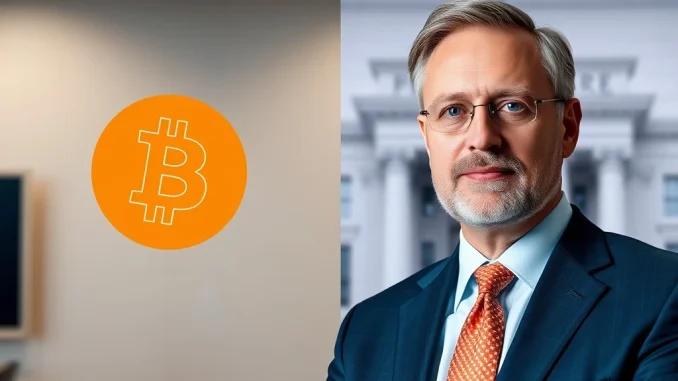
New York, May 2025: A potential seismic shift in U.S. monetary policy is capturing the attention of global financial markets. Rick Rieder, the Chief Investment Officer of asset management titan BlackRock, is reportedly under consideration for the role of Federal Reserve Chair. This development, first reported by CoinDesk, is being analyzed by economists and crypto market participants as a potentially bullish long-term signal for Bitcoin, given Rieder’s established and public advocacy for the digital asset’s role in modern portfolios.
BlackRock CIO Rick Rieder’s Pro-Bitcoin Stance
Rick Rieder is not a newcomer to the cryptocurrency conversation. His views have evolved from cautious interest to clear advocacy, positioning him uniquely among traditional finance leaders. As early as November 2020, in commentary that now seems prescient, Rieder argued that Bitcoin could evolve into a superior store of value compared to gold. He highlighted the practical advantages of digital transferability over the physical logistics of gold bars, a point that resonated with institutional investors beginning to explore digital assets.
His commentary has grown more definitive over time. In a 2023 CNBC interview, Rieder stated plainly that “Bitcoin is here to stay” and that it “should be part of a sensible investment portfolio.” He framed Bitcoin and gold not as speculative gambles but as complementary components for portfolio stability, especially in an environment of fiscal expansion and currency debasement concerns. This perspective, coming from the CIO overseeing more than $10 trillion in assets under management at BlackRock, lent significant institutional credibility to Bitcoin’s investment thesis.
The Unprecedented Influence of the Federal Reserve Chair
The Chair of the Federal Reserve wields unparalleled influence over the global financial system, far beyond setting interest rates. The position’s power stems from three core pillars:
- Monetary Policy Authority: The Chair leads the Federal Open Market Committee (FOMC), which controls the federal funds rate and directs open market operations, directly influencing liquidity, inflation, and economic growth.
- Regulatory Oversight: The Fed plays a key role in the Financial Stability Oversight Council and regulates bank holding companies, giving it a major voice in the regulatory perimeter for new asset classes like cryptocurrencies.
- Global Financial Leadership: The Fed Chair’s public statements and policy outlook set the tone for central banks worldwide, affecting global capital flows and risk appetite.
Historically, the Fed’s relationship with cryptocurrency has been characterized by cautious scrutiny, focusing on financial stability risks, banking sector exposure, and the potential for illicit finance. A Chair with a foundational understanding of Bitcoin’s technology and market structure could steer this dialogue toward nuanced analysis rather than blanket skepticism.
Historical Context: Fed Leadership and Market Paradigms
Leadership changes at the Fed have often coincided with shifts in regulatory and philosophical approaches to emerging finance. For instance, the tenure of Alan Greenspan was marked by a focus on deregulation and technological innovation in traditional markets. The appointment of a chair with explicit, positive views on a specific alternative asset like Bitcoin would be without precedent. It would represent a profound cultural shift within the central bank, potentially accelerating the institutional integration of digital assets into the regulated financial framework that BlackRock itself has been pioneering with its spot Bitcoin ETF.
Potential Implications for Bitcoin and Cryptocurrency Policy
Analysts are careful to note that a Rieder-led Fed would not mean direct advocacy for Bitcoin from the central bank. The Fed’s mandate focuses on price stability and maximum employment. However, the implications of such an appointment would be multifaceted and significant.
Regulatory Clarity and Tone: The greatest immediate impact would likely be in the tone and direction of regulatory discussions. A Fed Chair who understands cryptocurrency markets could advocate for clearer, more innovation-friendly frameworks developed in concert with the SEC and CFTC. This could reduce the regulatory uncertainty that has long been a headwind for the asset class.
Monetary Policy and Digital Assets: Rieder’s experience in global fixed income and asset allocation would inform how he views Bitcoin within the broader monetary system. His public statements suggest he views it as a potential hedge against fiscal profligacy and currency debasement. This perspective could influence how the Fed analyzes the impact of its balance sheet policies on alternative stores of value.
Institutional Adoption Acceleration: The symbolic effect cannot be understated. The appointment of a known Bitcoin advocate to the world’s most powerful central banking position would be interpreted by institutional investors as the ultimate signal of legitimacy. It could catalyze faster and deeper allocation from pensions, endowments, and sovereign wealth funds that take policy cues from Washington.
Conclusion: A Speculative Scenario with Profound Ramifications
The consideration of Rick Rieder for Federal Reserve Chair remains a developing political story. The final decision rests with the President and the Senate. However, the mere emergence of a candidate with his public profile regarding Bitcoin marks a milestone in the digital asset’s journey from niche internet experiment to mainstream financial consideration. It underscores how deeply cryptocurrency discourse has penetrated the highest echelons of traditional finance. While the Fed’s primary mandates would remain unchanged, the leadership’s underlying philosophy can subtly shape priorities, research agendas, and regulatory cooperation. For Bitcoin, the potential nomination of the BlackRock CIO represents a hypothetical but powerful validation of its enduring role in the future of global finance.
FAQs
Q1: Who is Rick Rieder and why is he important to Bitcoin?
Rick Rieder is the Chief Investment Officer of BlackRock, the world’s largest asset manager. He has publicly advocated for Bitcoin’s role as a store of value and a portfolio stabilizer, giving the cryptocurrency significant institutional credibility.
Q2: What power does the Federal Reserve Chair have over Bitcoin?
The Fed Chair influences monetary policy, regulatory discussions, and global financial sentiment. While they do not directly regulate Bitcoin, their stance can affect banking sector access, regulatory clarity, and overall institutional risk appetite toward crypto assets.
Q3: Would a pro-Bitcoin Fed Chair make Bitcoin legal tender or cause its price to skyrocket immediately?
No. The Fed Chair operates within a strict dual mandate (price stability, maximum employment) and a governance structure. They would not directly control Bitcoin’s price or legal status. The impact would be more indirect, through regulatory tone, research focus, and symbolic legitimacy over the long term.
Q4: Has any previous Federal Reserve Chair been supportive of cryptocurrency?
No previous Fed Chair has expressed supportive views on Bitcoin akin to Rieder’s. Past chairs, like Jerome Powell, have acknowledged cryptocurrency as an asset class but primarily emphasized the need for consumer protection and financial stability regulation.
Q5: How does BlackRock’s own Bitcoin ETF relate to this story?
BlackRock’s successful launch of a spot Bitcoin ETF (IBIT) demonstrates the firm’s institutional commitment to providing Bitcoin exposure. Rieder’s potential Fed candidacy intertwines his personal advocacy with his firm’s strategic direction, highlighting a convergence of traditional finance and digital assets.