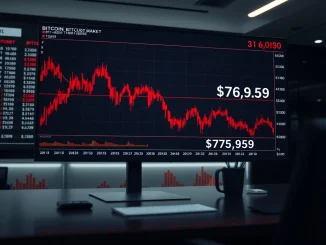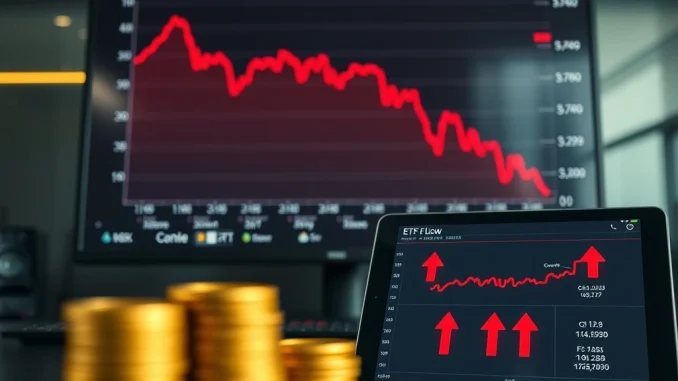
Global, March 2025: Bitcoin is on track for its most challenging first quarter in eight years, with a steep price decline and shifting investor behavior through Exchange-Traded Funds (ETFs) painting a cautious picture for the flagship cryptocurrency. Since January, Bitcoin has shed over 22% of its value, straining its quarterly performance to levels not seen since 2018 and prompting a close examination of the underlying market dynamics.
Bitcoin’s Q1 Performance Hits an Eight-Year Low
The first quarter of 2025 has proven exceptionally difficult for Bitcoin. Historical data reveals that Q1 often sets the tone for the cryptocurrency’s annual performance. A decline exceeding 22% since the year’s start places this quarter among the worst in Bitcoin’s history for this period. The last time Bitcoin witnessed a similarly poor Q1 close was in 2018, a year followed by an extended bear market. Analysts compare current metrics—including trading volume, price support levels, and macroeconomic correlations—to previous cycles to contextualize the slump. This performance diverges sharply from the bullish momentum that characterized late 2024, following the landmark approval of spot Bitcoin ETFs in the United States.
The Role of ETF Outflows in Market Sentiment
A primary factor cited for the current pressure is a notable shift in flows for U.S.-listed spot Bitcoin ETFs. After initial waves of substantial inflows post-approval, recent weeks have seen a consistent pattern of net outflows. This trend indicates a cooling of institutional and retail enthusiasm in the short term.
- Liquidity Pressure: Sustained ETF outflows force authorized participants to sell Bitcoin holdings to meet redemptions, creating direct selling pressure on the underlying asset.
- Sentiment Indicator: ETF flows have become a key real-time gauge of mainstream investor sentiment. Net outflows suggest a risk-off approach or profit-taking after the previous rally.
- Contrast with Expectations: The outflows contrast with early predictions that ETFs would provide a one-way influx of capital, highlighting the product’s role as a double-edged sword that can also facilitate easy exits.
This dynamic demonstrates how traditional financial instruments, now grafted onto digital assets, can amplify both positive and negative market movements.
Understanding the Volatility Spike
Concurrent with the price drop and ETF outflows, market volatility has risen significantly. The Bitcoin Volatility Index (BVOL) has spiked to levels not seen in months. Several interconnected factors drive this instability.
First, uncertainty in global macroeconomic policy, including interest rate decisions and geopolitical tensions, has increased risk aversion across all asset classes. Cryptocurrencies, still perceived as higher risk, often experience magnified reactions. Second, the ETF structure itself can contribute to volatility. Large, concentrated orders for creation or redemption baskets can cause price dislocations, especially during periods of lower overall liquidity. Finally, the market is grappling with the realization that ETF adoption is a marathon, not a sprint. The initial euphoria has settled into a phase of price discovery based on organic demand, which is inherently more volatile.
Historical Context: Comparing 2018 and 2025
Drawing parallels to 2018 provides crucial context but also reveals key differences. The 2018 Q1 decline followed the all-time high peak of late 2017 and was driven by the bursting of a retail-driven speculative bubble, regulatory crackdowns on initial coin offerings (ICOs), and security concerns at major exchanges.
| Factor | Q1 2018 | Q1 2025 |
|---|---|---|
| Primary Driver | Retail bubble burst, ICO collapse | ETF flow reversal, macro risk-off shift |
| Market Structure | Primarily retail, few institutions | Significant institutional presence via ETFs & futures |
| Regulatory Environment | Hostile, uncertain | More defined, with major regulatory milestones (ETF approval) |
| Global Liquidity | Tightening monetary policy | Uncertain policy outlook, potential shifts |
The critical distinction lies in market maturity. The 2025 sell-off is occurring within a more robust, regulated, and institutionalized framework. While this may not prevent declines, it can alter the recovery trajectory and reduce the risk of a multi-year bear market akin to 2018-2020.
Expert Analysis on Market Mechanics
Market structure experts point to derivatives markets as an additional layer of complexity. High open interest in Bitcoin futures and options can lead to increased volatility around quarterly expiries and key price levels where large volumes of leverage are liquidated. The current environment suggests that leveraged long positions accumulated during more optimistic periods are being unwound, creating a feedback loop of selling. Furthermore, on-chain data shows movement of older Bitcoin holdings, often interpreted as long-term holders distributing supply, which can add to near-term selling pressure. However, this same data can also indicate a healthy transfer of assets to new investors, laying a foundation for future stability.
Implications for the Broader Cryptocurrency Ecosystem
Bitcoin’s performance invariably impacts the entire digital asset sector. Altcoins have typically shown high correlation with Bitcoin during downturns, leading to broad-based losses. This correlation underscores Bitcoin’s continued role as the market’s reserve asset and primary sentiment indicator. For projects and companies within the ecosystem, a protracted downturn can affect fundraising, development timelines, and operational runway. Conversely, such periods often weed out speculative excess, allowing fundamental value and utility to become clearer long-term drivers. The focus may shift from pure price speculation to metrics like network usage, protocol development, and real-world adoption.
Conclusion
Bitcoin faces a significant test as it heads toward its worst Q1 close since 2018, driven by a combination of ETF outflows and heightened volatility. This period highlights the evolving and maturing nature of the cryptocurrency market, where traditional finance mechanisms like ETFs now play a decisive role in price action. While the short-term sentiment is cautious, the underlying market structure is fundamentally stronger than in previous major downturns. The coming weeks will be critical in assessing whether this is a healthy correction within a broader trend or the beginning of a more profound shift. Understanding the interplay between ETF flows, macroeconomic factors, and on-chain dynamics is essential for navigating this current phase of Bitcoin’s market cycle.
FAQs
Q1: What does “worst Q1 in eight years” mean for Bitcoin?
It means Bitcoin’s price performance for the first quarter (January-March) of 2025 is on pace to be its most negative since the first quarter of 2018, based on the percentage decline from the start of the year.
Q2: Why are Bitcoin ETF outflows significant?
Net outflows from spot Bitcoin ETFs indicate more money is being withdrawn from these funds than deposited. This requires the fund managers to sell Bitcoin to return cash to investors, creating direct selling pressure on the market.
Q3: How does rising volatility affect ordinary investors?
Higher volatility means larger and more frequent price swings in both directions. This increases risk for short-term traders and can lead to larger losses (or gains) in a shorter period, making the market feel more unpredictable.
Q4: Is the current situation similar to the 2018 crypto crash?
There are similarities in the scale of the Q1 price drop, but key differences exist. The 2025 market involves major institutional players and regulated products like ETFs, which were absent in 2018, potentially leading to a different recovery path.
Q5: Could this Q1 performance predict Bitcoin’s price for the rest of the year?
Not definitively. While Q1 can set a tone, historical patterns show Bitcoin has experienced poor quarters followed by strong recoveries within the same year. Annual performance depends on numerous subsequent factors, including macroeconomic conditions and adoption trends.