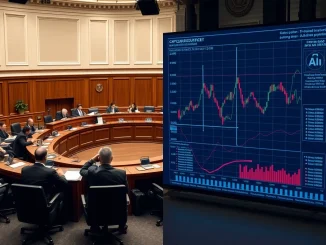
NEW YORK, March 7, 2026 — Bitcoin’s recent price surge above $74,000 has faltered, with leading analysts and on-chain data confirming the cryptocurrency remains entrenched in a bear market. The brief Bitcoin relief rally on Thursday, March 6, quickly lost momentum, shedding over $3,000 by Friday morning as fundamental metrics failed to signal a sustained recovery. This price action underscores the persistent headwinds facing the digital asset, despite fleeting optimism from spot ETF inflows and shifting U.S. investor sentiment.
Bitcoin Relief Rally Faces Immediate Headwinds
Bitcoin briefly touched a one-month high of $74,000 on the Coinbase exchange Thursday, momentarily breaching a key technical barrier at the 50-day exponential moving average. However, the rally proved short-lived. By Friday morning trading in Asia, the price had retreated below $71,000, marking a 4.7% decline from the peak. This volatility highlights the fragile nature of the recent gains. On-chain analytics firm CryptoQuant provided a sobering assessment, stating unequivocally that Bitcoin is still in a bear market despite the recent rally. The firm’s proprietary Bull Score Index, a composite health indicator for BTC, remains mired at 10 out of 100. Consequently, this level places it deep in bearish territory and suggests underlying weakness.
Market observers note the rally coincided with a shift in the Coinbase Premium—a metric tracking the price difference between Coinbase and other global exchanges—into positive territory. This shift indicates renewed buying interest from U.S.-based investors, likely driven by institutional flows into spot Bitcoin ETFs. Meanwhile, selling pressure from traders and long-term holders has eased slightly. This easing occurred after unrealized losses across the network reached levels not seen since the bear market lows of July 2022. Nevertheless, these supportive factors have so far failed to catalyze a broader regime change.
Analysts Point to Persistent Bear Market Dynamics
The rapid fade of the rally reinforces analyst warnings about the enduring bear market environment. Nick Ruck, Director of LVRG Research, told Cointelegraph that while renewed risk appetite and ETF inflows provided a welcome lift, the advance quickly faced headwinds. “Prices are pulling back toward $71,000 amid persistent macro uncertainties and fading momentum,” Ruck stated. He further cautioned that softer macroeconomic signals, like an anticipated slowdown in job growth data, keep cryptocurrencies vulnerable to renewed downside pressure. Therefore, ongoing bear market dynamics reinforce a cautious stance among institutional players.
- Technical Rejection: The failure to hold above the 50-day EMA is a classic bear market signal, indicating a lack of sustained buying power.
- Macro Sensitivity: Cryptocurrency markets remain acutely sensitive to traditional financial indicators and central bank policy expectations, which currently suggest restraint.
- On-Chain Weakness: Despite improved sentiment, core on-chain metrics like network activity and miner revenue have not shown the robust growth typical of a new bull phase.
Institutional and Expert Analysis
CryptoQuant’s analysis forms a central pillar of the current bearish thesis. “Even after the recent price rally, fundamental and technical indicators still point to a bear market environment,” the firm stated. “The current move is likely just a relief rally, not the start of a new bull phase.” This perspective is grounded in a multi-factor model that assesses market health beyond simple price action. Conversely, other analysts see glimmers of a potential shift. Researchers at SwissBlock observed on Friday that momentum indicators are “flashing a critical shift,” suggesting the market may be “exiting peak negative momentum.” They noted this kind of transition often precedes a broader regime change, though they stopped short of declaring the bear market over.
Historical Context and Market Structure Comparison
This period draws comparisons to previous crypto market cycles where sharp relief rallies punctuated longer-term downtrends. For instance, the bear market of 2018-2019 saw several rallies of 30% or more that ultimately failed to reverse the primary downward trend until a fundamental catalyst emerged. The current market structure differs due to the presence of U.S. spot Bitcoin ETFs, which provide a new, regulated conduit for capital. However, ETF flows themselves have been volatile, reflecting the uncertain macro landscape. The table below compares key metrics from the recent rally to signals from prior cycle transitions.
| Metric | Current Rally (March 2026) | Early Bull Market Signal Threshold |
|---|---|---|
| CryptoQuant Bull Score | 10 / 100 | 50 / 100+ |
| Sustained Break Above 50-day EMA | No | Yes |
| ETF Net Inflow Trend (30-day) | Volatile / Neutral | Consistently Positive |
| Long-Term Holder Selling Pressure | Easing, but Elevated | Significantly Reduced |
What Happens Next for Bitcoin Prices?
The immediate focus for traders and analysts is whether Bitcoin can establish a support base above $70,000. A failure to hold this level could open the door for a retest of recent lows near $65,000. Key data points to watch include weekly ETF flow reports, upcoming U.S. inflation and employment data, and any changes in the Coinbase Premium. A sustained positive premium would signal continued U.S. institutional demand, potentially providing a floor for prices. Conversely, a return to negative territory could accelerate declines. Market technicians are also monitoring Bitcoin’s relative strength index (RSI) for signs of being oversold, which could trigger another short-term bounce.
Trader Sentiment and Market Positioning
Derivatives data shows a cautious increase in leverage among futures traders during the rally, which was quickly unwound as prices fell. This pattern is typical of bear market rallies, where optimism is fleeting. Options markets indicate a growing demand for downside protection (put options) at the $68,000 and $65,000 strike prices for the coming month. This demand suggests a segment of the market is hedging against further losses. On social sentiment platforms, the brief rally improved mood scores from “extreme fear” to merely “fear,” but they have since retreated, indicating the psychological damage from the prolonged downturn remains.
Conclusion
The failed Bitcoin relief rally serves as a stark reminder that price movements alone cannot declare a bear market over. Despite encouraging signals like a positive Coinbase Premium and easing sell-side pressure, core indicators from firms like CryptoQuant confirm the bear market persists. The path forward for Bitcoin remains fraught with headwinds, primarily tied to macroeconomic uncertainty. Investors should watch for a confluence of improving on-chain fundamentals, sustained ETF inflows, and a decisive break above key technical levels before concluding the market structure has shifted. Until then, analysts recommend caution, viewing any sharp price appreciations as potential selling opportunities within the broader downtrend rather than invitations to chase momentum.
Frequently Asked Questions
Q1: What is the CryptoQuant Bull Score Index, and why is it significant?
The Bull Score Index is a composite indicator from analytics firm CryptoQuant that measures Bitcoin’s overall market health using a combination of fundamental and technical on-chain metrics. A score of 10 out of 100, as seen currently, is considered deep in bearish territory, suggesting underlying weakness despite short-term price rallies.
Q2: What caused Bitcoin’s brief rally above $74,000?
The rally was primarily driven by a shift to positive Coinbase Premium, indicating renewed buying from U.S. investors, likely via spot Bitcoin ETFs. A temporary easing of selling pressure from long-term holders also contributed. However, it lacked broad-based fundamental support.
Q3: What would need to happen for analysts to declare the bear market over?
Analysts would look for a sustained improvement in on-chain metrics (like the Bull Score rising above 50), a confirmed and held breakout above key moving averages, and a consistent trend of positive capital inflows into the market via vehicles like ETFs, all amid a stabilizing macroeconomic backdrop.
Q4: How does the current situation affect everyday cryptocurrency investors?
For most investors, the persistent bear market signals continued volatility and risk. It underscores the importance of disciplined risk management, avoiding over-leverage, and focusing on long-term fundamentals rather than short-term price spikes during uncertain market phases.
Q5: How does this compare to Bitcoin’s previous bear markets?
Similar to past cycles, sharp relief rallies are common features within extended bear markets. The current cycle is unique due to the influence of U.S. spot ETFs, which can amplify both inflows and outflows, potentially leading to sharper but shorter-lived rallies and corrections.
Q6: What is the single most important chart or data point for traders to watch now?
Beyond the price itself, the Coinbase Premium is critical in the short term. A sustained positive premium suggests strong U.S. institutional demand that could provide price support. A return to negative territory would be a strong bearish signal, indicating selling pressure is outweighing buying interest in a key market.