
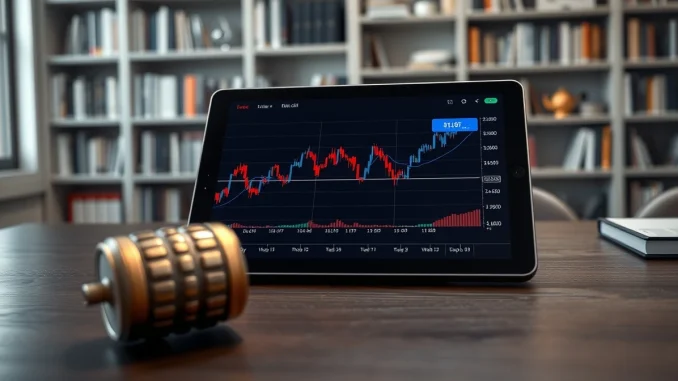
On Monday, March 30, 2026, the price of West Texas Intermediate crude oil surged past $105 per barrel, reaching its highest level in nearly four years. This immediate price shock has sent ripples through global markets, with investors now scrutinizing a historical pattern: previous oil spikes to this level were followed by significant corrections in the price of Bitcoin. The question for traders is whether history is a reliable guide or a misleading coincidence.
Bitcoin Price and the $105 Oil Threshold: A Historical Check
Data shows only three distinct instances where WTI crude breached the $105 mark while Bitcoin was a traded asset. The outcomes varied, but each period was marked by notable Bitcoin sell-offs. According to price charts from TradingView, the first event occurred in June 2014. WTI climbed above $105 as ISIS militants advanced in Iraq. Bitcoin’s price, then around $600, appeared stable for a week. But it then fell 21% over ten weeks, dropping to $468. It took more than two years for Bitcoin to recover that lost ground.
Also read: Uranium Finance Hacker Faces 30 Years for $54M Theft—Funds Spent on Pokémon Cards
The next instance was in early March 2022. Oil prices jumped as Russia’s invasion of Ukraine escalated. Bitcoin faced a sharper, quicker 14% drop within a week. However, this loss was fully reversed in less than a month, even though oil prices stayed elevated. The third and most severe correlation happened in May 2022. The European Commission proposed an embargo on Russian oil, pushing WTI above $105 again. This time, Bitcoin crashed 27% in seven days. It then entered a prolonged bear market that lasted 19 months.
Unpacking the Correlation: Cause or Coincidence?
Three data points over twelve years are a thin thread on which to hang a predictive theory. Market analysts note that other major, crypto-specific events coincided with these periods, potentially explaining the downturns. The 2014 sell-off overlapped with the collapse of the Mt. Gox exchange, a foundational crisis of confidence for Bitcoin. The 2022 crashes occurred alongside the catastrophic failure of the Terra-Luna ecosystem, which erased tens of billions in value from the crypto market.
Also read: SEC Enforcement Chief Exit Sparks Senate Fury Over Dropped Justin Sun Fraud Case
“Pinpointing a Bitcoin crash solely on an arbitrary oil price is far-fetched,” one market report concluded. The implication is that while high oil prices create macroeconomic stress—potentially leading to risk-off sentiment—they are rarely the sole trigger for crypto volatility. Industry watchers suggest that oil acts as an amplifier of existing fears rather than a primary cause.
The Macroeconomic Squeeze Play
High oil prices function as a tax on global economic growth. They fuel inflation, which can prompt central banks to maintain or raise interest rates. This environment is typically hostile to speculative assets like Bitcoin. Investors may pull capital from riskier bets to cover higher costs or seek safer havens. This suggests that the current $105 price could pressure Bitcoin if it sustains and feeds into broader inflationary concerns. Data from the Federal Reserve’s past meetings shows that energy-driven inflation is a persistent worry for policymakers.
Current Market Drivers Beyond Oil
While oil grabs headlines, other forces are at play in crypto markets. Large transactions, known as whale activity, can signal sentiment. Recently, a so-called ‘whale’ on the Hyperliquid derivatives platform opened a substantial $53 million short position against Bitcoin. Such moves often draw attention, though they do not guarantee a market direction.
Geopolitical rhetoric is also heating up. Reports from Yahoo Finance noted that former U.S. President Donald Trump recently stated a preference for the U.S. to control Iran’s oil industry “indefinitely.” Statements like this contribute to market uncertainty about future energy supply and regional stability. This uncertainty can spill over into all financial markets, including digital assets.
What This Means for Investors and Traders
For market participants, the historical pattern serves as a cautionary signal, not a definitive roadmap. The key takeaway is that periods of extreme commodity price stress have correlated with crypto weakness. However, the severity and duration of Bitcoin’s reaction appear heavily dependent on internal crypto market health.
A simple comparison illustrates the point:
- 2014: $105 oil + Mt. Gox collapse = Deep, multi-year bear market.
- March 2022: $105 oil + early war shock = Sharp, brief correction.
- May 2022: $105 oil + Terra-Luna collapse = Severe, prolonged crash.
This could signal that the crypto market’s internal structure is now the primary determinant of its resilience. If the current ecosystem is perceived as more solid than in 2022, the reaction to oil shocks may be muted. But if latent vulnerabilities exist, high oil prices could expose them.
Conclusion
The surge in oil prices above $105 presents a familiar stress test for the Bitcoin price. Historical data undeniably shows sell-offs following similar spikes. Yet, a deeper analysis reveals that crypto-specific crises like Mt. Gox and Terra-Luna likely played a larger role in those historic downturns. While high oil prices create a tough macroeconomic backdrop that can pressure speculative assets, they are not a standalone crash indicator. Investors should monitor this correlation but weigh it against the overall health and sentiment within the cryptocurrency market itself.
FAQs
Q1: How many times has oil been above $105 when Bitcoin was trading?
There have been three recorded instances: June 2014, March 2022, and May 2022.
Q2: What was Bitcoin’s worst performance after oil hit $105?
The worst was in May 2022, when Bitcoin fell 27% in a week and entered a 19-month bear market.
Q3: Does high oil price directly cause Bitcoin to crash?
Not directly. Analysis suggests it creates a risk-off economic environment, but major crashes have coincided with specific crypto disasters like exchange failures or stablecoin collapses.
Q4: What other factors should I watch alongside oil prices?
Key factors include large derivative positions (whale activity), broader stock market sentiment, central bank policy on interest rates, and major developments within the cryptocurrency sector.
Q5: Is the current market structure stronger than in 2022?
Some analysts believe oversight and infrastructure have improved since the Terra-Luna collapse. However, the market remains highly speculative and sensitive to macroeconomic shocks, including sustained high energy prices.

This article was produced with AI assistance and reviewed by our editorial team for accuracy and quality.




Be the first to comment