Global Markets, February 2025: Bitcoin faces its most significant technical breakdown in months as the cryptocurrency plunges through critical support levels, reviving analyst projections of a potential drop below $50,000. The market’s failure to hold above key thresholds has shifted sentiment dramatically, with technical indicators and on-chain data converging to suggest a more prolonged bearish phase may be developing.
Bitcoin Technical Breakdown: Support Levels Shattered
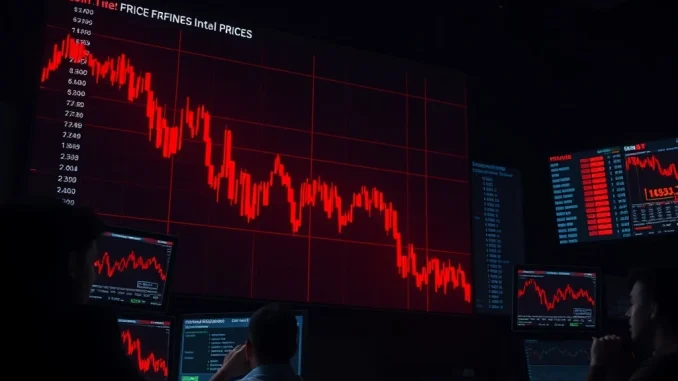
The cryptocurrency market entered a new phase of uncertainty this week as Bitcoin decisively broke below multiple technical support levels that traders had watched closely. The most significant development came with Bitcoin’s fall below the $80,000 threshold, a level many analysts considered a crucial pivot zone for maintaining bullish momentum. This breakdown represents more than a simple price correction—it signals a potential shift in market structure that could have lasting implications for investor positioning and institutional participation.
Technical analysts point to several concerning developments that have emerged simultaneously. The loss of the 21-week exponential moving average (EMA) stands out as particularly significant, as this indicator has historically served as a reliable gauge of market momentum. When Bitcoin maintains position above this moving average, it typically signals sustained bullish conditions. The current breach suggests weakening underlying strength and has prompted reassessments across trading desks and investment firms.
Analyst Targets Shift Toward Lower Price Zones
Market observers who previously maintained optimistic outlooks have begun revising their projections downward. Several prominent analysts now identify specific price targets significantly below current levels, with $49,180 emerging as a frequently mentioned objective. This represents a substantial departure from earlier predictions that focused on resistance levels and potential breakout scenarios above previous highs.
The changing sentiment reflects several technical developments:
- Multiple support clusters have failed to hold during recent declines
- Volume patterns show increasing selling pressure during down moves
- Key moving averages have shifted from support to resistance
- Market structure shows signs of distribution rather than accumulation
These technical factors combine to create what analysts describe as a “perfect storm” of bearish signals. The market’s inability to mount meaningful rebounds from oversold conditions further reinforces the negative outlook, suggesting that buying interest remains subdued despite lower prices.
Historical Context and Market Cycles
Current market conditions bear resemblance to previous Bitcoin cycles where extended consolidation periods followed significant rallies. Historical data shows that Bitcoin typically experiences several phases within broader market cycles, including periods of distribution that can last for months. Understanding these patterns helps contextualize current developments within Bitcoin’s longer-term trajectory.
The cryptocurrency market operates within distinct cycles characterized by accumulation, markup, distribution, and markdown phases. Current technical breakdowns suggest the market may be transitioning from markup to distribution, a phase typically marked by increased volatility and declining momentum. This transition doesn’t necessarily indicate the end of Bitcoin’s long-term growth story but rather represents a natural consolidation within its broader adoption curve.
On-Chain Data Reveals Structural Weakness
Beyond price charts and technical indicators, blockchain data provides crucial insights into market health. Recent on-chain metrics reveal concerning developments that support the technical breakdown narrative. One particularly telling metric involves the realized price for Bitcoin holders who acquired their positions within specific timeframes.
Analysis shows that the average purchase price for Bitcoin held between 12 and 18 months now sits above current spot prices. This creates what analysts term “structural pressure” as a significant portion of market participants face unrealized losses. Historically, when Bitcoin’s price remains sustainably below this realized cost threshold, the market tends to enter extended corrective phases rather than brief pullbacks.
Additional on-chain concerns include:
- Declining network activity metrics across several timeframes
- Reduced exchange inflows suggesting diminished buying interest
- Changing holder behavior patterns indicating increased caution
- Metrics showing decreased network utilization during price declines
These data points collectively suggest that current market weakness extends beyond simple price action to reflect broader changes in participant behavior and network utilization.
Market Psychology and Investor Sentiment Shifts
The psychological impact of recent price action cannot be overstated. Market sentiment has shifted noticeably as Bitcoin failed to hold key levels that many investors considered crucial for maintaining bullish outlooks. This psychological component often becomes self-reinforcing, as deteriorating sentiment leads to reduced buying interest, which in turn puts further pressure on prices.
Several sentiment indicators show marked deterioration:
- Fear and Greed Index readings have declined significantly
- Social media sentiment analysis shows increasing negative commentary
- Options market positioning indicates growing protective behavior
- Funding rates across derivatives platforms have normalized from elevated levels
This shift in market psychology creates challenges for price recovery, as sentiment often leads fundamentals during cryptocurrency market movements. The current environment suggests that rebuilding positive sentiment will require either significant time or a catalyst strong enough to overcome prevailing negative narratives.
Institutional Perspective and Market Structure
Institutional participants have responded to recent developments with increased caution. Trading desks report reduced activity from traditional finance entities, while custody solutions show slowing inflows. This institutional hesitation reflects several factors, including regulatory uncertainty, macroeconomic concerns, and reassessment of cryptocurrency allocation strategies within broader portfolios.
The changing institutional landscape matters because these participants typically bring stability and longer-term perspectives to cryptocurrency markets. Their reduced activity can exacerbate volatility and limit liquidity during periods of stress. However, it’s important to note that institutional interest in blockchain technology and digital assets generally remains strong, suggesting current caution relates more to timing and price levels than fundamental skepticism about the asset class.
Potential Scenarios and Market Implications
As analysts process recent developments, several potential scenarios have emerged. The most immediate concern involves whether Bitcoin can establish new support levels or whether further declines toward the $50,000 region become inevitable. Market participants should consider multiple possibilities rather than assuming a single predetermined outcome.
Possible developments include:
- Consolidation within a new, lower trading range followed by gradual recovery
- Further declines to test historical support levels around $50,000
- Extended sideways movement while market fundamentals catch up to price
- Rapid recovery if unexpected positive catalysts emerge
Each scenario carries different implications for traders, investors, and the broader cryptocurrency ecosystem. Market participants should develop strategies appropriate for their risk tolerance and time horizons rather than reacting impulsively to short-term price movements.
Conclusion: Navigating Uncertain Waters
Bitcoin’s technical breakdown and the emerging focus on $50,000 targets represent a significant shift in market dynamics. While concerning for short-term holders, these developments fit within Bitcoin’s historical pattern of volatile cycles and extended consolidation periods. The key for market participants lies in distinguishing between temporary volatility and fundamental deterioration.
The current bitcoin price action underscores the importance of risk management and perspective in cryptocurrency investing. Markets naturally oscillate between optimism and pessimism, and current conditions reflect this cyclical nature. As technical indicators and on-chain data continue to evolve, market participants should focus on long-term fundamentals while managing near-term risks appropriately. The road ahead may involve further volatility, but Bitcoin’s underlying value proposition remains intact despite current price pressures.
FAQs
Q1: What caused Bitcoin’s recent price decline?
Bitcoin’s decline resulted from multiple factors including technical breakdowns below key support levels, deteriorating on-chain metrics, shifting market sentiment, and broader macroeconomic concerns affecting risk assets globally.
Q2: Is $50,000 a realistic target for Bitcoin?
Several technical analysts have identified $50,000 as a potential target based on chart patterns and historical support levels, but market outcomes depend on numerous variables including buying interest at lower levels and potential catalysts that could change sentiment.
Q3: How does current market action compare to previous Bitcoin cycles?
Current conditions show similarities to previous consolidation phases within Bitcoin’s broader market cycles. Historical patterns suggest extended periods of sideways or downward movement often follow significant rallies before new uptrends emerge.
Q4: What should investors do during this market phase?
Investors should reassess their risk tolerance, ensure proper position sizing, focus on long-term fundamentals rather than short-term price action, and consider dollar-cost averaging strategies if they maintain conviction in Bitcoin’s long-term potential.
Q5: Are on-chain metrics reliable indicators of market health?
On-chain metrics provide valuable insights into network activity, holder behavior, and market structure, but they should be considered alongside technical analysis, fundamental developments, and macroeconomic factors for comprehensive market assessment.
This article was produced with AI assistance and reviewed by our editorial team for accuracy and quality.