LONDON, March 15, 2026 — For individual enthusiasts and hobbyists, the era of profitably mining Bitcoin on a PC has reached its definitive end. A confluence of soaring network difficulty, unprecedented energy costs, and the absolute dominance of specialized hardware has rendered consumer-grade computer mining economically unviable. This reality, confirmed by industry analysts and mining pool data from the first quarter of 2026, marks the final chapter in a decade-long evolution from accessible participation to purely industrial-scale operation. The dream of generating Bitcoin from a home office rig now consumes far more in electricity than it could ever hope to produce, according to a new report from the Cambridge Centre for Alternative Finance.
The Insurmountable Bitcoin Mining Difficulty in 2026
The Bitcoin network’s hash rate, a measure of its total computational power, surpassed 1.3 exahashes per second (EH/s) in early 2026. This represents a 1200% increase from just five years prior. Consequently, the mining difficulty—the algorithm’s self-adjusting mechanism that controls how hard it is to find a new block—has reached astronomical levels. “The difficulty adjustment in January 2026 was one of the largest single increases we’ve recorded,” states Dr. Elena Vasquez, a lead researcher at the Cambridge Centre. “It effectively doubled the computational work required from the previous period. For a standard gaming PC with a high-end GPU, the probability of successfully mining a block is now statistically equivalent to zero over any reasonable human timeframe.”
This difficulty surge stems directly from the global deployment of millions of next-generation Application-Specific Integrated Circuit (ASIC) miners. Companies like Bitmain, MicroBT, and Canaan continue to release models, such as the Antminer S21 Hydro, that are orders of magnitude more efficient than any general-purpose processor. The network has become a competition among these industrial machines, leaving consumer hardware utterly non-competitive.
The Crushing Economics of Home PC Mining
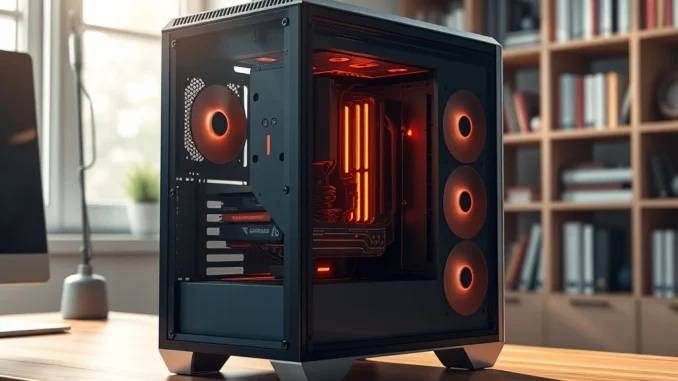
The financial equation for home cryptocurrency mining has flipped entirely. In 2026, the average residential electricity cost in major Western economies hovers between $0.18 and $0.35 per kilowatt-hour (kWh). A high-performance gaming PC equipped with an NVIDIA GeForce RTX 5090 or equivalent can draw upwards of 600 watts under full mining load. Running such a system 24/7 would incur monthly electricity costs ranging from $78 to $151, depending on location.
- Revenue Collapse: That same PC, using the most optimized mining software, would generate an estimated $3 to $7 worth of Bitcoin per month at current prices and network conditions.
- Hardware Depreciation: The intense, continuous workload drastically shortens the lifespan of expensive PC components like GPUs and power supplies, adding significant hidden costs.
- Opportunity Cost: The capital invested in a $3,000 mining PC would yield greater returns through direct Bitcoin purchase and holding, a strategy known as “HODLing.”
Expert Analysis from Mining Pool Operators
Lena Kowalski, Head of Operations at Foundry USA, one of the world’s largest Bitcoin mining pools, provides a stark assessment. “We haven’t seen a solo PC miner successfully submit a valid share to our pool in over two years,” Kowalski confirms. “The share difficulty is simply too high. Even if you joined a pool, your contribution would be so infinitesimally small that payout thresholds would never be met. The conversation has moved entirely to optimizing ASIC fleets in regions with sustainable energy contracts below $0.05/kWh.” This perspective underscores the industry’s shift toward professionalization and scale, a trend documented in Foundry’s quarterly transparency reports.
ASIC vs GPU Mining: The Technological Gulf in 2026
The core issue is a fundamental technological divergence. A GPU (Graphics Processing Unit) is a flexible processor designed for parallel tasks like rendering graphics. An ASIC is a chip engineered for one specific function: computing the SHA-256 hashes required for Bitcoin. This specialization creates an unbridgeable efficiency gap.
| Hardware Type | Approximate Hash Rate (TH/s) | Power Consumption | Efficiency (J/TH) |
|---|---|---|---|
| High-End 2026 Gaming PC (RTX 5090) | ~0.0025 TH/s | 600W | 240,000 J/TH |
| Bitmain Antminer S21 Hydro (2025) | 335 TH/s | 5360W | 16 J/TH |
| MicroBT Whatsminer M60S (2026) | 380 TH/s | 5280W | ~13.9 J/TH |
The table illustrates the staggering disparity. The ASIC is over 130,000 times more powerful at the specific task of Bitcoin mining while being 15,000 times more energy-efficient per unit of work. This efficiency is the sole determinant of profitability in a competitive mining environment.
What This Means for the Future of Decentralized Participation
The end of PC mining raises philosophical questions about Bitcoin’s original vision of decentralized participation. While mining is now concentrated in large-scale farms, analysts argue that decentralization persists through other means. “The security and governance of the network are now separated from the act of mining for most users,” explains blockchain economist Marcus Thorne. “Decentralization manifests through full nodes, which anyone can run on a standard PC to validate transactions and enforce consensus rules, and through the global, permissionless nature of the asset itself.” The barrier to being a *user* or *validator* remains low, even as the barrier to being a *miner* has skyrocketed.
Alternative Paths for Crypto Enthusiasts
For those drawn to the technical process of mining, alternatives exist on other blockchain networks. Some cryptocurrencies, like Ethereum Classic or Ravencoin, continue to use mining algorithms (Ethash, KawPow) that are partially resistant to ASIC dominance, though their profitability is volatile and still heavily influenced by electricity costs. However, the focus for most individuals in 2026 has shifted. Participating in the crypto ecosystem now means staking on proof-of-stake networks, providing liquidity in decentralized finance (DeFi) protocols, or simply engaging in long-term investment strategies—all of which can be done with a standard personal computer without the prohibitive energy overhead.
Conclusion
The definitive answer to whether you can still mine Bitcoin on a PC in 2026 is a resounding no, from both a technical and economic standpoint. The Bitcoin network has matured into an infrastructure layer secured by industrial-grade, specialized hardware operating at the absolute frontiers of energy efficiency. While the romantic notion of the solo miner persists in crypto lore, the 2026 reality is one of hyper-competition and professionalization. For the average person, engaging with Bitcoin is now almost exclusively through buying, holding, and using it, while leaving the monumental task of network security to dedicated, large-scale operations powered by cheap, often renewable, energy sources. This evolution, while closing one door, underscores the immense value and security the network has achieved.
Frequently Asked Questions
Q1: Is it completely impossible to mine any Bitcoin with a PC in 2026?
Technically, you can still run mining software, but your chances of earning any reward are effectively zero. The computational work required is so vast that a PC would take millions of years to solve a block alone, and its contribution to a mining pool would be too small to ever trigger a payout.
Q2: What happened to make PC mining obsolete?
Two primary factors: the Bitcoin network’s difficulty increased exponentially due to global ASIC deployment, and residential electricity costs rose significantly. The efficiency gap between a general-purpose GPU and a purpose-built ASIC miner became an unprofitable chasm.
Q3: Could a future change to Bitcoin’s code make PC mining viable again?
It’s highly unlikely. Changing the core mining algorithm (SHA-256) would be a contentious, network-splitting hard fork. The multi-billion-dollar ASIC industry and the mining farms that rely on this hardware have a vested interest in maintaining the status quo that secures their investment.
Q4: Are there any cryptocurrencies I can still mine with my PC?
Yes, some smaller proof-of-work coins like Monero (XMR), which uses an ASIC-resistant algorithm, can be mined with CPUs. However, profitability is minimal and depends entirely on your electricity being very cheap or free. It’s often treated as a hobby rather than an income source.
Q5: What should I do with a PC I built for mining a few years ago?
Repurpose it. The powerful GPU is excellent for gaming, video editing, 3D rendering, or machine learning tasks. You can also use the PC to run a full Bitcoin node, which supports the network’s decentralization by validating and relaying transactions, a crucial and accessible form of participation.
Q6: How do large mining farms operate profitably if it’s so hard?
They achieve economies of scale. They purchase ASICs by the thousands, negotiate bulk electricity rates as low as $0.03-$0.05/khr (often near renewable sources like hydro, geothermal, or flared gas), and employ sophisticated cooling and management systems to maximize hardware uptime and efficiency.