
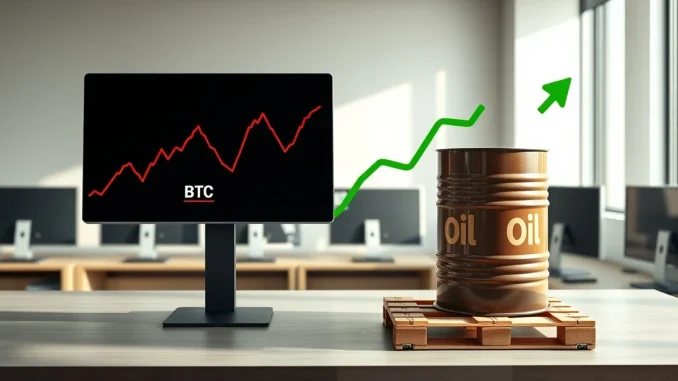
WASHINGTON, D.C. — Financial markets reacted swiftly to President Donald Trump’s national address on the Iran conflict Wednesday, with Bitcoin dropping sharply and crude oil prices surging past a key threshold. The immediate price moves underscore how geopolitical tensions in the Middle East continue to directly influence both traditional and digital asset markets.
Market Reaction to Presidential Remarks
According to price data tracked by financial terminals, the value of Bitcoin fell approximately 2% during and immediately after the President’s speech from the White House. The digital asset slid from around $68,250 to $66,904. Meanwhile, the global benchmark Brent crude oil price spiked more than 3%, breaking back above $100 per barrel to trade at $103.59. This reversal came just a day after oil prices had eased on hopes of a near-term resolution.
Also read: Taiwan Bitcoin Reserve: A Strategic Hedge Against War and Dollar Risk, Think Tank Urges
In his remarks, Trump stated the U.S. military is “very close” to finishing “Operation Epic Fury.” He claimed the campaign had degraded Iran’s nuclear and naval capabilities. “Very shortly, we are going to hit them extremely hard over the next 2 to 3 weeks,” Trump told the nation. This declaration of intensified near-term action appeared to trigger the risk-off move in cryptocurrencies and the supply-fear bid in oil.
The Strait of Hormuz Factor
The core issue for energy markets remains the Strait of Hormuz. Iran initiated a blockade of this critical waterway in February following U.S. and Israeli strikes. Approximately 20% of the world’s oil supply passes through the strait. Any threat to this transit pushes global oil prices higher due to perceived supply risk.
Also read: Huione Money Laundering Boss Extradited in Stunning Blow to Global Crypto Scam Network
Trump addressed this directly, predicting the blockade would end “naturally” once conflict ceased. “They’re going to want to be able to sell oil because that’s all they have to try and rebuild,” he argued. He connected this directly to consumer costs, stating, “the gas prices will rapidly come back down.” However, traders focused on his warning of weeks of hard strikes before any resolution, bidding oil prices up on the spot.
A Pattern of Crypto-Geopolitical Sensitivity
This event fits a recent pattern. Over the past several months, Bitcoin and other major cryptocurrencies have shown increased sensitivity to Middle East conflicts. Analysts note that digital assets, often touted as uncorrelated “safe havens,” have recently traded more like risk assets during such crises. They sell off alongside stocks when geopolitical fear spikes, particularly when energy security is threatened.
Data from market analytics firms shows a strengthening correlation between crypto volatility and oil price shocks since the Iran conflict escalated earlier this year. This suggests crypto markets are maturing and becoming more integrated with broader macroeconomic narratives, including geopolitics.
Stakes for Negotiations and Demands
Trump noted that discussions are ongoing, outlining a complex set of demands from both sides. The U.S. seeks:
- A full dismantling of Iran’s nuclear programs.
- Open commercial shipping channels in the region.
- An end to Iranian support for proxy militant groups.
Iran’s reported demands include a permanent ceasefire, financial compensation for damages, and a complete withdrawal of U.S. military forces from the region. The president characterized the current Iranian negotiation team as “less radical and much more reasonable.” But he added a stark warning: “if during this period of time no deal is made, we have our eyes on key targets.”
This creates a high-stakes window. Markets are now pricing in several weeks of elevated tension, with the potential for a sudden shift should a deal emerge. The uncertainty itself is a driver of volatility.
Historical Context and Market Implications
Historically, major Middle East conflicts have caused oil price spikes and stock market declines. The 1990 Gulf War and the 2003 Iraq invasion followed this pattern. The current situation adds a new variable: the reaction of cryptocurrency markets, which did not exist during those prior events.
What this means for investors is a period of heightened cross-asset correlation. A sustained oil price above $100 pressures inflation expectations. That can reinforce tighter monetary policy from central banks like the Federal Reserve, which is typically negative for growth-sensitive assets like tech stocks and cryptocurrencies. The immediate market reaction appears to be anticipating this chain of events.
Some portfolio managers are watching key technical levels. For Bitcoin, holding above $65,000 is seen as critical for maintaining its bullish market structure. For oil, a close above $105 could signal a run toward $110. The next few weeks of headlines will likely dictate which direction these levels break.
Conclusion
President Trump’s address reaffirmed that the Iran conflict remains a primary driver for global markets. The simultaneous drop in Bitcoin and surge in oil highlights how geopolitical risk transmits across asset classes. While the administration predicts a resolution that will lower gas prices and lift stocks, the immediate market verdict is one of caution. Traders are preparing for more volatility as the promised weeks of intense military action unfold. The path of both Bitcoin and oil prices will hinge on the actual progression of the conflict and the success of behind-the-scenes negotiations.
FAQs
Q1: Why did Bitcoin go down when Trump spoke?
Bitcoin often acts as a risk asset during geopolitical crises. The speech signaled escalating military action, prompting investors to sell risky holdings. Higher oil prices also raise inflation fears, which can lead to expectations of higher interest rates—a headwind for speculative assets.
Q2: How does conflict in Iran affect oil prices?
Iran is a major oil producer and influences the Strait of Hormuz, a vital shipping channel. Threats to supply or transportation make global oil markets nervous, causing prices to rise on the potential for shortages.
Q3: What did Trump say about ending the war?
Trump said the U.S. is “very close” to finishing military objectives but promised “extremely hard” strikes over the next 2-3 weeks. He said negotiations are ongoing and predicted the Strait of Hormuz would reopen naturally after conflict ends so Iran could sell oil.
Q4: Have crypto and oil been linked before?
Yes, especially since early 2024. Major conflicts that disrupt energy supplies often cause oil to rise and risk assets like crypto to fall simultaneously. This correlation has become more pronounced.
Q5: What happens to markets if a deal is reached soon?
A swift diplomatic resolution would likely cause oil prices to fall and could trigger a relief rally in stocks and cryptocurrencies. The key would be the reopening of the Strait of Hormuz and a credible de-escalation.

This article was produced with AI assistance and reviewed by our editorial team for accuracy and quality.



Be the first to comment