Global, April 2025: Binance Research has published a comprehensive analysis revealing that Bitcoin’s recent 50% price correction represents the ninth such reset in the cryptocurrency’s history, fitting established cyclical patterns. More significantly, the report identifies a fundamental market rotation toward durable investment vehicles, with spot Bitcoin ETFs demonstrating persistent demand and tokenized real-world assets attracting substantial institutional capital flows. This analysis provides crucial context for understanding current market dynamics beyond surface-level price movements.
Bitcoin’s Historical Pullback Pattern Confirms Market Maturity
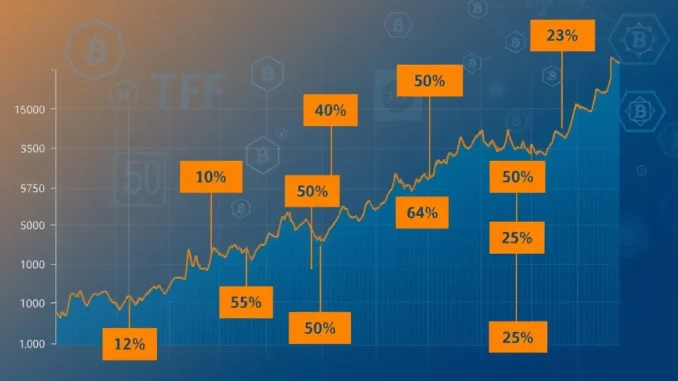
Binance Research’s latest quarterly report provides detailed statistical analysis of Bitcoin’s price history since 2011. The research team identified eight previous instances where Bitcoin experienced approximately 50% drawdowns from local highs, with the current correction marking the ninth occurrence. This pattern emerges across multiple market cycles, regardless of macroeconomic conditions or specific catalysts. The consistency of these resets suggests they represent structural features of Bitcoin’s maturation process rather than anomalous events.
Historical data reveals that previous 50% pullbacks typically lasted between 30 and 150 days, with recovery periods varying based on market conditions. The research team analyzed volatility metrics, trading volume patterns, and on-chain data across all nine instances, finding remarkable similarities in market behavior during these periods. These corrections consistently served to redistribute assets from short-term speculators to long-term holders, a process that strengthens the network’s foundational ownership structure.
Institutional Demand Shows Remarkable Resilience Through Volatility
Despite Bitcoin’s price volatility, institutional investment vehicles have demonstrated unprecedented stability during the current cycle. Spot Bitcoin ETFs, approved in early 2024, have maintained consistent inflows throughout the recent correction period. This represents a significant departure from previous cycles when institutional participation typically retreated during market downturns. The data suggests a fundamental shift in how sophisticated investors approach cryptocurrency exposure.
Several factors contribute to this resilient institutional demand:
- Regulatory clarity: Established frameworks for digital asset custody and trading
- Portfolio diversification: Recognition of Bitcoin’s non-correlation with traditional assets
- Inflation hedging: Continued concerns about monetary policy and currency devaluation
- Infrastructure maturity: Robust trading, custody, and settlement systems
Daily flow data from major ETF providers shows that institutional investors have used the pullback as an accumulation opportunity rather than an exit signal. This behavior pattern aligns with traditional market approaches where experienced investors view corrections as potential entry points rather than reasons for panic.
The Tokenized RWA Revolution Accelerates Institutional Adoption
Beyond Bitcoin-specific products, Binance Research identifies tokenized real-world assets (RWAs) as the next frontier for institutional cryptocurrency adoption. These digital representations of traditional assets—including treasury bonds, real estate, commodities, and private credit—are attracting substantial capital from institutional investors seeking blockchain efficiency without cryptocurrency volatility. The tokenized RWA market has grown approximately 300% since 2023, with projections suggesting continued exponential expansion.
This growth reflects several advantages of tokenization:
| Traditional Asset | Tokenization Benefit | Institutional Adoption Stage |
|---|---|---|
| U.S. Treasury Bonds | 24/7 trading, fractional ownership | Widespread implementation |
| Commercial Real Estate | Increased liquidity, global access | Growing pilot programs |
| Private Credit | Automated compliance, transparent terms | Early adoption phase |
| Precious Metals | Verifiable custody, instant settlement | Developing infrastructure |
Major financial institutions are increasingly allocating portions of their digital asset portfolios to tokenized RWAs, creating a more balanced approach to blockchain investment. This diversification strategy reduces overall portfolio volatility while maintaining exposure to blockchain technology’s efficiency benefits.
Market Structure Evolution Points Toward Greater Stability
The simultaneous trends of Bitcoin ETF resilience and RWA tokenization growth indicate a broader transformation in cryptocurrency market structure. Traditional metrics like exchange volume and retail participation no longer fully capture market dynamics. Instead, institutional flows through regulated vehicles and tokenization platforms are becoming increasingly significant indicators of market health and direction.
This structural evolution has several important implications:
- Reduced systemic risk: Diversified institutional participation decreases reliance on any single investor category
- Improved price discovery: Multiple sophisticated investor types contribute to more efficient markets
- Enhanced regulatory compliance: Institutional products operate within established frameworks
- Greater market accessibility: Multiple entry points cater to different risk profiles and investment theses
Market data shows decreasing correlation between Bitcoin’s price movements and retail sentiment indicators, suggesting institutional flows are becoming increasingly dominant in determining market direction. This represents a maturation milestone for the entire digital asset ecosystem.
Comparative Analysis of Market Cycle Characteristics
Binance Research provides detailed comparison between the current market cycle and previous periods of similar magnitude. The analysis reveals distinct differences in market participant behavior, regulatory environment, and investment vehicle availability. Most notably, institutional participation during the current pullback period remains substantially higher than during comparable phases of previous cycles, both in absolute terms and as a percentage of total market activity.
The research identifies three key differentiators from previous cycles:
First, regulatory frameworks in major jurisdictions now provide clearer guidelines for institutional participation. Second, financial infrastructure supporting digital assets has matured significantly, with robust custody solutions, trading venues, and settlement systems. Third, investment products have diversified beyond direct cryptocurrency exposure to include various structured products and tokenized traditional assets.
Conclusion: A Maturing Market Builds on Historical Patterns
Bitcoin’s ninth 50% pullback follows historical precedents while occurring within a fundamentally transformed market structure. The resilience of spot Bitcoin ETF demand and accelerating institutional adoption of tokenized real-world assets indicate a durable foundation beneath surface volatility. These developments suggest the cryptocurrency market is evolving from speculative trading toward integrated financial infrastructure. As institutional participation continues growing through diversified channels, market dynamics will likely exhibit greater stability while maintaining the innovative potential that initially attracted investors to blockchain technology. The current pullback represents not a failure of the cryptocurrency thesis but rather another step in its maturation process.
FAQs
Q1: How many previous 50% pullbacks has Bitcoin experienced according to Binance Research?
Binance Research identifies eight previous instances of approximately 50% price corrections before the current ninth occurrence, dating back to 2011.
Q2: What makes the current institutional demand different from previous cycles?
Current institutional demand demonstrates remarkable resilience during volatility, with spot Bitcoin ETFs maintaining consistent inflows and tokenized real-world assets attracting substantial capital despite market corrections.
Q3: What are tokenized real-world assets (RWAs)?
Tokenized RWAs are digital representations of traditional assets like treasury bonds, real estate, or commodities on blockchain networks, offering benefits like 24/7 trading, fractional ownership, and automated compliance.
Q4: How does this pullback compare duration-wise to previous instances?
Historical 50% pullbacks typically lasted 30-150 days, with recovery periods varying based on market conditions. The current correction falls within this historical range.
Q5: What market structure changes indicate greater stability?
Decreased correlation with retail sentiment, diversified institutional participation through multiple vehicles, and growing tokenized RWA markets all contribute to more stable market structure foundations.