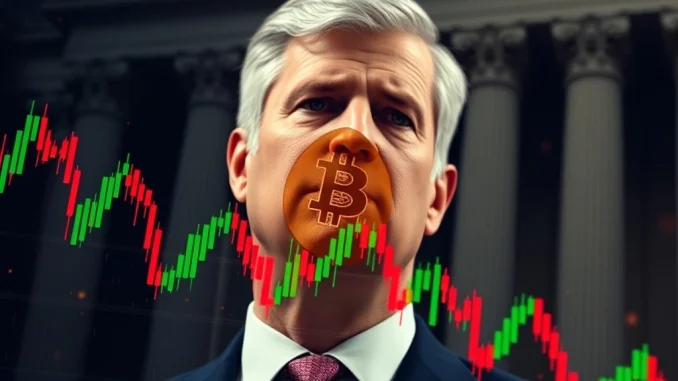
In a move that sent shockwaves through the cryptocurrency market, Federal Reserve Chair Jerome Powell has dashed hopes for near-term rate cuts, citing rising tariff inflation. This Bitcoin news today reveals how Powell’s hawkish stance is reshaping investor expectations and creating volatility across financial markets.
Jerome Powell’s Firm Stance on Rate Cuts
During his recent FOMC speech, Powell made it clear that the Federal Reserve won’t be easing monetary policy anytime soon. Key takeaways from his address:
- Inflationary pressures from tariffs are just beginning
- Reciprocal trade measures could amplify inflation in coming months
- September rate cut probability dropped from 63.7% to 47.1%
- Fed remains committed to data-driven decisions
How Tariff Inflation Is Impacting Bitcoin
The cryptocurrency market reacted swiftly to Powell’s remarks, with Bitcoin falling below $116,000. This reaction highlights:
| Factor | Impact on Bitcoin |
|---|---|
| Prolonged higher rates | Reduced risk appetite |
| Inflation concerns | Increased volatility |
| Market uncertainty | $0.2B crypto liquidation |
What’s Next for the Cryptocurrency Market?
Investors should watch these critical indicators:
- Upcoming PCE inflation data
- October and December Fed meetings
- Employment figures
- Global trade developments
The coming weeks will be crucial for cryptocurrency investors navigating this uncertain macroeconomic landscape. While Bitcoin has shown resilience in past Fed tightening cycles, the current combination of tariff inflation and hawkish policy creates unique challenges.
Frequently Asked Questions
Why did Bitcoin drop after Powell’s speech?
Bitcoin fell because Powell signaled higher-for-longer interest rates, reducing risk appetite among investors.
How does tariff inflation affect cryptocurrency?
Tariffs can increase inflationary pressures, prompting central banks to maintain tight monetary policy, which typically weighs on risk assets like Bitcoin.
When might the Fed consider rate cuts?
The market now sees October or December as more likely timing for potential rate cuts, depending on inflation data.
Is Bitcoin still a good hedge against inflation?
While Bitcoin was originally conceived as an inflation hedge, its recent correlation with risk assets has made this relationship more complex during periods of monetary tightening.