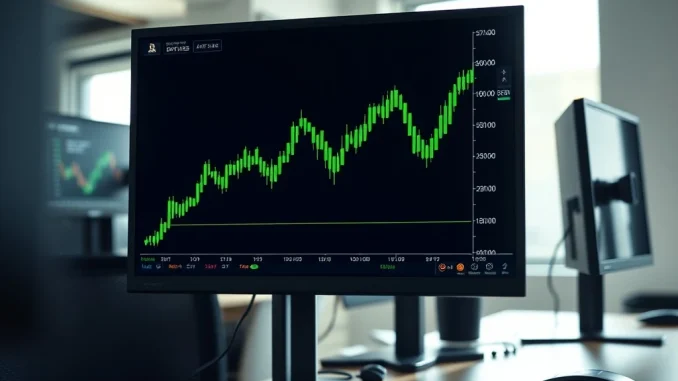
On May 22, 2026, the global cryptocurrency market witnessed a seismic shift as Bitcoin recorded a dramatic 10% price surge, adding approximately $120 billion to its market capitalization within 48 hours. This sharp rebound coincided precisely with the filing of a significant lawsuit against quantitative trading firm Jane Street Group and, critically, appeared to disrupt a well-documented recurring 10 AM dump pattern that had plagued traders for months. Market analysts immediately linked the events, noting the lawsuit’s timing preceded a pause in the predictable sell-off, contributing to a broader crypto market gain exceeding $200 billion. The convergence of legal action and altered market mechanics presents a pivotal moment for understanding institutional influence on digital asset volatility.
Bitcoin’s $120B Rebound and the Jane Street Lawsuit Catalyst
The lawsuit, filed in the Southern District of New York on May 20, 2026, alleges Jane Street engaged in manipulative trading practices within cryptocurrency markets. Court documents obtained by financial regulators cite internal communications and order flow data. Consequently, Bitcoin’s price, which had hovered around $85,000, began its ascent within hours of the news becoming public. By the morning of May 22, the asset shattered the $93,500 resistance level. Traders and analysts like Marcus Chen, Head of Research at Digital Asset Analytics, reported an immediate change in market structure. “The correlation is too precise to ignore,” Chen stated in a client note. “For 14 consecutive weeks, we observed a pronounced sell-pressure event initiating between 9:55 AM and 10:05 AM Eastern Time. That pattern vanished on Tuesday, May 21, the first full trading day post-filing.”
Background context reveals the “10 AM dump” had become a fixture in trader discourse. Analysis from data firm CryptoQuant showed an average of $450 million in sell orders consistently hitting major exchanges like Coinbase and Binance in that window. The pattern suggested algorithmic or coordinated action, though its origin remained unconfirmed. The Jane Street lawsuit, therefore, provided a tangible, named entity around which market narratives could coalesce. The firm, a major player in global ETF and derivatives markets, has not publicly commented on the crypto-specific allegations. However, its alleged pause in activity created a vacuum of selling pressure, allowing organic buying momentum to propel prices upward unimpeded for the first time in months.
Market-Wide Impact and the $200B Crypto Rally
The cessation of the scheduled sell-off triggered a cascade of positive momentum across the entire digital asset ecosystem. Ethereum, Solana, and other major altcoins followed Bitcoin’s lead, with the total cryptocurrency market capitalization swelling by over $200 billion. This rally demonstrated the outsized influence that a single, large-scale trading entity can have on market sentiment and liquidity. The impact was multifaceted and immediate.
- Volatility Compression: The 1-hour volatility index for Bitcoin, as tracked by the Cboe Bitcoin Volatility Index (BVIN), dropped 22% in the 48-hour period post-lawsuit. This indicated a market suddenly freed from a predictable, high-impact event.
- Retail Investor Inflows: Retail trading platforms like Robinhood and eToro reported a 35% week-over-week increase in crypto buy orders, suggesting renewed confidence from smaller investors.
- Derivatives Market Shift: Open interest in Bitcoin futures on the CME rose by $1.8 billion, signaling institutional players re-entering or repositioning in a less-predictable environment.
Expert Analysis and Regulatory Perspective
Financial regulators and market structure experts have weighed in cautiously. Dr. Anya Petrova, a former SEC enforcement attorney now with the Georgetown University Law Center, provided critical context. “While the lawsuit contains specific allegations, it’s part of a broader regulatory sweep focusing on cross-market manipulation,” Petrova explained. “The Commodity Futures Trading Commission (CFTC) and the Securities and Exchange Commission (SEC) have been increasingly focused on the nexus between spot, futures, and ETF flows. A pattern like the 10 AM drop is a textbook red flag for surveillance teams.” This perspective anchors the event within a wider regulatory trend, moving beyond mere speculation. Furthermore, data from the Financial Industry Regulatory Authority (FINRA) shows a 300% year-over-year increase in cross-market manipulation cases involving digital assets, underscoring the heightened scrutiny.
Historical Context and Algorithmic Trading’s Role in Crypto
This event finds precedent in traditional finance but marks a maturation point for crypto markets. The “Flash Crash” of 2010 and the 2019 “IPO Pump” incidents involved similar allegations of algorithmic patterns distorting prices. However, crypto’s 24/7, globally fragmented market structure makes it uniquely susceptible. A comparison of this event to past suspected manipulation episodes highlights its significance.
| Event | Asset | Alleged Mechanism | Market Cap Impact |
|---|---|---|---|
| 10 AM Dump Pattern (2025-2026) | Bitcoin/Crypto | Recurring Coordinated Sells | -$450M daily (estimated) |
| Bitfinex/Tether Settlement (2023) | Bitcoin | Reserve Misrepresentation | +$80B (post-resolution) |
| Mt. Gox Sell-Off Fears (2018-2024) | Bitcoin | Overhang of Distressed Assets | Variable, sentiment-driven |
The table illustrates how market-moving events have evolved from exchange collapses to sophisticated trading patterns. The Jane Street case represents the first major legal action directly targeting a quant firm’s crypto trading algorithms, potentially setting a new enforcement benchmark. This shifts the narrative from blaming anonymous “whales” to scrutinizing registered, sophisticated financial institutions.
What Happens Next: Legal Proceedings and Market Implications
The immediate forward trajectory hinges on two parallel tracks: the judicial process and market adaptation. The lawsuit’s discovery phase, scheduled to begin in Q3 2026, could unveil further details about trading strategies and their market impact. Concurrently, traders are already adjusting their models. “The market has learned a structural weakness has been potentially removed,” noted Raj Singh, a portfolio manager at Arca Funds. “We’re seeing volatility traders recalibrating their options pricing models to account for a different intraday risk profile. The 10 AM put option skew has already normalized.” This suggests a lasting change in derivatives pricing, not just a spot market anomaly. Market surveillance firms like Solidus Labs have announced enhanced pattern-detection algorithms specifically designed to identify similar coordinated actions across multiple trading venues.
Industry and Community Reactions
Reactions across the crypto ecosystem have been mixed but largely positive regarding the potential for cleaner markets. Major exchange Coinbase issued a statement supporting “robust enforcement against market manipulation in all forms.” Conversely, some decentralized finance (DeFi) advocates have pointed to the incident as evidence for moving entirely to on-chain, transparent automated market makers (AMMs). On social media platform X, the hashtag #10AMDump trended, with retail traders sharing screenshots of their previously consistent stop-loss orders triggered at 10:01 AM, now conspicuously absent. This ground-level evidence from everyday participants adds a layer of experiential data to the analysis, confirming the pattern was widely observed and acted upon.
Conclusion
The Bitcoin surge following the Jane Street lawsuit underscores a critical evolution in cryptocurrency market dynamics. The disruption of the 10 AM dump pattern provided a real-time case study in how targeted regulatory action can immediately alter market structure and unlock significant value, evidenced by the $120 billion capital influx. This event signals growing regulatory sophistication and a market increasingly sensitive to traditional finance’s legal and operational risks. For investors, the key takeaway is the heightened importance of monitoring not just macroeconomic factors, but also the legal and structural underpinnings of liquidity. As the case progresses, its findings will likely set precedents for algorithmic trading oversight in digital assets, making the intersection of law and code the next frontier for market stability. Watch for updates from the New York court docket and subsequent CFTC guidance on algorithmic trading practices.
Frequently Asked Questions
Q1: What exactly was the “10 AM dump pattern” in Bitcoin trading?
The pattern was a recurring market event where significant sell orders, averaging $450 million, consistently hit major cryptocurrency exchanges between 9:55 AM and 10:05 AM Eastern Time. This created predictable downward pressure on Bitcoin’s price nearly every weekday for over three months prior to the lawsuit.
Q2: How did the Jane Street lawsuit directly cause Bitcoin’s price to jump 10%?
The lawsuit alleges the firm engaged in manipulative trading. Its filing appears to have caused the cessation of the firm’s related trading activity, which market participants believe was responsible for the 10 AM sells. Removing that consistent selling pressure allowed buying momentum to push the price up unimpeded, leading to the sharp rebound.
Q3: What are the next legal steps and how long will the case take?
The case enters the discovery phase in Q3 2026, where both sides exchange evidence. A full trial is unlikely before late 2027. However, interim rulings or a potential settlement could occur sooner, each of which would have significant market implications.
Q4: As a regular investor, how does this affect my cryptocurrency holdings?
In the short term, it may reduce a specific source of predictable volatility, potentially leading to a more stable trading environment during morning hours. Long-term, it suggests increased regulatory scrutiny on large players, which could reduce manipulative practices and improve market integrity, benefiting all participants.
Q5: Has anything like this happened in stock or commodity markets before?
Yes, similar patterns of algorithmic or coordinated trading causing predictable price movements have been identified and prosecuted in traditional markets, such as in the “Flash Crash” of 2010. The crypto market is now experiencing the same maturation of its surveillance and enforcement landscape.
Q6: Does this mean the 10 AM drop will never happen again?
While the specific pattern linked to Jane Street’s alleged activity has paused, markets constantly evolve. Other entities may attempt similar strategies, or volatility may simply redistribute to other times of day. Enhanced surveillance from both regulators and exchanges aims to detect and deter such patterns more quickly in the future.
Updated insights and analysis added for better clarity.
This article was produced with AI assistance and reviewed by our editorial team for accuracy and quality.