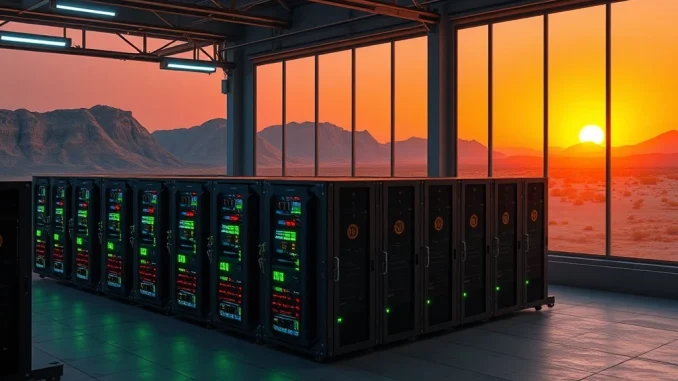
TEHRAN, March 15, 2026 — Global Bitcoin markets face renewed scrutiny as analysts examine Iran’s critical but often overlooked role in the cryptocurrency’s mining infrastructure. The Islamic Republic contributes an estimated 2 to 5 percent of the global Bitcoin hashrate, a significant portion concentrated in regions with vulnerable power grids. Energy sector observers report increasing strain on Iran’s electricity network, raising questions about what happens to Bitcoin if Iran’s hashrate vanishes overnight. Such a sudden disappearance would immediately reduce global mining power, temporarily slowing block production times until the network’s difficulty adjustment occurs approximately every two weeks. Market analysts at Chainalysis and Cambridge Centre for Alternative Finance confirm they are monitoring both oil price fluctuations and regional security risks that could impact Iran’s energy exports and domestic power stability.
Iran’s Bitcoin Hashrate Contribution and Grid Vulnerability
Iran emerged as a significant Bitcoin mining hub following the government’s 2019 decision to legalize cryptocurrency mining as an industrial activity. The country’s subsidized electricity rates, sometimes as low as $0.002 per kilowatt-hour for licensed miners, created powerful economic incentives. According to the Cambridge Bitcoin Electricity Consumption Index’s 2025 regional breakdown, Iran consistently ranks among the top ten countries by hashrate share, with estimates ranging from 2% during peak global activity to nearly 5% during off-peak periods. Dr. Larisa Yarovaya, Associate Professor of Finance at the University of Southampton and co-author of multiple studies on cryptocurrency mining geography, notes the concentration risk. “Iran’s mining operations are not evenly distributed across its territory,” Yarovaya explained in a recent research briefing. “They cluster in specific provinces with access to subsidized industrial power zones, particularly near natural gas fields and hydroelectric dams. This geographic concentration amplifies the impact of any localized grid failure.”
The vulnerability stems from Iran’s aging electricity infrastructure and seasonal demand patterns. Each summer, domestic consumption spikes due to air conditioning use, forcing authorities to impose blackouts that sometimes affect industrial zones. In January 2026, Iran’s Energy Ministry announced plans to cut power to unlicensed cryptocurrency miners for the fourth consecutive year, acknowledging grid strain. However, licensed operations in approved industrial parks also face intermittent outages. A comprehensive 2025 report by the International Energy Agency highlighted that Iran’s power grid has suffered from underinvestment and faces technical losses exceeding 15% of generated electricity. These systemic weaknesses mean that even licensed Bitcoin mining facilities, which reportedly consume between 500 to 600 megawatts at peak capacity according to Iranian energy officials, operate in an environment of electrical uncertainty.
Immediate Impact on Global Bitcoin Network Operations
A sudden loss of Iran’s entire Bitcoin hashrate would trigger immediate, measurable effects on the global network’s performance. The Bitcoin protocol automatically adjusts mining difficulty every 2,016 blocks (approximately every two weeks) to maintain a target block time of 10 minutes. If a significant portion of hashing power disappears between adjustments, block times increase proportionally. Mining engineer and Braiins Insights analyst Alejandro De La Torre provided specific calculations. “If Iran contributes 4% of the global hashrate and that vanishes instantly, the immediate effect would be block times extending to about 10 minutes and 25 seconds,” De La Torre stated. “This seems minor, but across a full day, it translates to approximately 138 blocks instead of 144, reducing daily Bitcoin issuance by about 0.75 BTC initially. The network would continue at this slower pace until the next difficulty adjustment, which could see a drop of 4-5%.”
- Transaction Confirmation Delays: Longer block times mean users and exchanges waiting for transaction confirmations would experience slightly slower processing. During periods of high mempool congestion, this effect compounds.
- Mining Revenue Redistribution: The remaining global miners would temporarily capture a larger share of block rewards and transaction fees as competition decreases, creating a short-term profitability spike for operations outside Iran.
- Network Security Metric Fluctuation: The total hashrate, a key security metric watched by institutional investors, would show a sudden decline, potentially affecting short-term market sentiment despite no change to Bitcoin’s cryptographic security.
Expert Perspectives on Geopolitical and Market Implications
Beyond technical impacts, analysts emphasize the geopolitical signaling of such an event. “The market watches Iran primarily for oil price implications,” noted Marcus Sotiriou, analyst at digital asset broker GlobalBlock. “However, Bitcoin’s growing institutional adoption means its mining infrastructure now intersects with traditional energy and geopolitical analysis. A sudden hashrate drop from Iran wouldn’t crash Bitcoin—the network has survived larger losses—but it would highlight the cryptocurrency’s embeddedness in global energy systems and regional politics.” The Iranian government’s complex relationship with cryptocurrency mining adds layers to this analysis. While authorities have periodically seized mining equipment and cut power to unlicensed operations, they also recognize the sector as a potential source of foreign currency revenue through energy exports embodied in mined Bitcoin.
Cambridge Centre for Alternative Finance researchers point to precedent. Their case study on China’s 2021 mining ban, which removed an estimated 50% of global hashrate virtually overnight, demonstrated Bitcoin’s resilience. The network continued operating without interruption, difficulty adjusted downward by a historic 28% within weeks, and hashrate eventually migrated and recovered. However, CCAF lead researcher Michel Rauchs cautions against direct comparison. “China’s ban was a policy decision affecting a geographically dispersed industry,” Rauchs explained. “An Iranian grid collapse would be an infrastructure failure affecting a concentrated region. The technical outcome for Bitcoin is similar—hashrate loss followed by difficulty adjustment—but the causes, warning signs, and recovery pathways differ substantially.”
Comparative Analysis: Historical Hashrate Disruptions
Bitcoin’s fourteen-year history includes several significant hashrate disruptions, providing context for potential Iranian scenarios. The network’s difficulty adjustment mechanism has successfully navigated each event, though with varying recovery timelines and market reactions. The table below compares three major historical disruptions with a hypothetical Iranian event based on current estimates.
| Event | Estimated Hashrate Loss | Primary Cause | Difficulty Adjustment After | Full Recovery Timeline |
|---|---|---|---|---|
| China Mining Ban (June 2021) | ~50% | Policy/Regulatory | -28% (largest ever) | ~6 months |
| Kazakhstan Internet Shutdown (Jan 2022) | ~13% | Political Unrest/Infrastructure | -9% | ~3 months |
| Texas Winter Storm (Feb 2023) | ~3-4% | Natural Disaster/Grid Emergency | -4% | ~3 weeks |
| Iran Grid Collapse (Hypothetical) | ~2-5% | Infrastructure Failure/Energy Crisis | Estimated -2% to -5% | Unknown (depends on cause duration) |
The comparative data reveals several patterns. First, larger percentage losses trigger more substantial difficulty reductions. Second, recovery timelines depend heavily on whether the cause is permanent (like China’s ban) or temporary (like Texas’s storm). An Iranian grid collapse could fall into either category depending on the severity of infrastructure damage. Third, geographic concentration matters. China’s mining was spread across multiple provinces, allowing some gradual migration. Iran’s mining appears more concentrated, potentially making recovery dependent on rebuilding local infrastructure rather than equipment relocation.
Forward-Looking Analysis: Monitoring Indicators and Contingency Plans
Industry observers identify specific indicators that could signal increasing risk to Iran’s Bitcoin mining operations. These include official announcements from Iran’s Energy Ministry regarding summer load-shedding schedules, data from global hashrate distribution services like Foundry USA’s pool geography reports, and satellite imagery analysis of heat signatures from known mining facilities. Mining companies with global operations have already developed contingency strategies. “Diversification is the only real protection,” stated Fred Thiel, CEO of Marathon Digital Holdings, in a recent earnings call. “Our strategy involves distributing operations across multiple jurisdictions with different risk profiles. While we don’t operate in Iran, the principle applies universally: don’t concentrate critical infrastructure in single points of failure.”
The Bitcoin network itself incorporates the ultimate contingency plan through its difficulty adjustment algorithm. Regardless of cause—whether regulatory action, natural disaster, or infrastructure failure—the protocol automatically recalibrates mining difficulty to maintain functionality. This built-in resilience forms the core response to any regional hashrate loss. However, as Bitcoin becomes more integrated with traditional energy grids and geopolitical dynamics, short-term market reactions may increasingly reflect these interconnections, even when the network’s technical operation remains robust.
Industry and Government Reactions to Potential Scenarios
Responses from different stakeholder groups reveal varying priorities. Major mining pools like Antpool and ViaBTC, which include Iranian miners, emphasize the network’s historical resilience in public communications while privately advising participants about geographic risk. Iranian mining operators, speaking anonymously due to regulatory sensitivities, describe implementing localized backup solutions including diesel generators, though fuel shortages and costs make these temporary measures at best. Government responses remain multifaceted. Iranian authorities continue both cracking down on unlicensed mining to preserve grid stability while simultaneously promoting licensed mining in designated industrial zones as an export-oriented industry. This contradictory approach reflects the tension between immediate energy constraints and longer-term economic strategy.
International reactions focus on energy security implications. The U.S. Department of Energy’s 2025 cryptocurrency mining report briefly mentions Iran as an example of how cryptocurrency operations can stress developing grid infrastructure. European Union policymakers debating the Energy Efficiency of Cryptocurrencies Act have cited Iran as a case study in why geographic hashrate transparency matters for assessing network environmental impact. These perspectives illustrate how a technical event—a regional hashrate drop—ripples into policy debates far removed from Bitcoin’s code.
Conclusion
Iran’s Bitcoin hashrate represents a small but non-trivial component of global mining infrastructure, concentrated in a region with documented grid vulnerabilities. A sudden disappearance of this hashrate would temporarily slow Bitcoin block production, redistribute mining revenue, and trigger a downward difficulty adjustment within weeks. Technical analysis confirms the network would continue operating without interruption, as it has through larger disruptions. However, such an event would highlight Bitcoin’s growing entanglement with regional energy politics and infrastructure stability. Market participants should monitor Iranian energy announcements and global hashrate distribution reports for early warning signs. Ultimately, Bitcoin’s decentralized design and adaptive difficulty mechanism provide inherent resilience against regional failures, but individual miners and investors must assess their own exposure to geographic concentration risks. The evolving story of Iran’s Bitcoin mining sector serves as a real-time case study in cryptocurrency’s complex relationship with energy systems and geopolitical realities.
Frequently Asked Questions
Q1: How much Bitcoin hashrate does Iran actually contribute?
Estimates vary between 2% and 5% of the global total, depending on seasonal factors and reporting methodologies. The Cambridge Centre for Alternative Finance’s 2025 index placed Iran’s share at approximately 3.8% during the measurement period, while real-time pool data often shows lower percentages during peak global mining activity.
Q2: What would happen to Bitcoin transaction times if Iran’s mining stopped suddenly?
Block times would temporarily increase from 10 minutes to approximately 10 minutes and 25 seconds if Iran contributes 4% of hashrate. This modest increase might cause slightly slower confirmations during network congestion but would not halt transactions. The effect would last until the next difficulty adjustment (about two weeks maximum).
Q3: Has Bitcoin ever lost a large percentage of hashrate before?
Yes. Most notably, China’s 2021 mining ban removed an estimated 50% of global hashrate. The network continued operating, difficulty adjusted downward by 28% over subsequent adjustments, and hashrate fully recovered within six months as miners relocated to other countries.
Q4: Why does Iran have significant Bitcoin mining despite energy issues?
Iran legalized industrial cryptocurrency mining in 2019, offering heavily subsidized electricity rates (sometimes below $0.005/kWh) to attract investment. This created economic incentives despite grid reliability problems. Mining also offers potential hard currency revenue through Bitcoin sales on international markets.
Q5: How does Bitcoin’s difficulty adjustment protect against hashrate loss?
The protocol automatically recalculates mining difficulty every 2,016 blocks (roughly two weeks) based on the average block time during that period. If hashrate drops causing slower blocks, the next adjustment lowers difficulty, making it easier for remaining miners to find blocks and restoring the 10-minute target.
Q6: Should Bitcoin investors worry about Iran’s mining situation?
Long-term investors need not worry about network functionality—Bitcoin has proven resilient to larger disruptions. However, short-term traders should be aware that significant hashrate changes can affect market sentiment and mining stock valuations, even when the underlying protocol remains secure.
Updated insights and analysis added for better clarity.
This article was produced with AI assistance and reviewed by our editorial team for accuracy and quality.