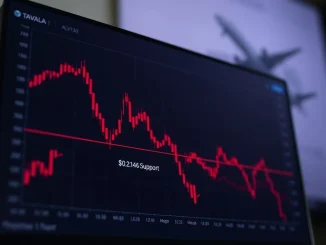
Global financial markets witnessed a significant shift in January 2026 as the Bitcoin-to-gold ratio reached its lowest point since November 2023. This 18-month low signals changing investor sentiment amid geopolitical tensions and economic uncertainty. The ratio now stands at 18.5 ounces of gold per Bitcoin, reflecting gold’s resurgence as the preferred safe-haven asset.
Gold’s Remarkable Rally and Market Dynamics
Gold prices surged to unprecedented levels in early 2026, reaching $4,888 per ounce. This represents a substantial increase from previous records. Several factors contributed to this remarkable rally. Geopolitical tensions in multiple regions created uncertainty in traditional markets. Central bank policies also played a crucial role in gold’s performance.
The People’s Bank of China continued its accumulation strategy, increasing reserves above 74 million ounces. This consistent buying pattern demonstrates institutional confidence in gold’s long-term value. Major financial institutions revised their forecasts upward in response to these developments.
- Citigroup projects a test of $5,000 per ounce
- Goldman Sachs identifies gold as its strongest long-term investment
- ICBC Standard Bank predicts potential peaks reaching $7,000
Nicky Shiels, a strategist at MKS PAMP, provided context about gold’s performance. She noted that 2025 represented historic gains for precious metals. While such extraordinary returns may not repeat, she expects solid annual increases. Gold’s current movement represents a secular trend rather than speculative commodity trading.
Bitcoin’s Position in the Current Financial Landscape
Bitcoin maintained relative stability during gold’s surge, trading around $89,920. The cryptocurrency market experienced modest inflows of approximately $2 billion weekly. This contrasts sharply with gold’s dramatic appreciation. The divergence highlights changing risk appetites among institutional investors.
Historical data reveals important patterns about asset rotation. Periods of extreme divergence between Bitcoin and gold often precede significant market shifts. Charles Edwards of Capriole Investments analyzed gold’s historical bull markets. His research suggests potential returns of +150% from current levels. This could push gold above $12,000 within three to ten years.
| Metric | Bitcoin | Gold |
|---|---|---|
| Current Price | $89,920 | $4,888/oz |
| Weekly Inflows | $2 billion | Not specified |
| Ratio Position | 18.5 oz/BTC | Historic low |
| Institutional Forecast | Q1 2026 rotation | $5,000-$7,000 |
Analyst Perspectives on Market Cycles
Market analysts observe that the Bitcoin-gold ratio currently experiences its fifth corrective wave. This technical analysis suggests the current cycle approaches completion. Decode, a prominent crypto analyst, characterizes this phase as the end of the corrective period. Historical patterns indicate that extreme lows often precede explosive catch-up movements.
The cryptocurrency market undergoes a pivotal transformation phase. Bitcoin transitions from its perception as purely speculative toward institutional acceptance. Several factors support this evolution. Erosion of confidence in fiat currencies creates opportunities for alternative stores of value. Sovereign debt concerns and monetary policies further drive this shift.
Institutional Activity and Strategic Positioning
Despite current market conditions, institutional activity continues in cryptocurrency markets. Strategy recently added 22,305 Bitcoins to its portfolio. This accumulation demonstrates long-term confidence despite short-term ratio pressures. The move suggests sophisticated investors position themselves for future market rotations.
Gold’s current dominance reflects traditional safe-haven behavior during uncertainty. However, Bitcoin’s fundamental characteristics offer distinct advantages. Its apolitical nature and transparent blockchain provide unique value propositions. The fixed supply of 21 million coins creates scarcity similar to precious metals.
Market participants monitor several key indicators for potential shifts. These include central bank policy changes, geopolitical developments, and institutional adoption patterns. The relationship between traditional and digital assets continues evolving as financial markets mature.
Future Projections and Market Expectations
Analysts anticipate potential capital rotation by the first quarter of 2026. This timeframe aligns with historical patterns of asset class performance. The convergence of several factors could drive this shift. Institutional adoption of cryptocurrency infrastructure continues progressing. Regulatory frameworks mature in major financial jurisdictions.
Gold’s performance establishes important precedents for store-of-value assets. Its success validates the concept of non-sovereign wealth preservation. Bitcoin potentially represents a digital evolution of this centuries-old concept. The technological advantages of blockchain could enhance traditional store-of-value characteristics.
Market cycles demonstrate that extreme valuations often correct toward historical means. The current Bitcoin-gold ratio divergence presents interesting dynamics for portfolio managers. Diversification strategies increasingly incorporate both traditional and digital assets. This approach balances short-term market conditions with long-term transformational trends.
Conclusion
The Bitcoin vs gold ratio reaching an 18-month low reflects complex market dynamics during geopolitical uncertainty. Gold’s resurgence as the preferred safe-haven asset demonstrates traditional responses to global tensions. However, Bitcoin maintains fundamental characteristics that position it for future institutional adoption. Market analysts monitor potential capital rotation in early 2026 as historical patterns suggest convergence opportunities. Both assets continue evolving within global financial systems as stores of value with distinct characteristics and applications.
FAQs
Q1: What does the Bitcoin-gold ratio measure?
The ratio measures how many ounces of gold one Bitcoin can purchase. It indicates relative strength between these alternative store-of-value assets.
Q2: Why has gold outperformed Bitcoin recently?
Geopolitical tensions and economic uncertainty traditionally drive investors toward gold. Its established safe-haven status attracts capital during volatile periods.
Q3: What is the historical significance of ratio extremes?
Historical data shows that extreme ratio levels often precede significant market rotations. These periods can indicate potential buying or selling opportunities.
Q4: How do institutions view Bitcoin versus gold?
Institutions increasingly recognize both as legitimate asset classes. Gold represents traditional safe-haven allocation while Bitcoin offers digital scarcity and technological advantages.
Q5: What factors could change the current trend?
Several developments could shift momentum including regulatory clarity, institutional adoption acceleration, macroeconomic policy changes, or technological breakthroughs in cryptocurrency infrastructure.
Updated insights and analysis added for better clarity.
This article was produced with AI assistance and reviewed by our editorial team for accuracy and quality.