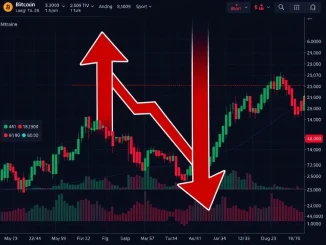
March 6, 2026 — Prominent cryptocurrency analyst Benjamin Cowen has declared the long-running debate over Bitcoin’s four-year market cycle officially finished. In an exclusive interview, the founder of Into The Cryptoverse stated that arguments about the cycle’s relevance were pointless, asserting that Bitcoin continues to follow its established historical pattern. Cowen’s declaration comes as Bitcoin trades around $70,000, following an October 2025 all-time high of $126,000 and a subsequent correction to $60,000 in February. His analysis places 2026 firmly as a “bear market year” with October potentially marking a critical turning point, directly challenging a growing consensus among major industry figures who believe the traditional cycle model is dead.
Benjamin Cowen Declares the Four-Year Cycle Debate Settled
Benjamin Cowen, who has amassed over 1.1 million followers on social media platform X, expressed frustration with the ongoing debate. “I honestly don’t know why people keep saying it’s not the thing,” Cowen told Magazine. “Bitcoin tops when it always tops, like every cycle, it tops in the fourth quarter.” He criticized what he called “mental gymnastics” employed by analysts seeking reasons why the current market must differ from historical precedents. Cowen holds a PhD in molecular dynamics simulations of radiation damage in ceramics and studied aerospace engineering, including an internship at NASA, before transitioning to crypto analysis. His technical background informs his data-driven approach to chart patterns, lending weight to his cyclical perspective.
Despite significant structural changes in the cryptocurrency landscape since 2021, including massive institutional adoption via spot Bitcoin ETFs and evolving macro catalysts, Cowen insists the broader market pattern remains intact. He points to the October 2025 peak as the latest example of Bitcoin adhering to its historical rhythm. This view directly counters narratives that new institutional capital has fundamentally altered Bitcoin’s market behavior, rendering old cycle models obsolete.
2026 Forecasted as a Bitcoin Bear Market Year
Cowen’s central thesis is straightforward: 2026 will be a bear market year for Bitcoin. “I do think it’s a bear market year. I don’t think that Bitcoin is going to be hitting all-time highs in 2026,” he stated. He bases this on the duration of previous bear markets, which he notes lasted “about a year.” Cowen speculates that the current downturn could simply span “October 2025 to October 2026,” suggesting a potential bottom around the tenth month of this year. This timeline finds an echo in the prediction of veteran trader Peter Brandt, who recently forecasted Bitcoin could fall as low as $60,000 by the third quarter of 2026.
The market data supports the bearish characterization. After reaching its $126,000 peak, Bitcoin entered a sustained downtrend, losing over 50% of its value to bottom near $60,000 in February 2026. The recent recovery to above $70,000 represents a bounce, but not necessarily a trend reversal in Cowen’s view. This price action mirrors the consolidation and correction phases observed in the years following previous cycle peaks, such as 2014 and 2018.
- Cycle Timing Intact: Peak in Q4 2025 aligns with historical cycle tops in 2013, 2017, and 2021.
- Bear Market Duration: Previous post-peak corrections lasted approximately 12-14 months.
- Price Action Similarity: The sharp drop from ATH followed by volatile consolidation matches prior cycle behavior.
Industry Heavyweights Challenge the Cycle Thesis
Cowen’s stance places him at odds with a formidable group of industry executives and analysts. Ark Invest CEO Cathie Wood, BitMEX co-founder Arthur Hayes, CryptoQuant founder Ki Young Ju, and Bitwise executives Matt Hougan and Hunter Horsley have all expressed views that the traditional four-year cycle is no longer a reliable model. Raoul Pal, founder of Real Vision, has also championed this perspective. In December 2025, asset management giant Grayscale published research expecting “rising valuations in 2026 and the end of the so-called ‘four-year cycle.'” This institutional consensus argues that the influx of regulated, long-term capital via ETFs and corporate treasuries has dampened the volatile, retail-driven patterns that defined earlier cycles.
A Key Difference: The Missing Altcoin Mania
While Cowen defends the cycle’s timing, he acknowledges one critical divergence from the 2017 and 2021 cycles: the absence of a massive rotation from Bitcoin into altcoins. “If there was one key difference this cycle, Cowen says it wasn’t the timing; it was the lack of a major altcoin mania.” He attributes this to the nature of the October 2025 top, which he compares to the 2019 top that occurred on “apathy rather than euphoria.”
“In 2021 and in 2017, Bitcoin topped on euphoria. And when you top on euphoria, when you have a parabolic rally, then you get a rotation into high-risk assets, like altcoins,” Cowen explained. “But when you top on apathy, like in 2019, you don’t get that rotation. And the reason you don’t get that rotation is that there’s just no one left to sell the altcoins to.” He links this market psychology to macroeconomic conditions, noting that both the 2019 and 2025 tops occurred just months before the end of Federal Reserve quantitative tightening cycles, creating a backdrop of caution rather than reckless speculation.
| Cycle Peak Year | Market Sentiment at Top | Subsequent Altcoin Rotation |
|---|---|---|
| 2017 | Euphoria/Parabolic | Massive (“Altseason”) |
| 2021 | Euphoria/Parabolic | Significant |
| 2025 | Apathy/Consolidation | Minimal |
Navigating Public Market Calls and Past Mistakes
With a large public following, Cowen is no stranger to scrutiny when his predictions miss the mark. He candidly discussed his most significant error of the current cycle, which occurred in the fourth quarter of 2023. At that time, he expected Bitcoin to stall below $35,000 and trade sideways, resuming its ascent in 2024. Instead, the market broke out sharply in October 2023. “That ended up playing out differently than how I thought it was going to, and I kind of had to lick my wounds for a little while after that one,” Cowen admitted. He acknowledges the double-edged sword of public analysis: “When you do make a lot of public calls about larger investing themes, when they play out, it’s great; when they don’t play out, you hear about it for a long time.” This experience underscores the difficulty of precise timing, even within a broader cyclical framework he believes is still valid.
The Road Ahead for Bitcoin in 2026
The immediate future for Bitcoin, according to Cowen’s model, involves navigating the remainder of a bear market phase. Investors and traders will watch key support levels, with the $60,000 February low being a critical technical and psychological floor. The primary question is whether October 2026 will indeed serve as a cyclical pivot point, marking the end of the downtrend and the beginning of accumulation toward the next cycle high, theoretically due around 2029. This forward-looking view remains contingent on macroeconomic factors, particularly Federal Reserve policy, which Cowen has consistently highlighted as a primary driver alongside Bitcoin’s internal halving cycle.
Conclusion
Benjamin Cowen’s definitive statement ends a years-long debate within cryptocurrency circles, at least from his perspective. He asserts that Bitcoin’s four-year cycle remains the dominant market force, with 2026 unfolding as a predictable bear market year following the Q4 2025 peak. The key evidence is the consistent timing of market tops and the historical duration of corrections. While a major point of differentiation—the lack of altcoin euphoria—exists, Cowen contextualizes it within similar macro conditions and market sentiment, rather than seeing it as a cycle-breaker. As the year progresses, the clash between this traditional cycle theory and the new institutional narrative will be tested by price action, with October 2026 looming as a decisive month for the Bitcoin four-year cycle thesis.
Frequently Asked Questions
Q1: What is Bitcoin’s four-year cycle?
The Bitcoin four-year cycle refers to a observed pattern where Bitcoin’s price experiences major bull markets approximately every four years, often linked to its “halving” event where miner rewards are cut in half. The cycle typically includes phases of accumulation, bull run, peak, bear market, and consolidation.
Q2: Why does Benjamin Cowen believe the cycle debate is over?
Cowen believes the debate is over because Bitcoin’s price action continues to follow the historical pattern, specifically peaking in the fourth quarter of its cycle year (2025), just as it did in 2013, 2017, and 2021. He views arguments for a broken cycle as unnecessary complexity.
Q3: What is Cowen’s prediction for Bitcoin’s price in 2026?
Cowen predicts 2026 will be a “bear market year” where Bitcoin does not reach new all-time highs. He suggests the downtrend that began in October 2025 could last until October 2026, with the price potentially bottoming in that timeframe.
Q4: How does Cowen’s view differ from other experts like Cathie Wood?
Cowen’s view directly opposes experts like Cathie Wood and Ark Invest, who believe massive institutional adoption via ETFs has fundamentally changed Bitcoin’s market structure, making the old four-year cycle model obsolete. Cowen argues the underlying pattern persists despite new participants.
Q5: What was the key difference Cowen identified in this cycle?
The key difference was the lack of a major “altcoin season” or rotation of capital from Bitcoin into smaller cryptocurrencies after the peak. Cowen attributes this to the market topping on “apathy” rather than the “euphoria” seen in 2017 and 2021.
Q6: What should investors watch for in late 2026 according to this analysis?
Investors following Cowen’s cyclical analysis should monitor the October-November 2026 period for potential signs of a market bottom and trend change, which could signal the start of a new accumulation phase leading into the next anticipated bull market.