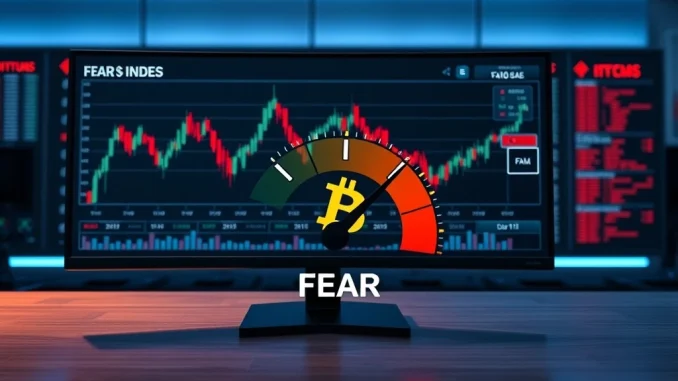
Global, March 2025: Cryptocurrency markets are experiencing a significant sentiment shift as Bitcoin fear reaches extreme levels not seen in four years. According to a new analysis from digital asset financial services platform Matrixport, these conditions may signal a crucial inflection point for the world’s leading cryptocurrency. The firm’s research indicates that current fear readings align with historical patterns of seller exhaustion, potentially setting the stage for a market reversal.
Understanding the Extreme Bitcoin Fear Signal
Matrixport’s latest market intelligence report reveals that Bitcoin sentiment has deteriorated to rare lows, with fear indicators reaching their most extreme readings since early 2021. The analysis examines multiple sentiment metrics, including social media sentiment analysis, derivatives market positioning, and on-chain transaction patterns. These indicators collectively point toward overwhelming negative sentiment among market participants, a condition that historically precedes significant market turning points.
The firm’s research team tracks what they term “seller exhaustion zones” – periods when sustained selling pressure depletes the pool of willing sellers, creating conditions ripe for price stabilization or recovery. Current data suggests Bitcoin may be entering such a zone, though the timing and magnitude of any potential reversal remain uncertain. Market analysts note that similar sentiment extremes occurred before major Bitcoin rallies in 2019 and 2020, though past performance never guarantees future results.
Historical Context of Crypto Market Sentiment Extremes
Cryptocurrency markets have experienced several notable sentiment extremes throughout Bitcoin’s history. The most famous occurred during the 2018 bear market bottom, when fear reached similar extremes before Bitcoin began its recovery toward new all-time highs. Other significant sentiment inflection points include:
- March 2020: Pandemic-induced market crash created extreme fear before Bitcoin’s dramatic recovery
- July 2021: Sentiment reached extreme greed before the market correction
- November 2022: FTX collapse triggered fear levels comparable to current readings
Matrixport’s analysis compares current conditions to these historical precedents, noting both similarities and important differences in market structure. The firm emphasizes that while sentiment indicators provide valuable context, they represent just one piece of the market analysis puzzle. Fundamental factors including regulatory developments, institutional adoption rates, and macroeconomic conditions continue to play crucial roles in Bitcoin’s price discovery process.
Technical Indicators Supporting the Inflection Thesis
Beyond sentiment analysis, several technical indicators support the potential inflection point thesis. The Relative Strength Index (RSI) for Bitcoin has reached oversold territory on multiple timeframes, suggesting diminished selling momentum. On-chain metrics show long-term holders accumulating positions despite price weakness, while short-term speculators have largely exited the market. These patterns typically characterize market bottoms rather than ongoing downtrends.
Derivatives markets provide additional context, with funding rates turning negative across major exchanges – a condition that often precedes short squeezes and rapid price recoveries. Open interest has declined significantly from recent highs, indicating reduced leverage in the system and potentially lower volatility ahead. Matrixport’s report carefully notes that these technical conditions create potential for reversal but don’t guarantee immediate price appreciation.
Market Structure and Current Trading Dynamics
The current market structure reveals several important characteristics. Exchange reserves have declined steadily as investors move Bitcoin to cold storage, reducing immediate selling pressure. Miner selling has moderated from earlier peaks, removing another source of consistent selling. Meanwhile, institutional flows show mixed signals, with some products experiencing outflows while others see steady accumulation from long-term investors.
Liquidity conditions remain challenging, with bid-ask spreads widening during periods of heightened volatility. This thin liquidity can amplify both downward and upward price movements, creating potential for rapid sentiment shifts. Market makers have reduced their presence during the recent downturn, contributing to these liquidity challenges. The table below summarizes key market metrics:
| Metric | Current Reading | Historical Average | Interpretation |
|---|---|---|---|
| Fear & Greed Index | 15 (Extreme Fear) | 45 (Neutral) | Strongly oversold sentiment |
| RSI (Weekly) | 32 | 50 | Approaching oversold territory |
| Exchange Net Flow | -12,000 BTC/month | Variable | Accumulation pattern |
| Miner Selling Pressure | Moderate | Variable | Reduced from peaks |
Psychological Factors in Market Cycles
Market psychology plays a crucial role in cryptocurrency cycles. The current extreme fear reading reflects what behavioral economists call “recency bias” – investors overweight recent negative experiences when making decisions. This psychological pattern often leads to selling at precisely the wrong time, as fear peaks near market bottoms. Understanding these psychological dynamics helps explain why sentiment extremes frequently coincide with inflection points.
Professional traders monitor several psychological indicators beyond standard sentiment metrics. Social media sentiment analysis tracks emotional language patterns across platforms. Search volume for terms like “Bitcoin crash” and “crypto bankruptcy” provides insight into retail investor concerns. Even mainstream media coverage follows predictable patterns, with peak negative coverage often aligning with market turning points. Matrixport’s analysis incorporates these psychological factors alongside traditional metrics.
Potential Implications for Bitcoin Investors
The current sentiment extreme carries several important implications for market participants. For long-term investors, extreme fear periods historically represented accumulation opportunities, though timing remains challenging. Dollar-cost averaging strategies can mitigate timing risks during volatile periods. For active traders, sentiment extremes often precede volatility expansions in both directions, requiring careful risk management.
Institutional investors face different considerations. Many institutions operate with longer time horizons and different risk parameters than retail participants. Some view sentiment extremes as entry points for strategic allocations, while others wait for clearer technical confirmations before increasing exposure. The diversity of institutional approaches contributes to market complexity during inflection periods.
Regulatory developments continue to influence market sentiment, with recent clarity in several jurisdictions potentially providing fundamental support despite negative sentiment readings. Adoption metrics show continued growth in Bitcoin network usage, with active addresses and transaction counts maintaining healthy levels even during price weakness. These fundamental factors provide important context for interpreting sentiment data.
Conclusion
Matrixport’s identification of extreme Bitcoin fear reaching four-year lows highlights a potentially significant market development. While sentiment indicators alone cannot predict market movements with certainty, historical patterns suggest such extremes often precede important inflection points. The combination of oversold technical indicators, improving fundamentals, and extreme psychological pessimism creates conditions that warrant close monitoring by market participants. As always in cryptocurrency markets, prudent risk management and diversified strategies remain essential, regardless of short-term sentiment readings. The coming weeks will reveal whether current conditions indeed mark a major Bitcoin market inflection point or represent another phase in the ongoing market cycle.
FAQs
Q1: What does “extreme fear” mean in cryptocurrency markets?
Extreme fear refers to sentiment indicators showing overwhelming negative investor psychology, typically measured through surveys, social media analysis, derivatives positioning, and trading patterns. It often occurs after sustained price declines and suggests most negative news may already be priced in.
Q2: How reliable are sentiment indicators for predicting market turns?
Sentiment indicators provide context rather than precise predictions. Historical data shows that extreme readings often coincide with market inflection points, but timing and magnitude vary. Professional traders use sentiment as one factor among many in their analysis.
Q3: What is seller exhaustion and why does it matter?
Seller exhaustion occurs when sustained selling pressure depletes the pool of willing sellers at current prices. This can lead to reduced downward momentum and create conditions for price stabilization or recovery, though additional negative developments can extend selling periods.
Q4: How does current sentiment compare to previous Bitcoin cycles?
Current readings resemble sentiment extremes from late 2018 and early 2020, both periods that preceded significant Bitcoin recoveries. However, each market cycle has unique characteristics, and direct comparisons have limitations given Bitcoin’s evolving market structure.
Q5: What should investors consider during extreme sentiment periods?
Investors should review their risk tolerance, ensure proper position sizing, consider dollar-cost averaging strategies, and maintain perspective on long-term fundamentals. Emotional decision-making during extreme sentiment periods often leads to poor outcomes, making disciplined strategies particularly important.