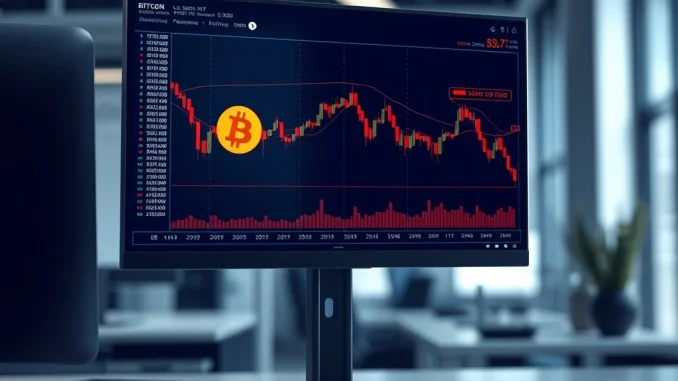
Global, May 2025: Leading blockchain analytics firm CryptoQuant has issued a significant warning about potential extended pressure on Bitcoin’s price trajectory. As the flagship cryptocurrency trades at approximately $65,520, representing a notable 8.52% decline over the past 24 hours, market analysts are scrutinizing on-chain data that suggests the possibility of further drawdown. This analysis comes during a period of heightened volatility across digital asset markets, prompting renewed examination of fundamental indicators that have historically preceded prolonged correction phases.
Understanding CryptoQuant’s Bitcoin Downtrend Analysis
CryptoQuant, established in 2017, has become one of the most respected providers of on-chain data analytics in the cryptocurrency industry. The firm’s warning stems from multiple converging metrics that historically correlate with sustained downward pressure. Unlike price charts that show what has happened, on-chain data reveals what market participants are actually doing with their assets, providing a more fundamental view of market health.
The current analysis examines several key indicators that have triggered concern among analysts. These include exchange netflow patterns, miner behavior, and the movement of long-term holder wallets. When these metrics align in specific configurations, they often signal shifts in market structure that can precede significant price movements. The $65,520 price level represents a critical psychological threshold that has served as both support and resistance in previous market cycles.
Key On-Chain Metrics Signaling Potential Pressure
CryptoQuant’s research team typically monitors several specific metrics when assessing market health. The current warning appears to be based on the convergence of multiple concerning signals that have historically preceded extended corrections.
- Exchange Netflow: Recent data shows increased Bitcoin deposits to exchanges, suggesting potential selling pressure as holders move assets to trading platforms
- Miner Outflow: Miner wallets have shown increased movement to exchanges, which can indicate miners are selling to cover operational costs
- Long-Term Holder Behavior: Analysis of wallets holding Bitcoin for extended periods shows changing patterns that may indicate profit-taking
- Realized Price Distribution: The concentration of coins purchased at various price levels reveals potential support and resistance zones
These metrics, when considered together, provide a more comprehensive picture than price action alone. The 8.52% decline over 24 hours becomes more significant when contextualized with these underlying on-chain movements. Historical analysis shows that similar convergences have occurred before previous extended downtrends, though past performance never guarantees future results.
Historical Context of Bitcoin Corrections
Bitcoin has experienced numerous corrections throughout its history, with drawdowns ranging from 20% to over 80% from previous highs. Understanding these historical patterns helps contextualize current market conditions. The cryptocurrency’s volatility is well-documented, with periodic corrections being a normal part of its market cycle development.
Previous significant corrections have often been preceded by similar on-chain signals, including increased exchange inflows and changing miner behavior. However, each market cycle possesses unique characteristics influenced by different macroeconomic conditions, regulatory developments, and adoption milestones. The current market environment differs substantially from previous cycles due to increased institutional participation, evolving regulatory frameworks, and broader integration into traditional financial systems.
Market Structure and Technical Analysis Perspectives
Beyond on-chain metrics, traditional technical analysis provides additional context for understanding current market conditions. The $65,520 level represents a significant technical area that has seen substantial trading activity in recent months. Market technicians are watching several key levels that could determine the short to medium-term trajectory.
Support and resistance levels become particularly important during periods of increased volatility. The rapid 8.52% decline suggests that previous support levels may have been breached, potentially opening the door to further testing of lower price zones. Volume analysis during the decline provides additional information about the conviction behind the selling pressure.
Market structure analysis examines how prices are organized across different timeframes. When higher timeframe structures begin to show signs of weakness, it can signal more significant trend changes rather than temporary corrections. The current analysis suggests that multiple timeframe alignments may be contributing to the potential for extended pressure.
Institutional and Macroeconomic Factors
The cryptocurrency market no longer operates in isolation from traditional financial systems. Institutional participation has grown substantially, meaning that Bitcoin and other digital assets now respond to many of the same macroeconomic forces that affect traditional markets. Interest rate policies, inflation data, and broader economic indicators increasingly influence cryptocurrency prices.
Current macroeconomic conditions present a complex backdrop for digital assets. Central bank policies, geopolitical developments, and traditional market correlations all contribute to the current market environment. These factors interact with cryptocurrency-specific dynamics to create the conditions that analytics firms like CryptoQuant are monitoring.
Institutional flows, as tracked through various products and vehicles, provide another layer of data for understanding market direction. The behavior of large holders and institutional investors often differs from retail participants, and their actions can significantly impact market structure. Recent patterns in institutional behavior may be contributing to the current market dynamics.
Potential Implications for Market Participants
CryptoQuant’s analysis carries implications for different types of market participants, from long-term investors to active traders. Understanding these potential implications helps market participants make informed decisions aligned with their individual strategies and risk tolerances.
For long-term holders, extended downtrends represent both challenges and opportunities. Historical patterns show that significant corrections have often presented accumulation opportunities for patient investors with multi-year time horizons. However, navigating these periods requires careful consideration of portfolio management principles and risk assessment.
Active traders and shorter-term participants face different considerations during potential extended downtrends. Volatility management, position sizing, and technical analysis become increasingly important. The current market conditions highlight the importance of having clear risk management protocols regardless of investment timeframe or strategy.
Industry Response and Expert Commentary
Responses to CryptoQuant’s analysis have varied across the cryptocurrency industry. Some analysts emphasize the importance of not overreacting to single data points, while others see the convergence of multiple metrics as warranting increased caution. This diversity of perspectives reflects the complex nature of cryptocurrency market analysis.
Industry experts consistently emphasize that on-chain data represents just one component of comprehensive market analysis. Fundamental developments, technological progress, regulatory clarity, and adoption metrics all contribute to the long-term trajectory of digital assets. While short-term price movements capture attention, many analysts maintain that these fundamental factors ultimately drive long-term value.
The professional trading and institutional communities typically approach such analyses with particular attention to risk management protocols. Their responses often focus on adjusting position sizes, reevaluating exposure levels, and implementing hedging strategies where appropriate. This measured approach reflects the maturation of cryptocurrency market participation over recent years.
Conclusion
CryptoQuant’s warning about potential extended Bitcoin downtrend pressure comes at a significant moment for digital asset markets. The convergence of on-chain metrics suggesting further drawdown possibilities, combined with the 8.52% decline to approximately $65,520, warrants careful attention from market participants. While historical patterns provide context, each market cycle develops under unique conditions influenced by evolving adoption, regulation, and macroeconomic factors.
The current analysis highlights the importance of comprehensive market assessment that considers multiple data sources and perspectives. As the cryptocurrency market continues to mature, the sophistication of analytical tools and frameworks similarly advances. Market participants navigating these conditions benefit from understanding both the technical indicators and the broader context in which they operate. The coming weeks will reveal whether these warning signals translate into sustained market movements or represent another volatility episode in Bitcoin’s dynamic history.
FAQs
Q1: What specific metrics is CryptoQuant using to warn about Bitcoin downtrend pressure?
CryptoQuant’s analysis typically examines exchange netflows, miner outflow patterns, long-term holder behavior, and realized price distribution. The warning stems from multiple metrics converging in patterns that have historically preceded extended corrections.
Q2: How significant is an 8.52% decline in the context of Bitcoin’s historical volatility?
While substantial in traditional market terms, 8.52% single-day declines have occurred numerous times throughout Bitcoin’s history. The significance lies in the context of underlying on-chain data and whether it represents isolated volatility or part of a broader pattern change.
Q3: What price level is Bitcoin currently trading at according to the analysis?
The analysis references Bitcoin trading at approximately $65,520, which represents both a psychological price level and a technical area that has seen significant trading activity in recent market cycles.
Q4: How reliable have CryptoQuant’s on-chain analyses been in predicting previous market movements?
On-chain analytics have proven valuable for understanding market structure and participant behavior, though no analytical method guarantees perfect prediction. Historical data shows correlations between certain metric convergences and subsequent market movements, but many factors influence cryptocurrency prices.
Q5: What should market participants consider when evaluating this type of analysis?
Participants should consider the analysis as one component of comprehensive market assessment, understand their own investment timeframe and risk tolerance, recognize that past patterns don’t guarantee future results, and maintain perspective on long-term fundamentals alongside short-term technical indicators.
Updated insights and analysis added for better clarity.
This article was produced with AI assistance and reviewed by our editorial team for accuracy and quality.