NEW YORK, March 15, 2026 — Bitcoin’s decisive recovery above $71,000 this week has solidified its market leadership, while a startling 36.8% of alternative cryptocurrencies trade perilously close to their all-time lows. This stark divergence between Bitcoin’s rally and altcoin stagnation has ignited intense debate among analysts about whether capital will soon rotate into smaller assets, potentially triggering the next altcoin season. Data from CryptoQuant and TradingView reveals the TOTAL2 index, tracking the market capitalization of all crypto assets excluding Bitcoin, now tests crucial long-term support near $900 billion, a level that historically preceded major market inflection points.
Bitcoin’s Rally Exposes Deep Altcoin Weakness
Bitcoin’s price action has dominated cryptocurrency headlines throughout early 2026. The flagship cryptocurrency reclaimed the $71,000 threshold on March 14, according to Cointelegraph Markets Pro data, signaling that institutional accumulation via spot Bitcoin ETFs continues to provide formidable support. Consequently, Bitcoin’s dominance ratio—its share of the total crypto market cap—has climbed to levels not seen since the fourth quarter of 2025. Meanwhile, the average altcoin now trades 44.4% below its 200-day simple moving average, a depth of underperformance typically associated with bear market bottoms. On major exchanges like Binance, a mere 4.59% of listed altcoins currently trade above their own 200-day SMA, confirming an exceptionally narrow market rally.
This concentration of capital is not accidental. XWIN Research analysts directly attribute the phenomenon to two structural shifts. First, persistent inflows into U.S. spot Bitcoin ETFs, which exceeded $12 billion net in 2025, have created a massive liquidity sink. Second, the exponential growth in the number of tradable tokens—now exceeding 15,000 across all chains—has fragmented available capital across countless projects. “The market is experiencing a quality flight,” noted a recent XWIN report. “Investors are prioritizing proven network security and institutional acceptance over speculative narratives, which disproportionately benefits Bitcoin.”
TOTAL2 Tests the $900 Billion Rubicon: A Make-or-Break Moment
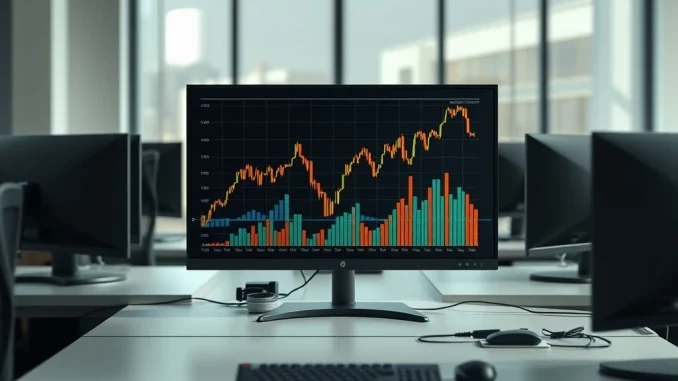
The TOTAL2 market cap presents the most compelling visual of the altcoin sector’s struggle. After peaking near $1.7 trillion in October 2025, the index has endured a brutal 43% drawdown, currently hovering around $970 billion. The decline accelerated sharply in January 2026 when TOTAL2 decisively broke below a three-year ascending trendline near $1.15 trillion. Market attention is now laser-focused on the $900 billion level, where the index’s 200-week moving average resides. This long-term moving average has acted as reliable support during previous corrections, notably in September 2024 and April 2025. A weekly close below this zone could signal prolonged altcoin winter, while a strong bounce would fuel altseason speculation.
On the daily chart, TOTAL2 consolidates beneath a formidable resistance band between $1.1 trillion and $1.25 trillion. This zone previously contained large liquidity clusters and now represents the first major hurdle for any sustained altcoin recovery. The technical setup creates a clear narrative: Bitcoin has broken out, while the broader altcoin market remains trapped below key resistance, waiting for a catalyst to trigger a catch-up rally.
- Historical Precedent: Past cycles show altcoin seasons often commence after Bitcoin dominance peaks and TOTAL2 finds support at its 200-week MA.
- Liquidity Indicator: The 36.8% of altcoins near ATLs, as tracked by CryptoQuant, is a contrarian signal that often marks extreme pessimism.
- Sentiment Gauge: Such widespread underperformance can create a coiled-spring effect if market sentiment suddenly improves.
Expert Analysis: Is the Traditional Altseason Model Obsolete?
Not all analysts believe the next cycle will mirror the past. Matt Hougan, Chief Investment Officer at Bitwise Asset Management, offers a nuanced perspective that challenges conventional wisdom. In a recent client memo, Hougan argued that the era of a “rising tide lifts all boats” altseason may be ending. “Future capital rotation will likely be selective,” Hougan wrote. “We expect concentration in projects demonstrating real-world utility, sustainable tokenomics, and measurable adoption metrics, rather than broad-based speculative frenzies.” This view suggests that even if capital rotates out of Bitcoin, it may flow into a handful of high-quality altcoins rather than the entire sector.
This analysis aligns with on-chain observations from firms like Glassnode, which note that developer activity and protocol revenue have become increasingly important valuation filters for sophisticated investors. The implication is profound: the next altcoin cycle might produce staggering returns for a select few projects while leaving the majority of tokens behind, fundamentally changing the risk-reward calculus for altcoin investors.
The Ethereum Leadership Question: The Canary in the Coal Mine
Historically, a sustained altcoin season is preceded by Ethereum outperforming Bitcoin. The ETH/BTC pair serves as the primary gauge for this relative strength. Currently, the weekly chart shows ETH/BTC trading inside a well-defined descending channel, unable to establish a definitive uptrend. For analysts watching for early rotation signs, two key levels are critical. A breakout above 0.036 would represent the first breach of the channel’s local resistance, signaling improving momentum for Ethereum. A more convincing shift would require the pair to reclaim the 0.043 level, which acted as major resistance throughout late 2025 before the broader decline.
Until ETH/BTC shows sustained strength, the market remains in a Bitcoin-dominant phase. This dynamic creates a waiting game. Traders are monitoring Ethereum’s performance not just for its own sake, but as a proxy for broader altcoin market health. If Ethereum cannot lead, it is unlikely that smaller, riskier assets will muster a significant rally.
| Indicator | Current Reading | Historical Altseason Trigger Zone |
|---|---|---|
| % of Altcoins Near ATLs | 36.8% | Often >30% (Extreme Pessimism) |
| Altcoin/200D SMA Avg. | -44.4% | Typically <-40% (Oversold) |
| TOTAL2 vs. 200W MA | Testing Support | Bounce from this level preceded 2023 rally |
| ETH/BTC Ratio | Inside Descending Channel | Needs break above 0.036 |
What Happens Next: Scenarios for the Coming Quarter
The market stands at a crossroads, with two primary scenarios emerging from current data. The first, and perhaps most anticipated, is a classic rotational play. If Bitcoin’s price stabilizes or enters a consolidation phase between $68,000 and $75,000, it could alleviate selling pressure on altcoins. Combined with the deeply oversold conditions shown in the data, this stability might encourage sidelined capital to seek higher beta opportunities in the altcoin space, beginning with large-cap assets like Ethereum and Solana before trickling down.
The second scenario is a continuation of the status quo. Persistent Bitcoin ETF inflows, macroeconomic uncertainty favoring “digital gold” narratives, and regulatory clarity favoring Bitcoin over other tokens could prolong Bitcoin’s dominance. In this case, altcoins may continue to languish or only experience short, sharp relief rallies rather than a sustained season. The key variable is institutional behavior; if corporate treasuries and ETFs continue to focus solely on Bitcoin, the liquidity needed for a broad altcoin rally may remain scarce.
Market Participant Reactions: A Divide Between Patience and Skepticism
Community sentiment on crypto social channels reflects this dichotomy. On one side, long-term altcoin holders point to the extreme metrics as a classic bottoming signal, advocating for accumulation at these depressed levels. “The data is screaming oversold,” posted a prominent crypto quant analyst on social platform X. “When sentiment is this bad and prices are this detached from moving averages, the risk/reward shifts dramatically.” On the other side, skeptics highlight the changed structural landscape. They argue that the sheer number of tokens, increased regulatory scrutiny on altcoins deemed securities, and the maturity of the market mean 2017-style or even 2021-style altseasons are relics of the past. This group advises caution, suggesting that any investment in altcoins should be highly selective and based on fundamental research, not cyclical timing alone.
Conclusion
The cryptocurrency market presents a tale of two realities in March 2026. Bitcoin, bolstered by institutional adoption, stands strong above $71,000. Conversely, the altcoin market exhibits deeply oversold conditions, with a significant portion of tokens trading near historic lows and key indices testing multi-year support. While traditional altcoin season indicators are flashing potential buy signals, the path forward is contested. Experts like Bitwise’s Matt Hougan suggest the next cycle will favor quality over quantity. The immediate trigger for any broad rally likely rests on the ETH/BTC ratio breaking its downtrend. Investors should monitor this pair closely, alongside weekly closes for the TOTAL2 index above $1 trillion. The coming weeks will determine whether this divergence resolves in a dramatic capital rotation or a further entrenchment of Bitcoin’s market supremacy.
Frequently Asked Questions
Q1: What exactly is an “altcoin season” and how is it identified?
An altcoin season refers to a sustained period where alternative cryptocurrencies significantly outperform Bitcoin. Analysts identify it using metrics like the Altcoin Season Index, which measures the percentage of top 50 coins outperforming Bitcoin over a 90-day period, and sustained strength in the TOTAL2 market cap index relative to Bitcoin’s dominance.
Q2: Why are so many altcoins trading near all-time lows while Bitcoin is strong?
The primary reasons are capital concentration and liquidity fragmentation. Massive institutional inflows into spot Bitcoin ETFs have diverted capital, while the explosion in the number of new tokens has spread remaining investor funds thinly. This creates a “winner-takes-most” dynamic favoring the largest, most established asset.
Q3: What is the TOTAL2 index and why is the $900 billion level important?
TOTAL2 is a market capitalization index that tracks all cryptocurrencies except Bitcoin. The $900 billion level represents its 200-week moving average, a long-term trend indicator that has provided major support during past market corrections. Holding this level is considered critical for altcoin market health.
Q4: How does Ethereum’s performance relate to a potential altcoin season?
Ethereum (ETH) is considered the leader of the altcoin market. Historically, a sustained altcoin rally begins with ETH outperforming Bitcoin (a rising ETH/BTC ratio). Until this ratio shows strength, a broad-based “altseason” is considered unlikely, as money has not started rotating out of Bitcoin.
Q5: Are all altcoins equally likely to benefit if a season occurs?
Not according to recent analysis. Experts like Bitwise’s Matt Hougan argue future cycles will be selective. Capital will likely flow to projects with strong fundamentals, real-world use cases, and sustainable models, potentially leaving many lower-quality tokens behind despite a general market uplift.
Q6: What should a retail investor watch to time a potential altcoin market entry?
Key signals include: a breakout in the ETH/BTC ratio above 0.036, a sustained recovery in the TOTAL2 index above $1.1 trillion, and an increase in the percentage of altcoins trading above their 200-day moving average from the current extreme low of 4.59%.