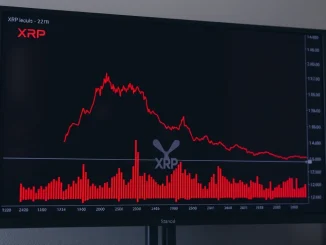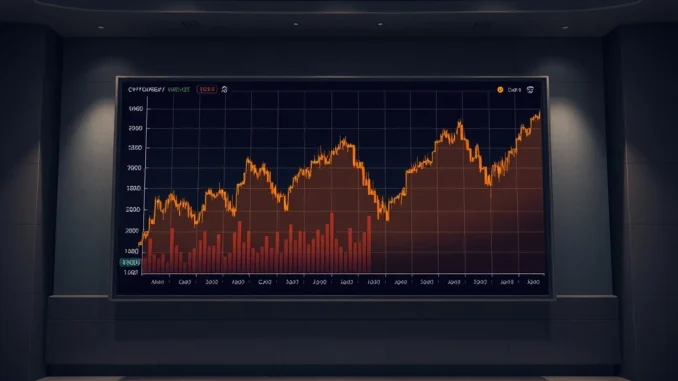
Global, March 2025: The cryptocurrency market has experienced a significant correction in recent weeks, with Bitcoin’s price decline triggering broader market movements that have reduced total market capitalization by approximately $2 trillion. This development has prompted investors and analysts to examine the underlying factors contributing to the current market conditions and assess potential implications for digital asset strategies.
Understanding the Recent Cryptocurrency Market Correction
The digital asset market has entered a period of increased volatility, with Bitcoin experiencing a notable price decline from recent highs. This movement has created ripple effects across the broader cryptocurrency ecosystem. Market data indicates that the total cryptocurrency market capitalization has decreased substantially from previous levels, reflecting changing investor sentiment and market dynamics. Historical patterns show that cryptocurrency markets typically experience periodic corrections following extended periods of growth, with the current movement fitting within established market cycles.
Several factors appear to be contributing to the current market conditions. Macroeconomic developments, including interest rate decisions by central banks and inflation concerns, have influenced investor behavior across multiple asset classes. Regulatory developments in major markets have also created uncertainty, with policymakers continuing to develop frameworks for digital asset oversight. Additionally, technical factors such as profit-taking after extended rallies and changing on-chain metrics have played roles in the recent price movements.
Bitcoin’s Market Influence and Historical Context
Bitcoin continues to function as the dominant cryptocurrency by market capitalization, with its price movements significantly influencing the broader digital asset market. Historical analysis reveals that Bitcoin has experienced multiple corrections exceeding 20% throughout its history, with the current decline representing one of several periodic adjustments. The relationship between Bitcoin’s price action and altcoin performance remains complex, with correlation patterns varying across different market conditions.
Market analysts note several technical and fundamental factors specific to Bitcoin’s recent performance:
- On-chain metrics indicating changing holder behavior
- Exchange flow data showing movement patterns
- Mining difficulty adjustments and hash rate stability
- Institutional investment flows and ETF performance
- Network activity and transaction volume trends
Market Structure and Investor Behavior Analysis
Current market conditions reflect evolving investor strategies during periods of increased volatility. Some market participants appear to be reallocating portions of their portfolios, while others maintain existing positions based on longer-term investment theses. The concept of “flight to quality” has emerged in discussions, with debates about whether investors are moving toward established assets or exploring alternative opportunities within the cryptocurrency space.
Market structure analysis reveals changing liquidity conditions across different cryptocurrency exchanges and trading pairs. Order book depth has fluctuated during the recent volatility, with implications for price discovery mechanisms. Derivatives market data shows adjustments in funding rates and open interest, reflecting changing sentiment among leveraged traders. These technical factors contribute to the overall market environment and influence short-term price movements.
Broader Market Implications and Sector Performance
The cryptocurrency market correction has affected various sectors within the digital asset ecosystem differently. Analysis of sector performance reveals distinct patterns:
| Market Sector | Performance Characteristics | Notable Factors |
|---|---|---|
| Layer 1 Protocols | Varied performance based on ecosystem activity | Developer activity, transaction volume |
| DeFi Platforms | Correlation with overall market trends | TVL changes, protocol revenue |
| NFT and Gaming | Mixed performance across projects | User activity, marketplace volume |
| Infrastructure Projects | Relative stability in some cases | Enterprise adoption, partnership announcements |
This sector analysis demonstrates that not all digital assets have responded identically to market conditions. Fundamental factors including project development progress, community engagement, and real-world adoption continue to influence individual asset performance even during broader market movements.
Regulatory and Macroeconomic Considerations
The current market environment exists within a complex regulatory landscape that continues to evolve across different jurisdictions. Recent policy developments and enforcement actions have contributed to market uncertainty, though regulatory clarity generally develops gradually over extended periods. Macroeconomic factors including monetary policy decisions, inflation data, and traditional market performance have created cross-asset correlations that influence cryptocurrency valuations.
International developments have added additional layers of complexity to market analysis. Geopolitical considerations, cross-border capital flows, and varying regulatory approaches in different regions create a multifaceted environment for digital asset markets. These factors combine with cryptocurrency-specific developments to shape the current market conditions and potential future trajectories.
Investor Strategies During Market Volatility
Market participants have adopted various approaches in response to recent conditions. Some investors emphasize portfolio diversification across different cryptocurrency sectors and risk profiles. Others focus on fundamental analysis of specific projects, examining development roadmaps, team composition, and community engagement metrics. Risk management practices including position sizing and portfolio rebalancing have gained increased attention during the recent volatility.
The concept of market cycles remains central to many investment frameworks within the cryptocurrency space. Historical analysis suggests that periods of consolidation and correction often follow extended rallies, with the current market movement representing a phase within broader cyclical patterns. Investor education about volatility management and long-term perspective has become increasingly prominent in community discussions and professional analysis.
Conclusion
The recent cryptocurrency market correction, highlighted by Bitcoin’s price decline and approximately $2 trillion reduction in total market capitalization, reflects complex interactions between multiple factors. Technical market dynamics, macroeconomic conditions, regulatory developments, and investor psychology have all contributed to current conditions. While market volatility presents challenges, it also represents a normal phase within cryptocurrency market cycles. Understanding these movements requires analysis of both cryptocurrency-specific factors and broader financial market contexts. The crypto down period serves as a reminder of the inherent volatility in digital asset markets while highlighting the importance of fundamental analysis and risk management in investment strategies.
FAQs
Q1: What typically causes cryptocurrency market corrections?
Cryptocurrency market corrections typically result from combinations of factors including profit-taking after extended rallies, changing macroeconomic conditions, regulatory developments, technical market dynamics, and shifts in investor sentiment. These corrections represent normal phases within market cycles.
Q2: How does Bitcoin’s performance affect other cryptocurrencies?
Bitcoin’s performance often influences broader cryptocurrency market sentiment due to its dominant market position. However, correlation patterns vary across different market conditions, with some periods showing strong correlation and others demonstrating more independent movement among different digital assets.
Q3: What strategies do investors use during market volatility?
Investors employ various strategies during volatility including portfolio diversification, fundamental analysis of specific projects, position sizing adjustments, and portfolio rebalancing. Some focus on longer-term investment theses while others adjust strategies based on changing market conditions.
Q4: How significant is a $2 trillion market capitalization reduction?
A $2 trillion reduction in total cryptocurrency market capitalization represents a substantial movement that reflects changing valuations across multiple digital assets. This scale of movement typically indicates broad market sentiment shifts rather than isolated events affecting individual cryptocurrencies.
Q5: What role do macroeconomic factors play in cryptocurrency markets?
Macroeconomic factors including interest rate decisions, inflation data, and traditional market performance increasingly influence cryptocurrency valuations. These factors create cross-asset correlations and reflect cryptocurrency’s growing integration with broader financial systems.
Updated insights and analysis added for better clarity.
This article was produced with AI assistance and reviewed by our editorial team for accuracy and quality.