Global Cryptocurrency Markets, February 2026: The cryptocurrency sector is navigating a period of significant volatility and regulatory scrutiny. Bitcoin, the market’s leading asset, has experienced a substantial sell-off event drawing comparisons to previous market cycles. Concurrently, political action committees (PACs) affiliated with the digital asset industry are reportedly increasing their lobbying expenditures ahead of key legislative sessions. This analysis examines the current market dynamics, the technical position of major assets like Cardano (ADA), and the emerging narrative around new projects such as DeepSnitch AI.
Bitcoin Capitulation Event: A $2.3 Billion Market Shift
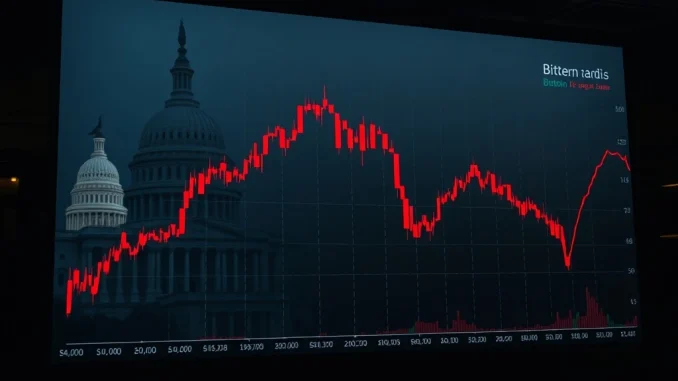
Data from major cryptocurrency exchanges and blockchain analytics firms indicates that Bitcoin witnessed a net outflow of approximately $2.3 billion over a concentrated period in early February 2026. This movement of capital, often termed ‘capitulation’ by analysts, refers to a phase where investors, facing sustained downward price pressure, sell their holdings en masse, frequently at a loss. The scale of this event has prompted comparisons to similar periods of intense selling pressure observed in late 2021 and other historical bear market phases.
Market analysts point to several potential contributing factors. Macroeconomic conditions, including interest rate decisions by major central banks, continue to influence risk asset sentiment globally. Furthermore, on-chain metrics leading up to the event showed a significant accumulation of Bitcoin in exchange wallets, a common precursor to increased selling activity. The capitulation is characterized by a surge in trading volume accompanied by a sharp decline in price, effectively ‘flushing out’ leveraged positions and weaker hands from the market. Historical precedent suggests such events, while painful in the short term, can sometimes establish a firmer price foundation by redistributing assets to longer-term holders.
The Cardano (ADA) Technical Outlook: Approaching Channel Support
While Bitcoin dominates market sentiment, other major cryptocurrencies are facing their own technical challenges. Cardano’s ADA token has seen its value decline toward a critical technical level known as channel support. On a longer-term chart, ADA’s price action has been contained within a descending channel—a pattern defined by two downward-sloping trendlines connecting lower highs and lower lows. The lower boundary of this channel represents a key support zone where buying interest has historically emerged to prevent further decline.
A breach below this established support level could signal a continuation of the bearish trend, potentially leading to a search for support at lower price points identified in previous market cycles. Conversely, a strong rebound from this zone might indicate that the asset is oversold and could stage a technical recovery. The performance of ADA is being closely watched not only for its market capitalization rank but also as a barometer for the broader ‘smart contract platform’ sector, which includes competitors like Ethereum, Solana, and Avalanche. Developer activity and network upgrade timelines on the Cardano blockchain remain focal points for its fundamental assessment.
Political Landscape: Crypto PACs and Congressional Engagement
Parallel to the market turbulence, political advocacy within the cryptocurrency industry is intensifying. Public filings reveal that cryptocurrency-focused Political Action Committees (PACs) have significantly increased their spending as the 2026 congressional session addresses several pivotal pieces of digital asset legislation. These PACs, funded by industry executives, venture capital firms, and advocacy groups, aim to support candidates and influence policy related to blockchain technology, digital asset classification, and regulatory frameworks.
The surge in spending underscores the industry’s maturation and its concerted effort to shape its regulatory environment. Key issues on the table include clarity on securities law application, the structure of stablecoin oversight, and the development of rules for decentralized finance (DeFi) protocols. The outcome of these legislative efforts is widely considered a major factor for the long-term operational landscape for crypto businesses in the United States and could have global implications due to the country’s influence on financial regulation.
DeepSnitch AI: An Emerging Project in a Cautious Market
Amid the broader market correction, development and fundraising continue in the blockchain sector. One project attracting analytical attention is DeepSnitch AI, which is initiating a token presale. The project proposes to integrate artificial intelligence with blockchain infrastructure, focusing on areas such as smart contract auditing and on-chain data analysis. In the current climate, investor scrutiny of new projects is exceptionally high, with emphasis on tangible utility, experienced teams, and transparent tokenomics.
Presale events for AI-crypto hybrids are not uncommon, but their reception is heavily dependent on the prevailing market sentiment and the demonstrable progress of the underlying technology. Analysts note that while such projects can generate interest due to the convergence of two high-profile tech trends, their long-term viability hinges on delivering functional products that address genuine needs within the blockchain ecosystem, rather than speculative narratives alone.
Historical Context and Market Cycle Analysis
To understand the current Bitcoin capitulation, it is instructive to examine past cycles. The 2021 comparison is frequently cited because it represents the last major bull market peak followed by a prolonged downtrend. That period also featured significant deleveraging events and investor exits. Market cycles in cryptocurrency, while not perfectly identical, often exhibit similar emotional and capital flow patterns: euphoria, denial, capitulation, and eventually, accumulation.
The current environment differs in key aspects, notably the increased institutional participation and more developed regulatory dialogues. These factors may alter the duration and severity of market phases but do not eliminate the underlying volatility inherent to the asset class. The convergence of technical selling pressure, macroeconomic headwinds, and sector-specific news creates the complex landscape observed in February 2026.
Conclusion
The cryptocurrency market in February 2026 is defined by a significant Bitcoin capitulation event, technical tests for major altcoins like Cardano, and a heightened political advocacy effort by industry PACs. The $2.3 billion outflow from BTC highlights the ongoing volatility and sensitivity of digital assets to broader financial conditions. Meanwhile, projects such as DeepSnitch AI continue to launch, aiming to find traction in a cautious and discerning market. These developments collectively paint a picture of an industry in a transitional phase, grappling with internal market forces while actively engaging with the external regulatory process that will shape its future.
FAQs
Q1: What does ‘capitulation’ mean in cryptocurrency markets?
Capitulation refers to a period of intense, panicked selling where investors surrender to downward price pressure and sell their holdings, often at a loss. It is typically marked by high volume and sharp price declines and is considered by some analysts as a potential sign of a market bottom forming.
Q2: Why is the Cardano (ADA) channel support level significant?
In technical analysis, a support level is a price point where buying interest is historically strong enough to halt or reverse a downtrend. Channel support on a long-term chart represents a key psychological and technical barrier. Holding this level can suggest stabilization, while breaking it may indicate further downside potential.
Q3: What are crypto PACs, and what are they trying to achieve?
Crypto Political Action Committees (PACs) are organizations that pool campaign contributions to support political candidates and lobby for specific policies. Their primary goal is to advocate for clear, favorable regulatory frameworks for digital assets and blockchain technology in the U.S. Congress and other governing bodies.
Q4: How does the current Bitcoin sell-off compare to 2021?
While the scale and sentiment echo the 2021 capitulation, the context differs. The 2026 market involves more institutional players, different macroeconomic conditions (like interest rates), and a more advanced regulatory discussion. The patterns may be similar, but the underlying market structure has evolved.
Q5: What should investors look for in new projects like DeepSnitch AI during a market downturn?
In cautious markets, scrutiny increases. Key factors include: a clearly defined problem the project solves, a demonstrable product or prototype (not just a whitepaper), an experienced and credible team with public profiles, transparent and sustainable tokenomics, and evidence of community growth and development milestones, not just marketing hype.