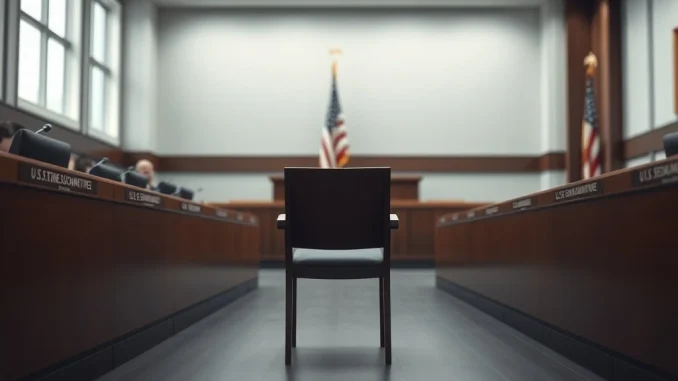
WASHINGTON, D.C. — In a sharply worded letter dated Friday, global cryptocurrency exchange Binance has forcefully rejected a US Senate probe into its potential facilitation of transactions with Iranian entities, labeling the underlying media reports as “demonstrably false” and “defamatory.” The exchange’s official response, submitted to Senators Richard Blumenthal and Ron Johnson of the Permanent Subcommittee on Investigations, marks a critical escalation in its ongoing regulatory battles. Binance categorically stated that “no Binance account transacted directly with an Iran-based entity,” directly challenging the narrative presented by a group of 11 senators in a February inquiry. This development comes just over a year after Binance’s landmark $4.3 billion settlement with U.S. authorities for sanctions and Anti-Money Laundering violations.
Binance Denies Core Allegations of Iran Sanctions Violations
Binance’s legal team dispatched the detailed rebuttal following a formal inquiry launched on February 13. The senators had cited reports from major publications, including the Wall Street Journal and New York Times, which alleged the exchange facilitated over $1 billion in crypto transactions to entities linked to Iran, specifically named Hexa Whale and Blessed Trust. Binance’s letter claims these reports lack credible evidence. The company asserts it proactively investigated these entities after receiving law enforcement inquiries, resulting in their removal from the platform. “To our knowledge, no Binance account transacted directly with an Iran-based entity,” the letter states, a line the exchange has emphasized as its core defense.
Furthermore, Binance addressed allegations concerning employee terminations. Media reports suggested the company fired staff who internally reported the suspicious transactions. Binance countered that some individuals resigned, while another was terminated specifically for violating internal policy by disclosing confidential user information externally. “Binance takes seriously the privacy of its users and has no tolerance for employees violating that trust,” the letter explains, framing the personnel action as a standard enforcement of labor policies rather than retaliation.
Immediate Regulatory and Market Consequences
The Senate’s inquiry, and Binance’s vehement denial, trigger immediate scrutiny from multiple regulatory fronts. The original letter from the bipartisan group of senators was addressed to Treasury Secretary Scott Bessent and Attorney General Pamela Bondi, requesting a response by March 13 on whether their departments intended to launch a formal investigation. As of this reporting, neither official has publicly commented, creating a window of uncertainty. Market analysts are watching for any impact on Binance’s trading volumes or BNB token price, though immediate effects were muted. The broader consequence is a renewed spotlight on the crypto industry’s compliance frameworks at a time when global regulators are intensifying oversight.
- Renewed DOJ & Treasury Scrutiny: The Senate probe directly invites executive branch agencies to re-examine Binance’s operations, potentially reopening settled matters.
- Reputational Damage Control: Binance must aggressively manage its public narrative to maintain user and institutional trust amidst damaging headlines.
- Industry-Wide Chill: Other crypto exchanges may face increased due diligence pressures as regulators use this case as a template for broader industry examinations.
Expert Analysis on Legal Precedent and Strategy
Dr. Sarah Jenkins, a former SEC enforcement attorney and current director of the Georgetown University Law Center’s Fintech Program, provided context. “Binance’s strategy is a classic, aggressive defense: attack the source and demand proof,” Jenkins noted. “By calling the reports ‘defamatory,’ they are not just defending but going on the offensive, potentially to deter future leaks or allegations. However, the 2023 settlement creates a problematic backdrop. Regulators will view any new allegations through the lens of past admitted violations.” She emphasized that the burden now shifts to the senators and the cited media outlets to produce concrete evidence, such as blockchain analytics reports or internal documents, to substantiate the $1 billion claim.
Broader Context: Binance’s Regulatory History and the 2023 Settlement
This confrontation cannot be divorced from Binance’s recent history. In November 2023, the exchange reached a sweeping $4.3 billion settlement with the U.S. Department of Justice, Commodity Futures Trading Commission (CFTC), and Treasury’s Financial Crimes Enforcement Network (FinCEN). As part of that deal, Binance admitted to violations of the Bank Secrecy Act and failing to register as a money services business. Then-CEO Changpeng ‘CZ’ Zhao pleaded guilty to one felony charge, later receiving a four-month prison sentence and stepping down from his leadership role. The settlement included a monitorship and strict compliance undertakings. This new Senate probe tests whether the exchange has upheld those commitments in the eyes of lawmakers.
| Event | Date | Key Outcome |
|---|---|---|
| DOJ/CFTC/FinCEN Settlement Announced | November 2023 | $4.3 billion penalty; CZ steps down, pleads guilty. |
| Changpeng Zhao Sentencing | April 2024 | Receives 4-month prison term. |
| U.S. Senate Inquiry Letter Sent | February 2026 | 11 senators question Treasury/DOJ on Binance-Iran links. |
| Binance Response Letter | March 2026 | Denies allegations, calls reports defamatory. |
What Happens Next: Legal and Political Pathways
The immediate timeline hinges on responses from the Treasury and Justice Departments by the Senate’s March 13 deadline. Legal observers anticipate one of three paths: a decision to open a new investigation, a referral to the existing court-appointed monitor from the 2023 settlement, or a conclusion that the allegations lack sufficient new evidence to warrant action. Politically, the issue intersects with ongoing debates about digital asset regulation. Senator Cynthia Lummis (R-WY), a co-sponsor of major crypto framework legislation, stated, “This underscores why we need clear rules of the road. Ambiguity helps no one—not regulators, not companies, and certainly not consumers.” Her office confirmed she was not among the 11 senators who signed the initial inquiry.
Stakeholder Reactions: From Crypto Community to Capitol Hill
Reactions have split along predictable lines. Advocacy groups like the Blockchain Association have urged due process, warning against regulatory overreach based on unproven media claims. Conversely, organizations focused on financial integrity, such as the Center for American Progress, have called for an immediate and thorough investigation. On Capitol Hill, staffers indicate the issue has become a flashpoint in the wider partisan debate over crypto, with some progressive lawmakers seizing on it to argue for stricter controls, while crypto-friendly legislators caution against prejudgment. The lack of public comment from Treasury and DOJ suggests a careful, internal review is underway.
Conclusion
Binance’s defiant response to the US Senate probe sets the stage for a high-stakes evidentiary battle. The exchange’s categorical denial of direct transactions with Iran and its attack on the credibility of major financial media outlets represent a high-risk strategy to reclaim its narrative. The core question remains whether senators and federal agencies possess, or can obtain, evidence robust enough to challenge Binance’s claims and its 2023 settlement compliance. For the cryptocurrency industry, this episode is a stark reminder that regulatory scrutiny is persistent and intensifying. All stakeholders should monitor the March 13 deadline for official government responses, which will determine whether this inquiry escalates into a formal investigation or recedes as an unresolved political challenge.
Frequently Asked Questions
Q1: What exactly is Binance accused of in the US Senate probe?
Binance is accused by a group of 11 U.S. Senators of potentially facilitating over $1 billion in cryptocurrency transactions to entities linked to Iran, specifically named Hexa Whale and Blessed Trust, which would violate U.S. sanctions. The inquiry is based on reports from the Wall Street Journal and New York Times.
Q2: How did Binance respond to the allegations?
In an official letter dated March 2026, Binance denied the allegations completely, stating “no Binance account transacted directly with an Iran-based entity.” The exchange labeled the media reports underlying the Senate inquiry as “demonstrably false, unsupported by credible evidence, and defamatory.”
Q3: What is the significance of Binance’s 2023 settlement in this new probe?
The 2023 $4.3 billion settlement, where Binance admitted to past sanctions and AML violations, forms the critical backdrop. Any new allegations are viewed through the lens of this admitted past misconduct and the compliance promises Binance made as part of that settlement deal.
Q4: What are the potential consequences for Binance if the Senate probe moves forward?
If federal agencies open a new investigation and find violations, Binance could face additional massive fines, extended monitoring, or even stricter operational limitations. It could also severely damage its reputation and user trust globally.
Q5: How does this affect everyday cryptocurrency users on Binance?
For most users, immediate impacts are minimal. However, prolonged regulatory uncertainty could affect which tokens are listed, the complexity of withdrawal/deposit processes, and the overall stability of the platform if severe penalties are levied.
Q6: What is the role of the court-appointed monitor from the 2023 settlement?
The independent monitor, appointed for three years under the 2023 settlement, is tasked with reviewing Binance’s compliance programs. The DOJ or Senate could refer these new allegations to the monitor for assessment as part of their ongoing oversight duties.