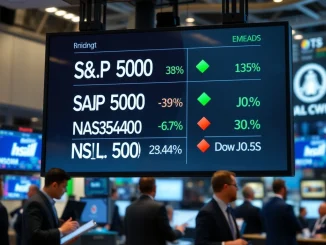
SINGAPORE – March 21, 2026. Binance, the world’s largest cryptocurrency exchange, has achieved a landmark $130 billion in trading volume for its Traditional Finance (TradFi) futures products. This milestone, confirmed by the exchange’s official data dashboard, underscores a dramatic shift as digital asset platforms capture significant market share from legacy institutions. Consequently, precious metals like gold and silver are emerging as the dominant assets within this new hybrid trading arena. The surge highlights a growing convergence between crypto and traditional markets, driven by institutional demand for familiar asset exposure within a crypto-native ecosystem.
Binance TradFi Futures Cross the $130 Billion Threshold
Binance announced the $130 billion cumulative trading volume milestone for its TradFi futures suite early Friday. The platform launched these products in late 2024, allowing users to trade leveraged contracts on commodities, major equity indices, and foreign currencies using cryptocurrency as collateral. According to a market analysis report from CCData published last month, Binance’s TradFi segment has grown at a compound quarterly rate of over 35% since its inception. This growth trajectory far outpaces initial projections. The exchange’s head of financial products, Leonard Lee, stated in a release, “This volume demonstrates clear demand for seamless access to macro-economic assets from within the crypto ecosystem. Our users are sophisticated and seek diversified portfolios.”
The timing of this milestone is critical. It coincides with a period of heightened volatility in global commodity markets, triggered by geopolitical tensions and shifting monetary policy expectations. Traders, particularly in regions with capital controls or limited access to traditional brokerage services, have flocked to crypto platforms for 24/7 exposure. Furthermore, the ability to use Bitcoin or stablecoins as margin provides a unique value proposition that traditional brokers cannot easily replicate.
Gold and Silver Dominate as Safe-Haven Assets Drive Volume
Within the $130 billion total, contracts tied to gold (XAU) and silver (XAG) futures account for an estimated 58% of the volume, based on aggregated data from the past quarter. This dominance reflects a broader macroeconomic trend where investors seek inflation hedges and safe-haven assets. For instance, the weekly volume for gold futures on Binance regularly exceeds $8 billion, a figure that rivals the activity on some established commodity exchanges. The platform’s silver contracts have also seen unprecedented interest, often correlating with industrial demand forecasts and green energy investment cycles.
- Institutional Participation: Data suggests a rising portion of this volume originates from proprietary trading firms and crypto-native hedge funds using algorithmic strategies across both crypto and commodity markets.
- Retail Accessibility: The low barrier to entry—allowing trading with as little as $10 in exposure—has democratized access to commodities, previously a domain dominated by high-net-worth individuals and funds.
- Cross-Margin Efficiency: Traders can use their existing crypto holdings as collateral for commodity positions, creating capital efficiency but also introducing novel risk correlations between asset classes.
Expert Analysis on the Market Convergence
Financial analysts view this milestone as a significant inflection point. Dr. Elena Vargas, a fintech researcher at the Cambridge Centre for Alternative Finance, noted in a recent commentary, “The $130 billion figure is not just a big number. It’s a signal that the infrastructure built for crypto is now robust enough to host serious traditional finance activity. The liquidity begets more liquidity.” She cautions, however, that regulatory scrutiny will intensify as these volumes grow. Conversely, a report from JPMorgan Chase analysts, while acknowledging the growth, highlighted potential systemic risks from the interlinking of crypto volatility with commodity markets on largely unregulated venues.
Broader Context: The Evolving Crypto-TradFi Landscape
Binance’s success is part of a larger industry trend. Competitors like Bybit and OKX have launched similar TradFi offerings, though their volumes remain a fraction of Binance’s. The move represents a strategic pivot for crypto exchanges seeking to diversify revenue streams beyond spot and perpetual crypto futures trading. This expansion also pressures traditional online brokers, who are now slowly integrating crypto assets into their own platforms in response.
| Platform | TradFi Futures Launch | Estimated Market Share (Q4 2025) |
|---|---|---|
| Binance | Q4 2024 | ~68% |
| Bybit | Q1 2025 | ~18% |
| OKX | Q2 2025 | ~9% |
| Other Platforms | Various | ~5% |
Regulatory Horizon and What Comes Next
The explosive growth will inevitably attract greater regulatory attention. Authorities in the EU, under the forthcoming Markets in Crypto-Assets Regulation (MiCA)</strong) implementation phase, are already examining how to classify these hybrid products. The U.S. Commodity Futures Trading Commission (CFTC) has also increased its surveillance of offshore platforms offering derivatives to U.S. persons. Binance's next stated goal is to list futures on additional asset classes, including key government bonds, which would represent an even deeper incursion into traditional finance territory. However, this plan is contingent on navigating complex regulatory frameworks across different jurisdictions.
Industry and Trader Reactions
Reactions from the trading community have been largely positive. Many praise the innovation and convenience. “I can hedge my Bitcoin mining energy cost exposure with natural gas futures on the same platform where I trade crypto. The synergy is powerful,” shared a pseudonymous institutional trader on a popular forum. Conversely, some traditional commodity traders express concern about price discovery being influenced by a new, less regulated pool of capital with different risk appetites. Legacy exchanges like the CME Group have so far declined to comment directly on the competitive threat, focusing instead on their own planned digital asset initiatives.
Conclusion
Binance’s crossing of the $130 billion TradFi futures volume mark, led by gold and silver, is a definitive milestone in the fusion of cryptocurrency and traditional finance. It signals a maturation of crypto infrastructure and a shifting preference among a new generation of traders. The trend points toward an increasingly integrated global financial system where asset class boundaries blur. Moving forward, the key developments to watch will be regulatory responses, the entry of more traditional players into the crypto space, and whether this liquidity proves resilient during a sustained market downturn. This convergence is no longer a speculative vision but a measurable, accelerating reality.
Frequently Asked Questions
Q1: What exactly are Binance TradFi futures?
Binance TradFi futures are derivative contracts that allow users to speculate on the future price of traditional financial assets like gold, silver, stock indices, and forex. Users trade these contracts using cryptocurrency as collateral on Binance’s crypto exchange platform.
Q2: Why are gold and silver seeing the most volume on these platforms?
Gold and silver are perceived as classic safe-haven and inflation-hedge assets. During periods of economic uncertainty, demand surges. Crypto traders, already sensitive to macro trends, find these commodities a familiar and attractive way to diversify their portfolios on a platform they already use.
Q3: What are the regulatory risks for traders using these products?
The primary risk is that these products are offered globally from a single entity, which may not hold derivatives licenses in all jurisdictions. Regulatory crackdowns could restrict access or affect the operation of the markets. Traders should be aware of their local laws regarding such derivatives trading.
Q4: How does trading commodities on Binance differ from using a traditional broker?
Key differences include 24/7 trading (unlike market hours on traditional exchanges), the use of crypto for margin (instead of fiat), often lower minimum trade sizes, and integration with a crypto portfolio. However, it may lack the direct physical delivery options of some traditional commodity contracts.
Q5: Does this growth threaten traditional commodity exchanges?
In the short term, the volume is complementary and taps into a different demographic. In the long term, if volumes continue to grow and attract more institutional players, traditional exchanges may face competitive pressure, especially in retail and leveraged trading segments, prompting them to innovate or partner with crypto firms.
Q6: What does this mean for the average cryptocurrency investor?
For the average crypto investor, it means more tools are available to manage risk and diversify without leaving the crypto ecosystem. It also indicates that the platforms they use are evolving into broader financial hubs, which could lead to more integrated services like unified portfolios spanning crypto and traditional assets.