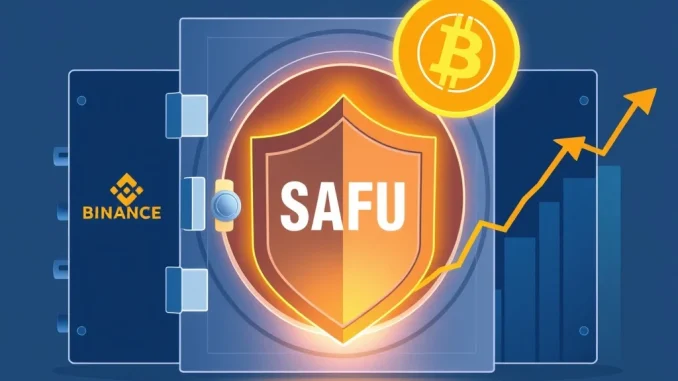
Global, May 2025: In a significant move for cryptocurrency market infrastructure, Binance, the world’s largest digital asset exchange by trading volume, has announced a fundamental restructuring of its Secure Asset Fund for Users (SAFU). The company is converting the fund’s reserve holdings from stablecoins to Bitcoin (BTC). This strategic pivot aims to reinforce the long-term security of the user protection fund and bolster confidence in Bitcoin’s role as a foundational reserve asset, particularly during periods of market volatility. The decision marks a notable evolution in how major exchanges manage their emergency insurance mechanisms.
Binance SAFU Fund Undergoes Fundamental Reserve Restructuring
The Secure Asset Fund for Users (SAFU) is an emergency insurance fund established by Binance in July 2018. Initially, the company allocated 10% of all trading fees to the fund to protect users in extreme cases, such as a major security breach or unexpected operational failure. For years, the fund’s reserves primarily consisted of stablecoins like BUSD and USDT, assets chosen for their price stability relative to the U.S. dollar. This composition aimed to ensure the fund’s value remained predictable and readily deployable.
However, the recent announcement signals a strategic departure from this model. Binance is now converting a substantial portion, if not all, of these stablecoin reserves into Bitcoin. The company’s official communication frames this not as a reaction to short-term market conditions, but as a deliberate, long-term strategy. The core rationale centers on Bitcoin’s established properties as a decentralized, scarce digital asset with a proven long-term appreciation trend, compared to the inherent counterparty and regulatory risks associated with fiat-backed stablecoins.
Analyzing the Rationale Behind the Bitcoin Conversion
This transition from stablecoins to Bitcoin for a critical safety-net fund is a multi-faceted decision with several logical underpinnings. Analysts point to a confluence of factors that make Bitcoin a potentially more robust reserve asset for a long-term protection fund.
- Long-Term Store of Value Thesis: Binance’s move aligns with the growing institutional perspective of Bitcoin as “digital gold.” The fund’s purpose is to exist for years, potentially decades, as a backstop. Proponents argue that Bitcoin’s capped supply of 21 million coins and its decentralized nature make it a superior hedge against inflation and currency devaluation over extended periods, unlike stablecoins which are pegged to potentially inflationary fiat currencies.
- Mitigating Stablecoin Counterparty Risk: While stablecoins offer price stability, they introduce centralized counterparty risk. Their value is contingent on the issuer maintaining full fiat reserves and regulatory compliance. Recent history has shown that regulatory actions against stablecoin issuers can create market instability. By holding Bitcoin, the SAFU fund reduces its direct exposure to the specific legal and operational risks of any single stablecoin entity.
- Enhancing Fund Sovereignty and Transparency: Bitcoin’s blockchain is public and auditable. The holdings of the SAFU fund in Bitcoin can be transparently verified on-chain by any user, providing a clear, trustless view of the fund’s size and status. This aligns with broader crypto principles of transparency and verifiability.
The decision implicitly expresses a strong, long-term confidence in Bitcoin’s network security and value proposition. It treats the SAFU fund not merely as a static insurance pool, but as a strategic asset that should grow and preserve purchasing power over time.
Historical Context and Precedent in Crypto Finance
Binance’s strategy echoes actions taken by other entities in the digital asset space, particularly publicly-traded companies and nation-states. MicroStrategy pioneered the corporate treasury strategy of holding Bitcoin as a primary reserve asset, a move later followed by firms like Tesla and Block. More recently, countries like El Salvador have adopted Bitcoin as legal tender, holding it in national reserves.
The SAFU fund conversion represents the application of this “Bitcoin as a reserve asset” philosophy to a new domain: exchange-operated user protection funds. It sets a potential precedent for how other exchanges might structure their own emergency funds. Historically, such funds were seen as purely defensive, low-risk pools. Binance’s move re-frames them as strategic, growth-oriented components of an exchange’s financial architecture, while still serving their core protective function.
Implications for User Protection and Market Confidence
The immediate question for users is how this affects the actual safety net the SAFU fund provides. Binance has emphasized that the fund’s size will remain substantial, and the conversion is managed to minimize market impact. The primary change is in the asset’s characteristics.
In the short term, the value of the SAFU fund in U.S. dollar terms will fluctuate with the price of Bitcoin. This introduces volatility where none existed with stablecoins. However, Binance’s argument is that over the multi-year horizon relevant for a catastrophic insurance fund, Bitcoin’s appreciation potential outweighs this short-term volatility risk. The fund’s ability to cover user losses in a future incident may be significantly larger if Bitcoin’s value rises substantially.
For the broader market, this move is interpreted as a major vote of confidence from a pivotal player. When the world’s largest exchange chooses Bitcoin over dollars (via stablecoins) for its most critical safety fund, it signals a profound belief in the enduring strength and legitimacy of the Bitcoin network. This action could reinforce Bitcoin’s status as the bedrock asset of the cryptocurrency ecosystem, potentially influencing institutional and retail sentiment alike.
Regulatory and Operational Considerations
Such a significant shift does not occur in a vacuum. Regulatory bodies worldwide are increasingly scrutinizing crypto exchanges’ reserve practices and consumer protection measures. Binance will likely need to demonstrate to regulators that this change does not compromise the fund’s liquidity or reliability in a crisis scenario. The company may outline specific protocols for liquidating Bitcoin holdings quickly if needed, perhaps through pre-arranged OTC (over-the-counter) desks or other mechanisms to avoid destabilizing the market during a sell-off.
Operationally, safeguarding a Bitcoin reserve of this magnitude requires impeccable security. Binance will need to employ the highest standards of cold storage custody, likely involving multi-signature wallets and geographically distributed secret sharding. The security of the SAFU fund’s Bitcoin is paramount, as it directly underpins user trust.
Conclusion
Binance’s decision to transition its SAFU fund reserves from stablecoins to Bitcoin represents a strategic evolution in cryptocurrency exchange risk management. It moves beyond viewing the user protection fund as a simple dollar-denominated escrow account and embraces Bitcoin’s properties as a long-term, sovereign store of value. While introducing price volatility, the shift aims to enhance the fund’s growth potential and reduce reliance on centralized stablecoin issuers. This action underscores a deepening institutional conviction in Bitcoin’s foundational role and sets a new benchmark for how exchanges secure user assets for the future. The move will be closely watched by regulators, competitors, and users, as it tests the thesis that Bitcoin is the ultimate reserve asset for the digital age.
FAQs
Q1: What is the Binance SAFU fund?
The Secure Asset Fund for Users (SAFU) is an emergency insurance fund created by Binance in 2018. It is funded by a portion of trading fees and exists to protect users’ assets in the event of extreme scenarios like a major security breach or unexpected operational failure.
Q2: Why is Binance converting SAFU reserves to Bitcoin?
Binance states the conversion is a long-term strategy to reinforce the fund. The rationale includes viewing Bitcoin as a superior long-term store of value compared to fiat-pegged stablecoins, mitigating counterparty risk associated with stablecoin issuers, and aligning the fund with the transparent, verifiable nature of blockchain-based assets.
Q3: Does this make the SAFU fund riskier for users?
It changes the risk profile. The fund’s dollar value will now fluctuate with Bitcoin’s price, introducing short-term volatility it did not have with stablecoins. However, Binance’s perspective is that over the long term, Bitcoin’s potential for appreciation could make the fund larger and more capable, outweighing the volatility risk for its intended purpose as a long-term backstop.
Q4: Can users verify the SAFU Bitcoin holdings?
Yes, in theory. One of the advantages of holding the fund in Bitcoin is that the wallet addresses can be made public, allowing anyone to audit the fund’s balance on the Bitcoin blockchain, promoting transparency.
Q5: Will other cryptocurrency exchanges follow Binance’s lead?
This remains to be seen. Binance’s move sets a significant precedent. Other exchanges will likely evaluate their own insurance funds based on their risk tolerance, regulatory environment, and long-term view of Bitcoin versus stablecoins. It could spark a broader industry trend if the strategy is perceived as successful.
Updated insights and analysis added for better clarity.
This article was produced with AI assistance and reviewed by our editorial team for accuracy and quality.