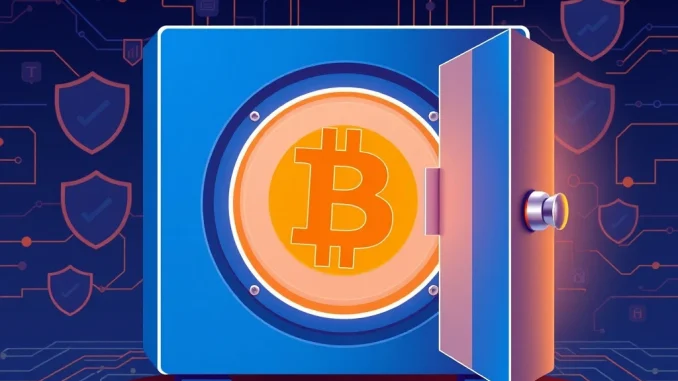
Global, May 2025: In a significant move for cryptocurrency exchange security, Binance has announced the conversion of its Secure Asset Fund for Users (SAFU) reserves from stablecoins to Bitcoin. This strategic pivot aims to reinforce the fund’s long-term value preservation and user protection mechanisms, signaling a profound vote of confidence in Bitcoin’s role as a foundational reserve asset amidst evolving market conditions.
Binance SAFU Fund Converts to Bitcoin for Long-Term Security
The Secure Asset Asset Fund for Users represents a cornerstone of Binance’s risk management framework. Established in 2018, the SAFU fund acts as an emergency insurance reserve, designed to protect users in extreme scenarios such as exchange hacks, unexpected technical failures, or fraudulent withdrawals. Binance initially committed to allocating 10% of all trading fees to grow this fund. For years, the fund’s reserves were held primarily in stablecoins like BUSD and USDT, assets chosen for their price stability relative to the U.S. dollar. This stability was intended to ensure the fund’s value remained predictable and readily deployable.
However, the recent transition to Bitcoin marks a fundamental philosophical and strategic shift. Company statements cite a focus on “long-term security” and “value preservation” as the core drivers. By holding the SAFU fund in Bitcoin, Binance is aligning the reserve with an asset many consider digital gold—a non-sovereign store of value with a capped, predictable supply. This move inherently accepts short-term price volatility in exchange for perceived long-term appreciation and resilience against inflation. The decision reflects a maturation in how major crypto entities view treasury management, moving beyond pure stability to seek assets with enduring monetary properties.
Analyzing the Implications of a Bitcoin-Backed Protection Fund
The conversion from stablecoin to Bitcoin reserves carries multifaceted implications for users, the market, and the broader industry narrative. The primary benefit touted by Binance is the potential for the SAFU fund to grow organically alongside Bitcoin’s long-term value trajectory, thereby increasing the absolute level of protection available to users over time. A larger fund enhances the exchange’s ability to cover potential liabilities without impacting its operational capital.
Conversely, this strategy introduces an element of market correlation risk. During a severe, broad cryptocurrency market downturn where Bitcoin’s price declines significantly, the nominal U.S. dollar value of the SAFU fund would also decrease. This could theoretically reduce its coverage capacity at the precise moment market stress is highest. Binance addresses this by emphasizing the fund’s “long-term” nature and the historical resilience of Bitcoin’s recovery cycles. The table below outlines the key comparative factors between the old and new SAFU reserve strategies:
| Factor | Stablecoin Reserves (Previous) | Bitcoin Reserves (Current) |
|---|---|---|
| Primary Goal | Price Stability & Immediate Liquidity | Long-Term Value Appreciation & Store of Value |
| Volatility Exposure | Very Low (Peg Risk Only) | High (Correlated to Crypto Market) |
| Inflation Hedge | No | Yes (Theoretically) |
| Fund Growth Mechanism | Reliant on New Trading Fee Allocations | Potential Organic Growth via BTC Appreciation |
| Industry Statement | Emphasis on Operational Safety | Confidence in Bitcoin’s Foundational Role |
Furthermore, this decision serves as a powerful market signal. As one of the world’s largest cryptocurrency exchanges, Binance’s allocation of a critical safety-net fund to Bitcoin reinforces the asset’s status as the primary reserve currency of the digital asset ecosystem. It may encourage other exchanges and crypto-native institutions to evaluate their own treasury strategies.
Contextualizing the Move Within Crypto Exchange Evolution
Binance’s SAFU fund update is not an isolated event but part of a broader trend in cryptocurrency exchange operational maturity. Following several high-profile industry failures and increased regulatory scrutiny globally, exchanges are under pressure to demonstrate robust financial health and user protection measures. The SAFU fund itself was a pioneering response to the security concerns that plagued earlier eras of crypto trading.
This shift to Bitcoin mirrors actions taken by publicly listed companies like MicroStrategy and Tesla in recent years, which adopted Bitcoin as a primary treasury reserve asset. It represents the institutionalization of a Bitcoin-standard mindset within a core infrastructure provider of the crypto economy. The timeline of the SAFU fund illustrates this evolution: created as a reactive safety measure in 2018, and now being strategically optimized in 2025 for long-term preservation and confidence-building. This progression aligns with the industry’s push towards greater transparency, with many exchanges now providing proof-of-reserves; a Bitcoin-backed SAFU fund could be more easily and credibly verified on the public blockchain.
Conclusion: A Calculated Bet on Bitcoin’s Enduring Value
Binance’s decision to convert its SAFU fund reserves to Bitcoin is a calculated strategic bet with clear objectives. It prioritizes long-term value preservation and organic growth of user protection capital over short-term price stability. While introducing new market-correlated risks, the move powerfully underscores Binance’s confidence in Bitcoin as the immutable, foundational asset of the cryptocurrency space. This conversion of the SAFU fund is more than a treasury management change; it is a statement on resilience, aiming to bolster user confidence by tethering a key protection mechanism to the asset with the strongest historical network effects and security guarantees. The industry will watch closely to see if this model of a Bitcoin-backed user protection fund sets a new standard for exchange security and financial stewardship.
FAQs
Q1: What is the Binance SAFU fund?
The Secure Asset Fund for Users (SAFU) is an emergency insurance reserve established by Binance in 2018. It is funded by allocating a portion of trading fees and is designed to protect users’ assets in extreme, unforeseen circumstances such as security breaches or operational failures.
Q2: Why did Binance switch the SAFU fund from stablecoins to Bitcoin?
Binance stated the shift was made to reinforce the fund’s long-term security and value preservation. The company believes holding the reserve in Bitcoin, viewed as a long-term store of value, allows the fund to potentially grow organically over time, thereby increasing the level of protection for users.
Q3: Does this make user funds less safe?
Binance argues it enhances long-term safety by growing the fund’s value. However, it introduces volatility risk. The fund’s U.S. dollar value will fluctuate with Bitcoin’s price, meaning its coverage capacity could be lower during a severe market downturn, which is a trade-off for potential long-term appreciation.
Q4: How much Bitcoin is now in the SAFU fund?
While Binance has confirmed the conversion, the exact total Bitcoin amount is dynamic as the fund grows from ongoing fee allocations and market valuation changes. The company has historically provided snapshots of the fund’s size during proof-of-reserve announcements.
Q5: Could other exchanges make a similar move?
It is possible. Binance’s move sets a precedent and reflects a growing “Bitcoin as treasury reserve” philosophy within the crypto industry. Other exchanges may evaluate their own risk management and treasury strategies in light of this development, especially those with strong conviction in Bitcoin’s long-term value proposition.
Updated insights and analysis added for better clarity.
This article was produced with AI assistance and reviewed by our editorial team for accuracy and quality.