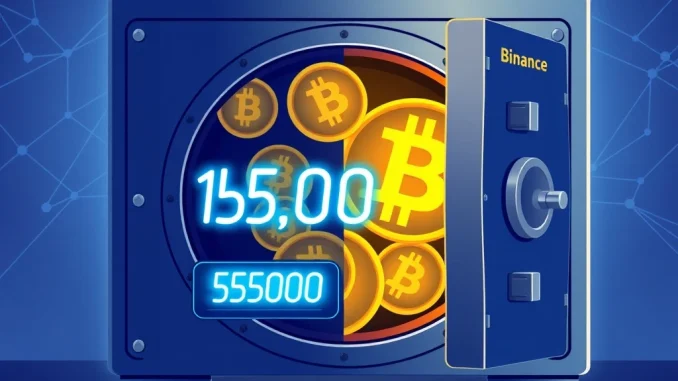
Global, May 2025: Binance, the world’s largest cryptocurrency exchange by trading volume, has completed a significant strategic shift in its reserve management. The exchange’s Secure Asset Fund for Users (SAFU) has finalized the conversion of its entire $1 billion emergency insurance fund into Bitcoin. This move, executed over a 30-day period, brings the fund’s total Bitcoin holdings to 15,000 BTC, valued at approximately $1.005 billion at current market prices. The conversion occurred despite ongoing market volatility, signaling a long-term confidence in Bitcoin’s role as a reserve asset.
Binance SAFU Fund Completes Strategic Bitcoin Conversion
The Secure Asset Fund for Users represents Binance’s commitment to protecting user assets. Established in 2018, the fund serves as an emergency insurance pool, funded initially by allocating 10% of all trading fees. For years, the fund maintained a diversified portfolio across various stablecoins and fiat equivalents. The recent decision to convert the entire $1 billion reserve into Bitcoin marks a fundamental change in the fund’s asset allocation strategy.
Binance executed the conversion through a series of purchases over one month. The final transaction involved acquiring 4,545 BTC, completing the full allocation to Bitcoin. Exchange representatives confirmed the process followed a measured approach to minimize market impact. The timing of this conversion coincides with what many analysts describe as a consolidation phase for Bitcoin, following its historic 2024 rally and subsequent correction.
This strategic shift follows broader industry trends where major cryptocurrency entities increasingly treat Bitcoin as a primary reserve asset. Other exchanges and blockchain companies have made similar, though typically smaller, allocations to Bitcoin in their treasury management strategies. Binance’s move represents the largest single conversion of an exchange insurance fund into Bitcoin to date.
Understanding the SAFU Fund’s Purpose and Evolution
The Secure Asset Fund for Users operates independently from Binance’s operational funds. Its primary purpose is to reimburse users in extreme, unlikely scenarios such as security breaches, hacking incidents, or unexpected financial failures within the exchange’s ecosystem. By maintaining this fund in highly liquid and secure assets, Binance provides an additional layer of protection beyond standard security measures.
The fund’s evolution reflects changing perspectives on asset security within the cryptocurrency industry:
- 2018-2021: Mixed portfolio of stablecoins (USDT, USDC, BUSD) and fiat currencies
- 2022-2024: Gradual increase in cryptocurrency allocation, particularly Bitcoin
- 2025: Full conversion to Bitcoin, representing 100% of the $1 billion fund
This progression mirrors the growing institutional acceptance of Bitcoin as a legitimate store of value. Unlike stablecoins, which maintain parity with fiat currencies, Bitcoin offers potential appreciation alongside its utility as a decentralized digital asset. However, this also introduces price volatility that the fund must now account for in its risk management calculations.
Market Context and Timing Analysis
Binance initiated the conversion during a period of relative market weakness for Bitcoin. After reaching all-time highs in early 2024, Bitcoin entered a prolonged consolidation phase characterized by decreased volatility and trading volume. Many analysts interpreted this period as healthy market digestion following unprecedented institutional adoption throughout 2023 and 2024.
The exchange’s decision to convert during this phase suggests several strategic considerations. First, purchasing during consolidation periods typically allows for better price execution with reduced market impact. Second, it demonstrates a long-term perspective that looks beyond short-term price fluctuations. Third, it aligns with increasing regulatory clarity in major markets, which has reduced some of the systemic uncertainty that previously affected cryptocurrency valuations.
Market data indicates that the purchases occurred across multiple trading venues and through both spot and over-the-counter transactions. This approach helped prevent significant price spikes that could have occurred with a single large market order. The final average purchase price reportedly fell within a narrow range, suggesting disciplined execution throughout the 30-day period.
Implications for Exchange Security and Industry Standards
Binance’s decision to hold its entire SAFU fund in Bitcoin establishes a new precedent for exchange insurance mechanisms. Traditionally, emergency funds have been held in stable assets with minimal price fluctuation to ensure predictable coverage amounts. By moving to Bitcoin, Binance accepts greater price volatility in exchange for potential asset appreciation and alignment with the cryptocurrency ecosystem’s native asset.
This move has several important implications:
- Coverage Value Fluctuation: The dollar value of the SAFU fund will now fluctuate with Bitcoin’s price, potentially increasing or decreasing the fund’s coverage capacity
- Industry Benchmarking: Other exchanges may reconsider their own insurance fund allocations, potentially leading to increased Bitcoin demand from institutional holders
- Regulatory Considerations: Financial regulators may examine how price volatility affects consumer protection mechanisms
- Transparency Requirements: Increased need for regular auditing and public verification of Bitcoin holdings
The decision also reflects confidence in Bitcoin’s long-term viability as the cornerstone of the cryptocurrency ecosystem. By denominating its user protection fund in Bitcoin rather than fiat equivalents, Binance reinforces Bitcoin’s status as the fundamental reserve asset of the digital economy.
Technical Execution and Storage Security
Securing 15,000 BTC requires sophisticated custody solutions. Binance has confirmed that the SAFU fund’s Bitcoin holdings utilize multi-signature cold storage wallets, with private keys distributed across geographically separate secure locations. This approach minimizes single points of failure and provides robust protection against unauthorized access.
The exchange employs a combination of institutional-grade custody partners and proprietary security infrastructure. Regular proof-of-reserve audits will verify that the Bitcoin remains securely held and fully backed. These audits typically involve cryptographic verification that allows users to confirm the existence of assets without compromising security through excessive transparency.
Storage security represents a critical consideration for any entity holding significant Bitcoin reserves. The SAFU fund’s security protocols likely exceed standard operational security measures, given the fund’s insurance function and the substantial value involved. Industry experts anticipate that Binance will provide enhanced transparency around these security arrangements, given the fund’s importance to user confidence.
Historical Perspective on Exchange Insurance Funds
Exchange insurance mechanisms have evolved significantly since the early days of cryptocurrency trading. Following several high-profile exchange failures between 2014 and 2019, industry leaders recognized the need for formalized user protection funds. Binance pioneered this approach with SAFU in 2018, setting a standard that numerous other exchanges subsequently adopted.
Comparative analysis shows varying approaches to exchange insurance:
| Exchange | Insurance Fund | Primary Assets | Coverage Amount |
|---|---|---|---|
| Binance | SAFU | Bitcoin (100%) | $1 billion |
| Coinbase | User Protection Fund | USD & Stablecoins | Not Disclosed |
| Kraken | No Formal Fund | N/A | N/A |
| FTX (Historical) | Insurance Fund | FTT Token | Failed 2022 |
The table illustrates diverse approaches to user protection. Binance’s move to Bitcoin represents the most substantial commitment to cryptocurrency-native asset backing. Historical examples like FTX demonstrate the risks of insurance funds backed primarily by exchange-specific tokens, which created correlated risks rather than independent protection.
This historical context highlights why Binance’s decision represents a significant departure from both traditional finance models and some cryptocurrency industry practices. By choosing Bitcoin—an asset independent of Binance’s operational success—the exchange creates a more robust protection mechanism that isn’t subject to the same risks as the exchange itself.
Conclusion
Binance has completed a landmark conversion of its $1 billion SAFU fund entirely into Bitcoin, resulting in holdings of 15,000 BTC. This strategic decision reflects growing institutional confidence in Bitcoin as a reserve asset and represents a significant evolution in exchange insurance mechanisms. While introducing price volatility to the fund’s value, the move aligns user protection with the fundamental asset of the cryptocurrency ecosystem. The conversion occurred during a period of market consolidation, suggesting a long-term perspective focused on Bitcoin’s structural role rather than short-term price movements. As the largest cryptocurrency exchange takes this substantial position, industry observers will monitor how this decision influences other exchanges’ approaches to user protection and reserve management. The Binance SAFU fund’s Bitcoin purchase reinforces the maturation of cryptocurrency markets and the increasing sophistication of institutional participants in the digital asset space.
FAQs
Q1: What is the Binance SAFU fund?
The Secure Asset Fund for Users (SAFU) is Binance’s emergency insurance fund, established in 2018 to protect users in extreme scenarios like security breaches or unexpected financial issues. It is funded by allocating 10% of all trading fees received by the exchange.
Q2: Why did Binance convert the entire SAFU fund to Bitcoin?
Binance converted the fund to Bitcoin as a strategic decision reflecting confidence in Bitcoin’s long-term value and its role as the fundamental reserve asset of the cryptocurrency ecosystem. This move aligns user protection with the native asset of the industry Binance serves.
Q3: How does holding Bitcoin affect the fund’s ability to protect users?
Holding Bitcoin introduces price volatility to the fund’s dollar value, meaning the coverage amount fluctuates with Bitcoin’s price. However, it also provides potential for appreciation and represents a commitment to cryptocurrency-native asset backing rather than fiat equivalents.
Q4: How is the Bitcoin stored for security?
The 15,000 BTC is stored in multi-signature cold storage wallets with private keys distributed across geographically separate secure locations. This approach minimizes single points of failure and provides robust protection against unauthorized access.
Q5: Will other exchanges follow Binance’s example?
Industry analysts suggest that other major exchanges may reconsider their insurance fund allocations following Binance’s move. However, each exchange will evaluate this based on their risk tolerance, regulatory environment, and strategic outlook on Bitcoin’s long-term role.
Q6: How can users verify the SAFU fund’s Bitcoin holdings?
Binance conducts regular proof-of-reserve audits that cryptographically verify asset holdings without compromising security. Users can review these audit reports to confirm that the Bitcoin remains securely held and fully backed.
Updated insights and analysis added for better clarity.
This article was produced with AI assistance and reviewed by our editorial team for accuracy and quality.