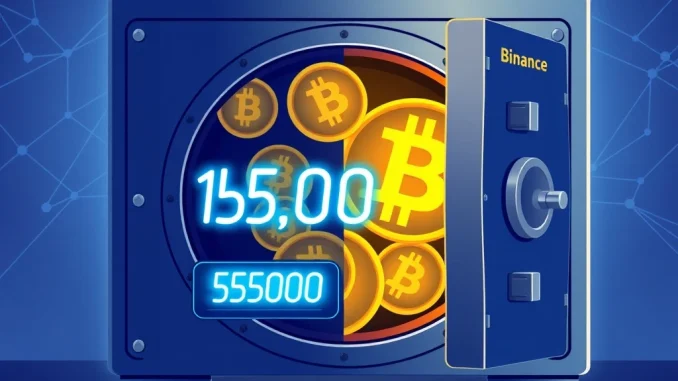
Global, April 2025: In a significant move underscoring its long-term commitment to user security and market stability, the Binance cryptocurrency exchange has executed another major Bitcoin acquisition for its SAFU insurance fund. Blockchain intelligence platform Arkham reported the purchase of 1,315 BTC, valued at approximately $100.42 million. This transaction marks the second major buy in a 48-hour period, bringing the total to a substantial 2,630 Bitcoin. The strategic accumulation directly advances Binance’s publicly stated goal of converting its $1 billion Secure Asset Fund for Users (SAFU) entirely into Bitcoin, a decision that carries considerable weight for both the exchange’s risk management and broader market sentiment.
Binance SAFU Fund Deepens Its Bitcoin Reserves
The Secure Asset Fund for Users represents a cornerstone of Binance’s risk management framework. Established in 2018, the SAFU fund acts as an emergency insurance pool, designed to protect users in extreme scenarios such as a security breach or unexpected financial losses. Originally funded by allocating 10% of all trading fees, the fund’s composition is a strategic choice. In late 2023, Binance announced a pivotal shift: converting the entire $1 billion value of the SAFU fund from its previous mix of stablecoins and other assets into Bitcoin. The recent 2,630 BTC purchase is a direct and accelerated execution of this strategy.
This conversion from fiat-pegged assets to a native cryptocurrency like Bitcoin is not merely an accounting change. It represents a fundamental belief in Bitcoin’s long-term value proposition as a non-correlated, scarce digital asset. By holding its insurance fund in Bitcoin, Binance aligns the fund’s growth potential with the performance of the core asset it exists to protect. Furthermore, it signals a reduction in reliance on traditional banking systems and fiat currencies for its most critical safety net. Analysts view this move as a vote of confidence that could influence other institutional holders to consider similar long-term reserve strategies.
Analyzing the Market Impact and Strategic Timing
The scale and pace of these purchases naturally draw attention to their potential market impact. A two-day accumulation of 2,630 BTC represents significant buying pressure, especially when executed by a known, transparent entity like an exchange’s official fund. Such activity can provide underlying support for Bitcoin’s price by absorbing available supply from the market. It also introduces a large, likely long-term holder (often called a “hodler”) into the ecosystem, reducing circulating supply.
The timing of these buys is also subject to analysis. They occur amidst a broader landscape of increasing institutional adoption, regulatory clarifications in key markets, and the ongoing integration of Bitcoin into traditional finance through spot Exchange-Traded Funds (ETFs). Binance’s actions can be interpreted as aligning with this macro trend, positioning its SAFU fund ahead of potential future appreciation. The table below contextualizes the scale of this purchase relative to other known corporate and institutional Bitcoin holdings.
| Entity | Approximate BTC Holdings | Type |
|---|---|---|
| Binance SAFU Fund (Post-Purchase) | ~$1 Billion (Value) | Exchange Insurance Fund |
| MicroStrategy | 200,000+ BTC | Corporate Treasury |
| Purpose Bitcoin ETF (Canada) | 30,000+ BTC | Public Investment Fund |
| Tesla (Historical Peak) | ~43,200 BTC | Corporate Treasury |
While the SAFU fund’s holdings are smaller than some corporate treasuries, its purpose as a user-protection mechanism makes its conversion uniquely symbolic. It demonstrates a practical, operational use case for Bitcoin beyond pure investment speculation.
The Evolution and Mechanics of the SAFU Fund
To fully appreciate this purchase, one must understand the SAFU fund’s evolution. Initially, the fund held a basket of assets, including Binance Coin (BNB), Bitcoin (BTC), and Tether (USDT). The shift to a Bitcoin-only strategy marks a maturation. The rationale is multi-faceted. First, Bitcoin is widely regarded as the most secure and decentralized digital asset, with the longest track record and highest liquidity. Second, holding the fund in a single, transparent asset simplifies auditing and public verification—a crucial factor for rebuilding trust in the wake of past industry challenges.
The mechanics of the purchase are also noteworthy. Using on-chain analytics from firms like Arkham, the public can verify the movement of funds to the designated SAFU wallet addresses in near real-time. This transparency is a deliberate choice by Binance, providing tangible proof of its commitment and allowing the community to monitor the fund’s growth. It turns the SAFU fund from an abstract promise into a verifiable on-chain reality, enhancing its authoritativeness and trustworthiness.
Broader Implications for Exchange Security and Industry Standards
Binance’s aggressive funding of its SAFU reserve establishes a high bar for security and user protection in the cryptocurrency exchange industry. Other major platforms maintain similar insurance or emergency funds, but the scale and public Bitcoin conversion of Binance’s SAFU is distinctive. This action could pressure competitors to bolster their own protection funds, potentially leading to industry-wide increases in secured user assets. For traders and investors, a well-funded SAFU provides an additional layer of psychological security when choosing where to custody their assets.
However, experts caution that an insurance fund is just one component of a robust security posture. It operates as a last line of defense. Primary security depends on continuous investment in:
- Cybersecurity Infrastructure: Advanced threat detection, cold storage solutions, and regular audits.
- Regulatory Compliance: Adhering to Anti-Money Laundering (AML) and Know Your Customer (KYC) standards globally.
- Transparent Operations: Regular proof-of-reserves audits and clear communication.
The SAFU fund’s growth complements these efforts, creating a more holistic safety net. Its conversion to Bitcoin also hedges the fund against inflation in traditional fiat currencies, aiming to preserve its real purchasing power over decades—a critical consideration for a fund meant to exist in perpetuity.
Conclusion
The Binance SAFU fund purchase of 1,315 BTC, culminating in a two-day total of 2,630 BTC, is a strategically significant event. It accelerates the exchange’s $1 billion Bitcoin conversion goal, reinforces market confidence through transparent, on-chain action, and sets a new benchmark for user protection in the digital asset industry. This move transcends a simple treasury allocation; it embodies a long-term philosophical shift towards Bitcoin as the foundational reserve asset for crypto-native institutions. As the industry continues to evolve, the size and composition of exchange insurance funds like SAFU will remain a key metric for assessing platform reliability and the deepening institutional conviction in Bitcoin’s enduring value.
FAQs
Q1: What is the Binance SAFU fund?
The Secure Asset Fund for Users (SAFU) is an emergency insurance fund established by Binance in 2018. It is funded by allocating a portion of trading fees and is designed to reimburse users in the unlikely event of a major security breach or financial incident on the platform.
Q2: Why is Binance converting the SAFU fund to Bitcoin?
Binance announced a strategy to convert the entire $1 billion value of the SAFU fund to Bitcoin to leverage Bitcoin’s potential as a long-term store of value, enhance the transparency of the fund through on-chain verification, and reduce reliance on traditional fiat-based assets.
Q3: How does this large Bitcoin purchase affect the market?
Large, transparent purchases by a known entity like Binance can create buying pressure and provide price support by absorbing available supply. More importantly, it signals strong institutional confidence, which can positively influence broader market sentiment.
Q4: Can users verify the SAFU Bitcoin holdings?
Yes. Binance publicly discloses the wallet addresses for the SAFU fund. Anyone can use blockchain explorers or analytics platforms like Arkham to track the fund’s balance and transaction history in real-time, ensuring full transparency.
Q5: Is user money automatically insured by the SAFU fund?
The SAFU fund is a discretionary emergency fund, not a guaranteed or automatic insurance policy like FDIC coverage on bank deposits. It is designed to be used at Binance’s discretion to protect users in extreme, exceptional circumstances.
Updated insights and analysis added for better clarity.
This article was produced with AI assistance and reviewed by our editorial team for accuracy and quality.