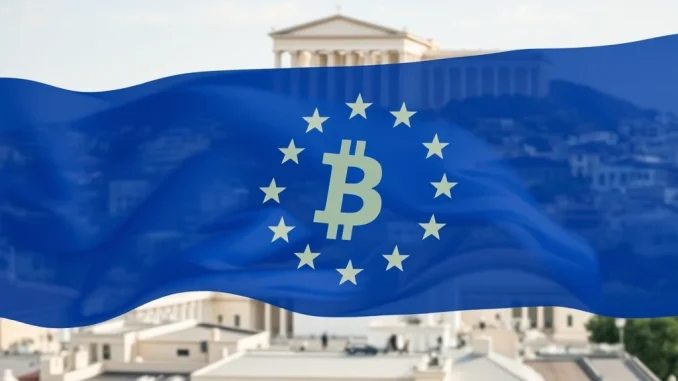
In a pivotal move for cryptocurrency regulation, global exchange Binance has formally submitted its Markets in Crypto-Assets (MiCA) license application to Greek authorities, positioning Athens as an unexpected gateway to European compliance. This strategic decision, announced on January 19, 2026, reveals deeper fractures in Europe’s regulatory approach as the July 2026 enforcement deadline approaches. The application follows Binance’s $4.3 billion settlement with U.S. regulators and represents a fundamental shift toward institutional acceptance.
Binance MiCA License Application Marks Regulatory Turning Point
Binance has officially filed its MiCA license application with the Hellenic Capital Market Commission (HCMC), selecting Greece despite the country having issued zero MiCA licenses to date. This contrasts sharply with Germany’s 43 approvals and the Netherlands’ 22 authorizations. The exchange has established Binary Greece, a local holding company to oversee regional operations, while engaging all four major auditing firms—EY, KPMG, PwC, and Deloitte—to shepherd the approval process.
Industry analysts note Greece offers distinct advantages through its agile administrative procedures. The HCMC has implemented an accelerated review process that appeals to exchanges facing time constraints. Furthermore, Greece’s economic growth exceeds the European average, creating a favorable environment for financial innovation. A Binance spokesperson emphasized this strategic choice reflects Greece’s commitment to financial stability, transparency, and investor protection within the EU framework.
European Crypto Regulation Creates Two-Speed Compliance Landscape
The MiCA framework, established by the European Parliament in 2023, creates a unified regulatory regime across 27 member states. However, implementation reveals significant national variations. Northern European nations like Germany and the Netherlands maintain rigorous, methodical approval processes. Southern European countries, including Greece and Austria, demonstrate more flexible approaches while maintaining core compliance standards.
This regulatory divergence has practical consequences. Over 540 million euros in fines have already been levied against non-compliant entities. Approximately 90 cryptocurrency companies still lack MiCA authorization with the deadline approaching. The framework mandates that all crypto asset service providers must obtain licensing or exit EU markets by July 2026, creating urgent pressure for major players like Binance.
Strategic Implications for Crypto Market Structure
Binance’s Greek application represents more than regulatory compliance—it signals a fundamental business transformation. Under CEO Richard Teng’s leadership, the exchange actively rebuilds institutional trust following regulatory challenges in multiple jurisdictions. The company withdrew from several European markets in 2023-2024 amid increased scrutiny, including investigations by France’s ACPR and JUNALOC authorities.
Simultaneously, other exchanges pursue varied European strategies. KuCoin secured its MiCA license through Austria’s Financial Market Authority. Traditional financial institutions like KBC Bank and Société Générale-Forge have adapted their existing frameworks to meet new requirements. This regulatory reshuffling may redistribute market share across Europe, with southern jurisdictions potentially attracting more crypto businesses seeking efficient approval processes.
Greece Emerges as Unlikely Crypto Regulation Laboratory
Athens has positioned itself as a testing ground for balanced cryptocurrency regulation. Greek authorities view MiCA compliance not as a regulatory burden but as an economic development opportunity. The country’s digital transformation strategy actively incorporates blockchain technology across public and private sectors. This progressive stance contrasts with more cautious approaches in northern EU nations.
Greece’s regulatory framework emphasizes several key principles. First, it maintains robust investor protection mechanisms required under MiCA. Second, it promotes transparency through clear reporting requirements. Third, it supports innovation by providing regulatory certainty. This balanced approach has attracted Binance’s strategic investment at a critical juncture in European crypto development.
Technical and Operational Requirements Under MiCA
The MiCA framework imposes comprehensive obligations on cryptocurrency exchanges. These include stringent capital requirements, detailed governance standards, transparent fee structures, and robust cybersecurity protocols. Exchanges must implement segregated customer funds, maintain comprehensive transaction records, and establish clear complaint resolution procedures.
For Binance, compliance involves significant operational adjustments. The exchange must demonstrate adequate liquidity reserves, enhance its anti-money laundering controls, and ensure marketing communications meet EU transparency standards. The collaboration with four major auditing firms suggests Binance is undertaking thorough preparation to meet all MiCA requirements through the Greek application process.
Market Response and Cryptocurrency Price Implications
Financial markets have responded cautiously to Binance’s regulatory developments. At the time of the Greek application announcement, BNB traded around $897, reflecting moderate investor optimism. Broader cryptocurrency markets show increased stability as regulatory clarity improves. Institutional adoption continues growing, with PwC’s latest report indicating irreversible momentum toward mainstream cryptocurrency integration.
The regulatory developments coincide with broader industry trends. Artificial intelligence tools for market analysis, quantum computing security concerns, and increasing institutional participation all shape the evolving cryptocurrency landscape. MiCA compliance represents one component of this maturation process, potentially reducing volatility through increased transparency and investor protections.
Broader Implications for Global Crypto Regulation
Europe’s MiCA framework establishes a precedent for comprehensive cryptocurrency regulation worldwide. Other jurisdictions, including the United Kingdom, Singapore, and the United Arab Emirates, are developing their own regulatory approaches. The European model emphasizes consumer protection while attempting to foster innovation—a balance other regions may emulate.
Binance’s strategic pivot toward regulated markets reflects this global trend. The exchange faces similar regulatory processes in multiple jurisdictions simultaneously. Success in Greece could streamline approvals elsewhere, while failure might complicate global operations. This interconnected regulatory landscape means decisions in Athens influence markets worldwide.
Conclusion
Binance’s MiCA license application in Greece represents a strategic maneuver within Europe’s evolving cryptocurrency regulatory landscape. The exchange targets Greek authorities for their agile procedures and growth-oriented approach as the July 2026 deadline approaches. This decision highlights emerging divisions between northern and southern European regulatory philosophies while signaling Binance’s transformation toward institutional compliance. The outcome will significantly influence cryptocurrency market structure, investor protections, and innovation pathways across the European Union and potentially globally.
FAQs
Q1: What is the MiCA regulation deadline for cryptocurrency exchanges?
The Markets in Crypto-Assets (MiCA) framework requires all crypto asset service providers to obtain licensing or cease EU operations by July 2026. This deadline creates urgent pressure for exchanges currently operating without authorization.
Q2: Why did Binance choose Greece for its MiCA application?
Binance selected Greece due to its agile administrative procedures, accelerated review process, and economic growth exceeding the European average. Greek authorities view regulation as an economic development opportunity rather than merely a compliance requirement.
Q3: How many MiCA licenses has Greece issued so far?
As of January 2026, Greece has issued zero MiCA licenses, contrasting with Germany’s 43 approvals and the Netherlands’ 22 authorizations. This makes Binance’s application particularly significant for the Greek regulatory landscape.
Q4: What are the penalties for non-compliance with MiCA regulations?
European authorities have levied over 540 million euros in fines against non-compliant cryptocurrency entities. Penalties include financial sanctions, operational restrictions, and potential market exclusion for severe or repeated violations.
Q5: How does Binance’s Greek application relate to its U.S. settlement?
The $4.3 billion settlement with U.S. regulators prompted Binance’s strategic shift toward comprehensive compliance. The Greek MiCA application represents part of this broader effort to rebuild institutional trust and establish regulated market access globally.