
SEOUL, South Korea – The Bank of Korea is pushing lawmakers to mandate emergency “circuit breakers” for cryptocurrency exchanges, a direct response to the staggering market fallout from Bithumb’s $40 billion Bitcoin distribution error earlier this year. This regulatory move signals a significant shift in how South Korean authorities view the risks inherent in digital asset trading platforms.
Bank of Korea Calls for Crypto Trading Halts
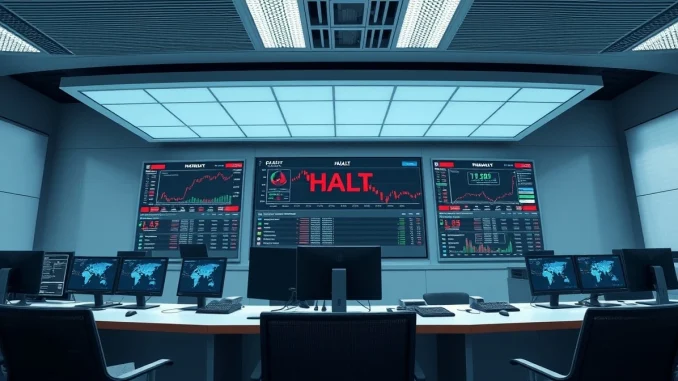
In a payments system report released on Monday, April 11, 2026, South Korea’s central bank argued that virtual asset exchanges need automatic suspension mechanisms. These would function like the trading curbs on the traditional Korea Exchange. The goal is simple: prevent a single error from spiraling into market-wide panic.
Also read: EU Crypto Regulation Shift: ECB Backs Dramatic Power Transfer to ESMA
“Currently, the virtual asset industry lacks internal control mechanisms and faces lower regulatory intensity compared to established financial institutions,” the bank stated. Data from the report shows the price of Bitcoin on Bithumb plunged nearly 10% in minutes following the February incident. On other major exchanges, the price remained stable.
This disparity highlights the isolated but severe impact an exchange-specific error can have. The bank’s analysis suggests that without safeguards, similar events are likely. “Consequently, as similar incidents could occur at other virtual asset exchanges, it is necessary to strengthen relevant regulations to prevent them in advance,” the report added.
Also read: Malicious AI Routers Exposed: How Crypto Credentials Are Being Stolen
The $40 Billion Bithumb Blunder That Sparked the Push
The catalyst for this regulatory urgency was a monumental clerical mistake. In early February 2026, Bithumb erroneously distributed 620,000 Bitcoin to customers. The intended payout was 620,000 Korean won, roughly $400. The erroneous distribution was valued at over $42 billion based on Bitcoin’s price at the time.
According to the Bank of Korea’s report, the immediate market reaction was chaotic. Users who received the unexpected windfall rushed to sell. This triggered a cascade of panic selling among other traders on the platform. Bithumb’s internal price for Bitcoin detached sharply from prices on other exchanges like Upbit.
Bithumb acted within minutes, halting all trading and attempting to reverse the transactions. But the damage was done. The exchange confirmed that 1,788 BTC, worth approximately $125 million, had been sold before the halt. Bithumb covered this massive shortfall using its own company reserves.
A Systemic Weakness Exposed
Industry watchers note the incident exposed a critical flaw. Crypto exchanges operate with high tap into and instant settlement, yet lack the automated error-checking systems common in traditional finance. The Bank of Korea’s report pinpointed this gap. It recommended exchanges be required to implement systems that can detect and block “erroneous payments caused by human error.”
Furthermore, the central bank suggested mandatory systems for automatically verifying a platform’s internal accounting of assets against the actual assets recorded on the blockchain. This real-time reconciliation could flag discrepancies before they explode into market crises. What this means for investors is a potential reduction in extreme, exchange-specific volatility caused by operational failures.
South Korea’s Broader Crypto Regulatory Crackdown
The circuit breaker proposal arrives as South Korean lawmakers are actively debating broader digital asset legislation. The Political Affairs Committee of the National Assembly has several bills under review. These aim to establish clearer rules for investor protection and exchange operations.
The Bank of Korea explicitly stated that its suggested safety measures should be included in this legislative package “to enhance the safety and transparency of virtual asset exchange operations.” This places the central bank firmly in the camp of advocates for stricter oversight.
This push is part of a longer trend. South Korean regulators have been gradually tightening rules around crypto since the market peaks and subsequent crashes of recent years. Measures have included stricter know-your-customer (KYC) checks, real-name account linking with banks, and increased scrutiny on the marketing practices of exchanges.
How Crypto Circuit Breakers Would Work
The proposed mechanism draws directly from the stock market. On the Korea Exchange, circuit breakers trigger a market-wide trading halt if the KOSPI or KOSDAQ indices fall by more than 8% in a single day. Trading pauses for 20 minutes. For crypto, the triggers would likely be exchange-specific.
Potential triggers could include:
- A price deviation exceeding a set percentage (e.g., 5-10%) from the global average price across major exchanges within a short timeframe.
- Unusually large, out-of-pattern transactions that suggest an error or market manipulation.
- A failure in the exchange’s internal asset verification system, flagging a mismatch with blockchain records.
The implication is a move toward standardization. By forcing exchanges to build these safeguards, regulators aim to inject stability into a market known for its wild swings. Critics, however, argue that overly aggressive circuit breakers could themselves create liquidity problems or be exploited by sophisticated traders.
The Global Context for Exchange Oversight
South Korea is not alone in grappling with exchange reliability. Major jurisdictions are implementing similar guardrails. Following the FTX collapse in late 2022, U.S. regulators have emphasized custody rules and operational resilience. The European Union’s Markets in Crypto-Assets (MiCA) regulation, set for full implementation, includes provisions for solid internal controls and governance.
The Bank of Korea’s focus on automated error detection aligns with this global shift. The message to exchanges is clear: operational excellence is no longer optional. It is a regulatory requirement. This could signal a wave of increased compliance costs for trading platforms, potentially leading to further industry consolidation.
Conclusion
The Bank of Korea’s call for crypto exchange circuit breakers is a direct, data-driven response to a near-catastrophic failure at Bithumb. It marks a central moment where South Korean authorities are applying lessons from traditional finance to the digital asset sector. The proposed rules aim to prevent human error from triggering market panic, thereby protecting investors and ensuring greater systemic safety. As lawmakers finalize broader crypto legislation, the integration of these automatic trading halt mechanisms will be a key test of South Korea’s commitment to building a more secure and transparent virtual asset market.
FAQs
Q1: What exactly did Bithumb do wrong?
In February 2026, Bithumb made a data entry error, sending customers 620,000 Bitcoin instead of 620,000 Korean won. This was a difference of about $400 versus over $42 billion.
Q2: What is a “circuit breaker” in financial markets?
A circuit breaker is an automatic mechanism that halts trading on an exchange for a short period. It is triggered by extreme price movements or system errors to prevent panic and allow time for information dissemination.
Q3: Why is the Bank of Korea getting involved in crypto regulation?
As South Korea’s central bank, it is responsible for financial system stability. The Bithumb incident demonstrated how an error at a major crypto exchange could cause significant market disruption, falling within the bank’s stability mandate.
Q4: Are other countries doing this?
Yes. The concept is common in stock markets globally. For crypto, the EU’s MiCA regulation and post-FTX discussions in the U.S. are pushing for similar operational resilience and error-prevention standards on exchanges.
Q5: What happens next for South Korean crypto exchanges?
Exchanges will likely need to invest in new automated monitoring and control systems to comply with expected regulations. The National Assembly must pass the relevant laws, which would then be enforced by the Financial Services Commission.

This article was produced with AI assistance and reviewed by our editorial team for accuracy and quality.



Be the first to comment