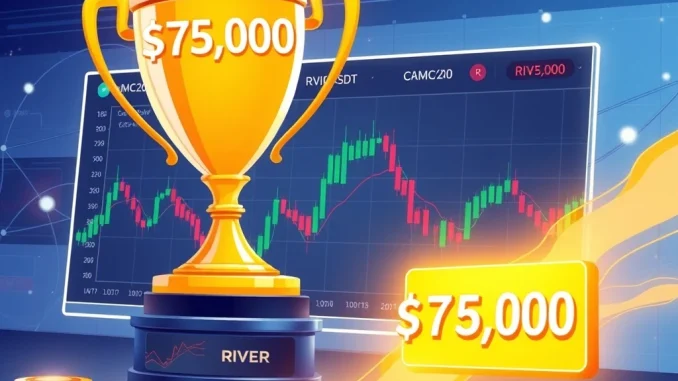
Global, January 2025: The decentralized finance (DeFi) landscape sees a significant competitive event as the Aster DEX trading competition launches with a substantial $75,000 prize pool. This initiative, structured across two distinct events for spot and perpetual futures trading, represents a strategic move by the decentralized exchange to incentivize liquidity and user engagement on its platform during a pivotal period for the sector.
Aster DEX Trading Competition Details and Structure
The Aster decentralized exchange has formally announced a dual-format trading competition, allocating a total of $75,000 in rewards. The first event centers on the CMC20/USDT spot trading pair. This competition commenced recently and is scheduled to conclude at 2:00 p.m. UTC on February 25, 2025. It features a reward pool of $50,000, denominated in the platform’s native ASTER token. The distribution mechanism for this event is twofold, rewarding participants based on the cumulative trading fees they generate and the duration they hold a qualifying position. This hybrid model encourages both active trading and committed participation, a common design in modern DeFi incentive programs aimed at fostering sustainable liquidity rather than short-term volume spikes.
The second concurrent event is a RIVER/USDT perpetual futures trading competition. With a separate prize pool of $25,000, this contest has a shorter timeline, ending at 12:00 p.m. UTC on February 1, 2025. Eligibility for rewards requires participants to meet a predefined minimum trading volume threshold. Subsequently, rewards are tiered and distributed primarily according to the holding duration of perpetual futures positions. This structure emphasizes the role of longer-term market participants in providing stability to the futures market on the DEX.
The Strategic Role of DEX Trading Competitions
Trading competitions have evolved into a core user acquisition and retention strategy within the decentralized exchange ecosystem. Unlike centralized exchanges that may use large marketing budgets, many DEXs leverage their treasury assets or partner with projects to fund prize pools that directly reward user activity. For a project like Aster, hosting a competition serves multiple strategic purposes. Primarily, it drives immediate trading volume and liquidity depth for the selected asset pairs, which improves the trading experience for all users by reducing slippage. Secondly, it introduces a broader user base to the specific functionalities of the Aster platform, including its spot market and perpetual futures offerings.
Historically, such events have proven effective in bootstrapping liquidity for new or emerging trading pairs. The choice of the CMC20 index token and RIVER highlights a focus on specific segments of the crypto market, potentially aligning with Aster’s broader listing and partnership strategy. The use of a tiered reward system based on holding time is a deliberate design choice to combat “wash trading”—where users trade with themselves to inflate volume—and to promote genuine, longer-term engagement with the platform’s features.
Understanding the Mechanics: Fees, Volume, and Holding Time
For potential participants, understanding the competition mechanics is crucial. In the CMC20/USDT event, rewards correlate with trading fees paid. This creates a direct relationship: the more a user trades (and consequently pays in fees), the larger their potential share of the $50,000 pool, assuming they also meet the holding requirements. The holding time component adds a layer of strategy, as it may require maintaining a position even during market volatility.
The RIVER/USDT futures competition introduces a minimum volume requirement, acting as a qualifying filter to ensure participants are seriously engaged. The tiered rewards based on holding duration then benefit those who maintain their futures positions over time, which can be a more complex decision given the leveraged and often short-term nature of futures trading. These mechanics reflect an industry-wide trend toward more sophisticated incentive models that reward behaviors contributing to a healthy, liquid market rather than just raw trading volume.
Contextualizing the Event in the Broader DeFi Landscape
The announcement from Aster arrives during a period of intensified competition among decentralized exchanges. While giants like Uniswap and PancakeSwap dominate in terms of total value locked (TVL) and volume, mid-tier and emerging DEXs frequently use targeted competitions to carve out niches and attract communities around specific assets. A $75,000 prize pool is a significant commitment, indicating Aster’s dedication to growing its market share. It also reflects the ongoing need for DeFi protocols to actively engage their communities and provide tangible value beyond basic swap functionality.
From a user’s perspective, participating in such events requires careful consideration. Potential rewards must be weighed against network gas fees, the inherent risks of trading volatile crypto assets, and the opportunity cost of capital. Furthermore, participants must thoroughly review the official competition rules regarding snapshot times, reward calculation formulas, and distribution schedules to avoid any misunderstandings.
Conclusion
The Aster DEX trading competition, with its combined $75,000 prize pool across spot and futures markets, represents a calculated initiative to boost platform activity and liquidity. By structuring rewards around both trading fees and holding duration, Aster aims to incentivize meaningful, sustained participation. As the DeFi sector continues to mature, such targeted incentive programs are likely to remain a key tool for protocols seeking to differentiate themselves and build loyal user bases in a highly competitive environment.
FAQs
Q1: What are the exact end dates for the two Aster trading competitions?
The CMC20/USDT spot trading competition ends at 2:00 p.m. UTC on February 25, 2025. The RIVER/USDT perpetual futures competition ends earlier, at 12:00 p.m. UTC on February 1, 2025.
Q2: How are the rewards distributed in the CMC20/USDT competition?
Rewards from the $50,000 pool are distributed in ASTER tokens based on a combination of two factors: the total trading fees a participant generates and the duration they hold a qualifying position in the CMC20/USDT pair.
Q3: Is there a minimum requirement to enter the RIVER/USDT futures competition?
Yes. To be eligible for rewards in the $25,000 futures competition, participants must first meet a minimum trading volume requirement for the RIVER/USDT perpetual futures pair. Specific volume thresholds are detailed in the official competition rules.
Q4: What is the main strategic goal for a DEX hosting a trading competition?
The primary goals are to increase trading volume and liquidity depth for specific asset pairs, improve the overall trading experience by reducing slippage, attract new users to the platform, and encourage deeper engagement with the DEX’s features like perpetual futures trading.
Q5: What should a user consider before participating in a DEX trading competition?
Users should consider the volatility of the involved cryptocurrencies, the network gas fees associated with transactions on the underlying blockchain, the specific and often complex competition rules, the opportunity cost of their capital, and the overall risk profile of active trading versus their investment strategy.