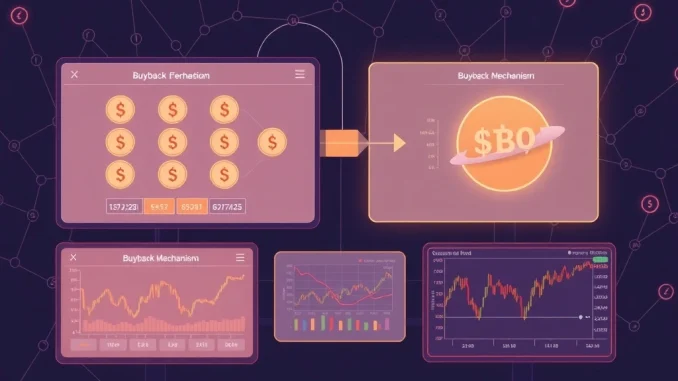
Decentralized perpetual futures exchange Aster has announced a significant expansion of its token buyback initiative, committing up to 40% of daily platform fees to systematically repurchase its native token from open markets. This strategic move, revealed via the platform’s official X account on November 15, 2024, represents a substantial escalation of the five-stage buyback plan unveiled just last month. The decision comes amid growing competition in decentralized derivatives trading and increasing investor focus on sustainable token economic models.
Aster Buyback Program Receives Major Fee Allocation Boost
The Aster platform will now allocate between 20% and 40% of its daily generated fees specifically toward token repurchases. This allocation represents a significant portion of platform revenue, demonstrating management’s commitment to creating sustainable value for token holders. The announcement follows careful analysis of platform performance metrics and market conditions throughout October 2024. Furthermore, this decision aligns with broader trends in decentralized finance where transparent value distribution mechanisms gain importance.
Platform fees on Aster primarily originate from trading activities across various perpetual futures markets. These fees include funding rate payments, opening and closing position charges, and liquidation penalties. The exchange operates on multiple blockchain networks including Ethereum and Arbitrum, providing cross-chain trading capabilities. Daily fee volumes fluctuate based on market volatility and trading activity levels, creating a dynamic buyback mechanism that responds directly to platform usage.
Decentralized Perpetual Futures Market Evolution
The decentralized perpetual futures market has experienced remarkable growth throughout 2024, with total value locked across major platforms exceeding $5 billion. Aster competes directly with established players like dYdX, GMX, and Gains Network, each implementing distinct token economic models. Unlike traditional centralized exchanges, decentralized platforms emphasize transparent revenue distribution and community governance. Consequently, buyback programs have emerged as popular mechanisms for returning value to token holders without regulatory complications.
Recent months have witnessed increased institutional interest in decentralized derivatives platforms. Traditional finance entities recognize the advantages of non-custodial trading and transparent settlement mechanisms. This institutional attention has elevated standards for token economic design, pushing platforms toward more sophisticated value distribution strategies. Aster’s enhanced buyback program directly addresses this evolving market expectation while maintaining compliance with regulatory frameworks.
Five-Stage Buyback Plan Implementation Timeline
Aster originally unveiled its comprehensive five-stage buyback strategy in October 2024, outlining a progressive approach to token repurchases. The plan includes specific triggers and allocation percentages for each development phase. Stage one focused on establishing baseline mechanisms using 10% of platform fees. Stage two, now activated, expands this allocation to between 20% and 40% based on performance metrics. Future stages will incorporate governance voting mechanisms and potentially expand to include token burning protocols.
The implementation follows this structured timeline:
- October 2024: Initial announcement of five-stage buyback framework
- November 2024: Activation of enhanced 20-40% fee allocation
- Q1 2025: Planned integration with governance voting systems
- Q2 2025: Potential expansion to include token burning mechanisms
- H2 2025: Full implementation of automated buyback parameters
Token Economic Impact and Market Response
Token buyback programs create direct deflationary pressure on circulating supplies when executed properly. By removing tokens from circulation, these programs increase scarcity while potentially supporting price stability. The Aster program specifically targets open market purchases rather than private transactions, ensuring transparent execution visible on blockchain explorers. Market analysts anticipate this approach will enhance long-term holder confidence while attracting new participants seeking sustainable token models.
Historical data from similar programs in traditional finance and cryptocurrency markets demonstrates varied outcomes. Successful implementations typically share several characteristics: transparent execution, sustainable funding sources, and clear communication protocols. Aster’s program incorporates all these elements while adapting them specifically for decentralized finance environments. The variable allocation percentage (20-40%) provides flexibility to adjust based on market conditions and platform performance metrics.
Comparative Analysis with Competitor Programs
| Platform | Buyback Mechanism | Fee Allocation | Transparency Level |
|---|---|---|---|
| Aster | Daily open market purchases | 20-40% of fees | On-chain verification |
| dYdX | Staking rewards | Variable based on fees | Governance dependent |
| GMX | Token burning | 30% of fees | Fully transparent |
| Gains Network | Buyback and burn | Fixed percentage | Regular reporting |
The table above illustrates how Aster’s approach compares with major competitors in the decentralized perpetual futures sector. Each platform employs distinct strategies reflecting their specific token economic philosophies and community preferences. Aster’s variable allocation percentage provides unique flexibility absent from most competitor programs. This adaptability may prove advantageous during periods of market volatility or changing regulatory landscapes.
Technical Implementation and Blockchain Integration
Aster’s buyback program operates through smart contracts deployed on supported blockchain networks. These contracts automatically allocate specified fee percentages to designated buyback addresses. The platform utilizes multi-signature wallets for enhanced security, requiring multiple authorized signatures for fund movements. Purchased tokens transfer to a publicly verifiable escrow contract, ensuring complete transparency throughout the process. This technical implementation minimizes counterparty risk while maximizing auditability.
The program incorporates several innovative features including dynamic allocation adjustments based on real-time metrics. Parameters like trading volume, open interest, and market volatility influence the exact percentage allocated each day. This responsive design ensures optimal resource utilization regardless of market conditions. Additionally, the system includes fail-safe mechanisms preventing excessive concentration or market manipulation during execution phases.
Expert Perspectives on Sustainable Token Economics
Industry analysts emphasize the importance of sustainable token economic models for long-term platform viability. Dr. Elena Rodriguez, tokenomics researcher at Blockchain Analytics Group, notes: “Well-designed buyback programs can align platform success with token holder interests effectively. The key considerations include funding sustainability, execution transparency, and market impact management. Programs funded directly from platform revenue typically demonstrate greater longevity than those relying on treasury reserves.”
Market data supports this perspective, showing that revenue-funded programs maintain consistency during various market cycles. Platforms allocating fixed treasury percentages often exhaust resources prematurely during extended downturns. Aster’s fee-based approach creates a natural correlation between platform usage and buyback intensity, establishing a virtuous cycle where increased trading activity directly enhances token value support mechanisms.
Regulatory Considerations and Compliance Framework
Decentralized finance platforms operate within evolving regulatory environments across multiple jurisdictions. Buyback programs require careful structuring to avoid classification as securities transactions or market manipulation. Aster’s legal team has designed the program specifically to comply with major regulatory frameworks including SEC guidelines and MiCA regulations in the European Union. The platform maintains detailed documentation of all buyback transactions for regulatory review when necessary.
Key compliance features include transparent disclosure of all program parameters, regular reporting of execution details, and clear communication of associated risks. The program avoids any guaranteed returns or profit promises, focusing instead on transparent value distribution mechanisms. These precautions help maintain regulatory goodwill while providing genuine value to token holders through systematic market operations.
Conclusion
Aster’s expanded buyback program represents a significant development in decentralized finance token economics. The commitment of up to 40% of daily platform fees demonstrates strong confidence in sustainable revenue generation while creating direct value for token holders. This strategic move enhances the Aster buyback program’s effectiveness within competitive perpetual futures markets. As decentralized finance continues maturing, such transparent value distribution mechanisms will likely become standard expectations rather than competitive advantages. The program’s success will depend on consistent execution, transparent reporting, and ongoing adaptation to evolving market conditions.
FAQs
Q1: How does Aster’s buyback program actually work?
The program automatically allocates 20-40% of daily platform fees to purchase ASTER tokens from open markets. These purchases occur through smart contracts that execute trades transparently on supported exchanges.
Q2: What happens to tokens purchased through the buyback program?
Purchased tokens transfer to a publicly verifiable escrow contract. The platform may redistribute these tokens through staking rewards, governance incentives, or permanent removal from circulation in future program stages.
Q3: How does this program benefit ASTER token holders?
The program creates buying pressure that may support token prices while reducing circulating supply. This deflationary mechanism potentially increases scarcity value for remaining tokens in circulation.
Q4: How transparent is the buyback execution process?
All transactions occur on-chain with publicly verifiable smart contracts. Users can monitor buyback addresses and transaction histories through blockchain explorers for complete transparency.
Q5: Can the buyback percentage change over time?
Yes, the program allows dynamic adjustment between 20% and 40% based on platform performance metrics and market conditions. Future governance mechanisms may enable community voting on allocation parameters.
Updated insights and analysis added for better clarity.
This article was produced with AI assistance and reviewed by our editorial team for accuracy and quality.