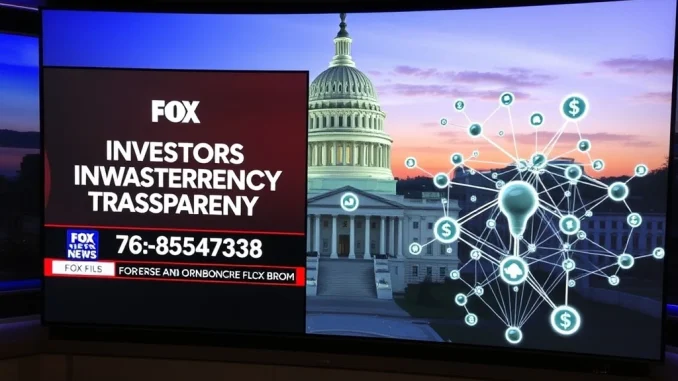
WASHINGTON, D.C. — A dramatic escalation in the battle over decentralized finance regulation unfolded this week as a newly formed advocacy group launched a national television campaign targeting specific provisions within landmark cryptocurrency legislation. The group, Investors For Transparency, aired advertisements on Fox News urging viewers to contact U.S. Senators and demand removal of DeFi-related clauses from the proposed Crypto-Asset Market Structure and Investor Protection Act, commonly known as the CLARITY Act. This development represents a significant moment in the ongoing struggle between traditional financial institutions and emerging decentralized technologies, potentially shaping the regulatory landscape for years to come.
DeFi Regulation Faces Organized Opposition
The advertisement campaign represents the most visible effort yet to influence the legislative process surrounding cryptocurrency regulation. Investors For Transparency specifically targets provisions within the CLARITY Act that would establish regulatory frameworks for decentralized finance platforms and stablecoin issuers. The group’s message contends that these DeFi provisions could stifle financial innovation in the United States, though financial analysts note the campaign reflects deeper concerns within the traditional banking sector about competitive pressures.
According to legislative tracking data, the CLARITY Act has undergone multiple revisions since its initial proposal. The current version contains several key components relevant to decentralized finance:
- Regulatory Classification: Defines when a decentralized protocol might be considered a securities exchange
- Stablecoin Oversight: Establishes federal requirements for payment stablecoin issuers
- Consumer Protection: Creates disclosure requirements for DeFi platforms serving U.S. users
- Innovation Sandbox: Allows for regulatory testing of new financial technologies
Financial policy experts observe that the advertisement’s timing coincides with increased Senate committee activity on the legislation. The campaign specifically asks viewers to call a provided hotline, which connects them with Senate offices, creating direct constituent pressure on lawmakers considering the bill.
Banking Sector Concerns Drive Campaign
Industry analysts identify the advertisement campaign as reflecting substantial concerns within the traditional banking industry about potential deposit outflows. The CLARITY Act’s provisions could enable regulated entities to offer interest-bearing stablecoin products, potentially competing directly with traditional bank savings accounts. Banking institutions have expressed apprehension that such products might attract significant capital away from conventional deposit accounts, particularly if they offer higher yields.
Historical context reveals similar patterns when new financial products emerge. The introduction of money market funds in the 1970s initially drew concerns about bank deposit stability, though regulatory adjustments eventually created coexistence between traditional and innovative financial products. Current Federal Reserve data shows U.S. commercial banks hold approximately $17.4 trillion in deposits, with even marginal outflows representing substantial sums.
| Institution Type | Estimated U.S. Deposits | Primary Concerns |
|---|---|---|
| Commercial Banks | $17.4 trillion | Deposit outflows, regulatory parity |
| Credit Unions | $1.8 trillion | Member retention, competitive yields |
| Potential DeFi Competitors | Not applicable | Regulatory clarity, market access |
Federal Reserve research indicates that interest rate differentials significantly influence deposit movements between financial products. Banking lobbyists have reportedly expressed concerns that interest-bearing stablecoins could create such differentials, particularly in higher interest rate environments. However, cryptocurrency advocates counter that properly regulated stablecoins could enhance financial inclusion and payment efficiency.
Industry Response and Counterarguments
The advertisement campaign prompted immediate responses from cryptocurrency industry leaders. Uniswap founder Hayden Adams publicly criticized the effort, characterizing it as an attack on decentralized finance by unidentified interests. Adams emphasized that DeFi protocols provide transparent, accessible financial services, contrasting them with opaque traditional systems. His response highlights the philosophical divide between decentralized and centralized financial models.
Regulatory experts note that the debate centers on fundamental questions about financial system architecture. Proponents of DeFi provisions argue they create necessary consumer protections while allowing innovation. Opponents contend the provisions might inadvertently stifle development or create regulatory uncertainty. The Securities and Exchange Commission and Commodity Futures Trading Commission have both indicated they are monitoring DeFi developments closely, though comprehensive regulatory frameworks remain under development.
Legislative Process and Timeline
The CLARITY Act currently resides with the Senate Banking Committee, where members are considering amendments before potential floor consideration. Legislative analysts identify several possible outcomes for the DeFi provisions targeted by the advertisement campaign:
- Complete Removal: Stripping all DeFi-related language from the bill
- Substantial Modification: Revising provisions to address banking sector concerns
- Study Requirement: Adding provisions for further regulatory analysis
- Preservation with Adjustments: Maintaining core provisions with technical changes
Congressional staffers indicate that the advertisement campaign has generated increased constituent contacts to several Senate offices. However, they note that cryptocurrency legislation typically involves complex negotiations between multiple committees and stakeholders. The House of Representatives passed different versions of cryptocurrency market structure legislation in previous sessions, creating potential reconciliation challenges if the Senate advances its version.
Historical legislative analysis shows that financial services bills often undergo significant modification during committee consideration. The current political environment, with divided government control, suggests bipartisan compromise will be necessary for any cryptocurrency legislation to advance. Several moderate Senators have expressed interest in finding middle ground that protects consumers while encouraging financial innovation.
Global Regulatory Context
The United States regulatory debate occurs alongside international developments in cryptocurrency oversight. The European Union recently implemented its Markets in Crypto-Assets (MiCA) regulation, which includes provisions for decentralized finance. Asian financial centers like Singapore and Hong Kong have also established regulatory frameworks addressing various aspects of cryptocurrency markets. Comparative analysis reveals different approaches to balancing innovation with consumer protection.
International regulatory bodies, including the Financial Stability Board and International Organization of Securities Commissions, have issued guidance on cryptocurrency regulation. These organizations generally recommend principles-based approaches that address risks while supporting responsible innovation. U.S. policymakers frequently consider international standards when developing domestic regulations, particularly for globally connected financial markets.
Economic research suggests regulatory clarity typically benefits financial innovation by reducing uncertainty for developers and investors. Studies of technology sectors show that clear regulatory parameters often precede increased investment and development activity. Cryptocurrency industry representatives have consistently emphasized the importance of regulatory certainty for continued innovation in decentralized finance applications.
Conclusion
The advertisement campaign targeting DeFi regulation provisions represents a significant development in the ongoing cryptocurrency policy debate. As the CLARITY Act moves through legislative consideration, stakeholders from traditional finance and emerging technologies are actively seeking to shape the regulatory outcome. The fundamental tension between innovation protection and systemic stability continues to define cryptocurrency policy discussions. Ultimately, the legislative process will determine whether DeFi regulation provisions remain in the final legislation, potentially establishing frameworks that influence financial innovation for years to come. The outcome will significantly impact how decentralized finance evolves within the United States financial ecosystem.
FAQs
Q1: What is the CLARITY Act?
The Crypto-Asset Market Structure and Investor Protection Act (CLARITY Act) is proposed U.S. legislation that would establish regulatory frameworks for cryptocurrency markets, including provisions for decentralized finance platforms and stablecoin issuers.
Q2: Who is Investors For Transparency?
Investors For Transparency is a recently formed advocacy group that has launched a television campaign urging removal of DeFi-related provisions from the CLARITY Act. The group has not publicly disclosed its membership or funding sources.
Q3: Why are banking institutions concerned about DeFi provisions?
Banking institutions express concerns that provisions enabling interest-bearing stablecoin products could attract deposits away from traditional bank accounts, potentially affecting their deposit bases and lending capacities.
Q4: How does this debate affect cryptocurrency innovation?
Regulatory clarity generally supports innovation by reducing uncertainty. The outcome of this legislative debate will establish parameters for DeFi development in the United States, potentially influencing investment and innovation trajectories.
Q5: What happens next in the legislative process?
The Senate Banking Committee will consider amendments to the CLARITY Act before potential floor consideration. The advertisement campaign has increased constituent contacts to Senate offices, potentially influencing the amendment process.
This article was produced with AI assistance and reviewed by our editorial team for accuracy and quality.