A significant development has shaken the cryptocurrency market: multiple altcoin spot ETF applications have been voluntarily withdrawn. This action directly impacts several prominent digital assets. The move signals a pivotal moment for crypto ETF applications and the broader regulatory landscape. This article delves into the details of these withdrawals and their potential ramifications.
Understanding the Altcoin Spot ETF Withdrawals
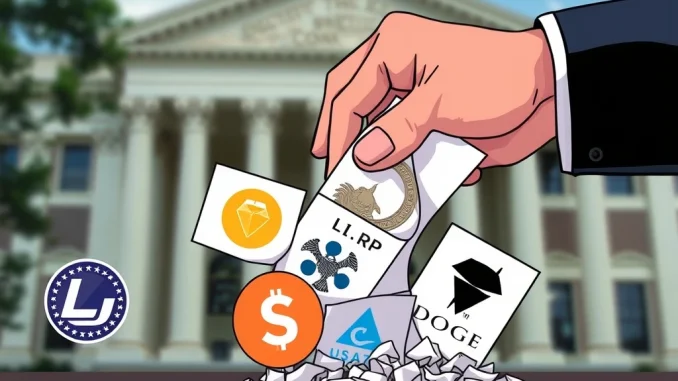
Recently, issuers pulled applications (Form 19b-4) for various altcoin spot ETF products from the U.S. Securities and Exchange Commission (SEC) website. This includes proposed ETFs for Litecoin (LTC), XRP, Solana (SOL), Cardano (ADA), and Dogecoin (DOGE). Furthermore, an Ethereum staking ETF application also faced withdrawal. This series of events marks a crucial period for digital asset investment vehicles.
The withdrawals occurred after the SEC reportedly requested issuers to voluntarily retract their submissions. This request indicates heightened scrutiny from the regulatory body. Such actions are not unprecedented in the volatile world of crypto finance. However, the sheer number and scope of these withdrawals highlight a significant shift in the SEC’s approach. These applications aimed to provide mainstream investors with regulated exposure to these digital assets. Their removal therefore raises questions about future access to these investment products.
The Role of Form 19b-4 in Crypto ETF Applications
Understanding the significance of Form 19b-4 is essential. This form represents a proposal for a rule change. It is filed by an exchange seeking to list a new financial product, such as an ETF. The SEC reviews these forms to ensure they comply with existing securities laws. Specifically, they assess whether the proposed product protects investors and prevents market manipulation. Approval of a 19b-4 form is a critical step in bringing an ETF to market. Its withdrawal effectively halts the approval process.
Bloomberg ETF analyst Eric Balchunas commented on the situation. He previously stated that the existing ETF approval process became meaningless under new listing standards. This expert observation underscores the profound impact of the SEC’s updated framework. Consequently, issuers found themselves in a difficult position. They faced a choice: continue with an application likely to be rejected or withdraw it proactively. Many chose the latter, signaling compliance with the SEC’s implied directive.
Navigating New SEC Crypto Regulation Standards
The voluntary withdrawals are largely interpreted as a direct consequence of the SEC’s new comprehensive listing standards for cryptocurrencies. These standards introduce a more rigorous framework for evaluating digital asset products. Historically, the SEC has been cautious regarding crypto ETFs. They often cite concerns about market manipulation, investor protection, and the nascent nature of the underlying markets. The new standards appear to amplify these concerns, making the path to approval more challenging.
What do these new standards entail? While specifics are still emerging, they likely demand:
- Enhanced surveillance-sharing agreements with regulated markets.
- Greater clarity on the classification of digital assets as securities.
- More robust investor protection measures.
- Detailed analysis of market liquidity and price discovery mechanisms.
These requirements place a substantial burden on issuers. They must demonstrate that their proposed ETFs can meet these stringent criteria. The SEC’s stance reflects a broader effort to bring the volatile crypto market under more traditional financial regulations. This shift affects all future crypto ETF applications.
Impact on Future Crypto ETF Applications and Market Dynamics
The withdrawal of these altcoin spot ETF applications has immediate and long-term implications. Firstly, it delays the introduction of diversified crypto investment products. Investors seeking direct exposure to assets like Solana or Cardano through regulated channels will need to wait. Secondly, it could temper market enthusiasm for altcoins, at least in the short term. The prospect of an ETF often brings institutional interest and capital. The absence of this catalyst might affect price movements.
Furthermore, these withdrawals could force issuers to re-evaluate their strategies. They might need to refine their proposals to align with the SEC’s stricter requirements. This could involve:
- Partnering with exchanges that have stronger surveillance capabilities.
- Focusing on assets with clearer regulatory classifications.
- Developing innovative structures to mitigate perceived risks.
The landscape for crypto ETF applications is undoubtedly changing. Issuers must adapt quickly to these evolving regulatory expectations. Consequently, the industry faces a period of recalibration and strategic planning. The market anticipates further guidance and clarification from the SEC.
The Specific Case of the Ethereum Staking ETF
The withdrawal of an Ethereum staking ETF application warrants particular attention. Staking involves locking up cryptocurrency to support the network’s operations. In return, participants earn rewards. An ETF that incorporates staking would offer investors exposure to Ethereum’s price movements alongside potential staking yields. This innovative product concept faced significant regulatory hurdles.
The SEC has expressed concerns about staking activities. They often question whether staking rewards constitute an unregistered security offering. Furthermore, the operational complexities of managing a staking portfolio within an ETF structure are considerable. These include:
- The liquidity of staked assets.
- The security risks associated with staking providers.
- The tax implications for both the fund and its investors.
The withdrawal suggests that the SEC remains unconvinced about the regulatory compliance of such products. It also highlights the unique challenges posed by DeFi-related investment vehicles. Therefore, the path for an Ethereum staking ETF appears more complex than a simple spot ETF. Future applications will require even greater innovation and regulatory foresight.
Looking Ahead: The Future of Altcoin Spot ETFs
The recent withdrawals paint a challenging picture for altcoin spot ETF hopefuls. However, this is not necessarily the end of the road. The crypto industry has shown remarkable resilience and adaptability. Issuers will likely study the SEC’s new standards closely. They will then work to develop applications that meet these rigorous criteria. The approval of Bitcoin spot ETFs, after years of rejections, offers a glimmer of hope. It demonstrates that perseverance and regulatory alignment can eventually yield results.
The focus now shifts to understanding the specific concerns of the SEC crypto regulation. Industry participants will engage in dialogue with regulators. They aim to clarify guidelines and foster an environment where innovation can thrive within a compliant framework. The future success of these products hinges on a collaborative approach. This involves both regulatory bodies and financial innovators. Ultimately, the market seeks clarity and a predictable path forward for digital asset investment products. The journey towards mainstream adoption of altcoin ETFs continues, albeit with new obstacles.
The voluntary withdrawal of numerous altcoin spot ETF and Ethereum staking ETF applications from the SEC website marks a significant moment. This action reflects the profound impact of the SEC’s new, comprehensive listing standards for cryptocurrencies. While this presents immediate challenges for issuers and investors, it also forces a critical re-evaluation of strategies. The industry must now adapt to a stricter regulatory environment. Future crypto ETF applications will require enhanced compliance and a deeper understanding of regulatory expectations. This ongoing evolution underscores the complex relationship between innovation and regulation in the digital asset space.
Frequently Asked Questions (FAQs)
Q1: Why were multiple altcoin spot ETF applications withdrawn?
A1: Issuers voluntarily withdrew these applications after the SEC reportedly requested their retraction. This move is largely attributed to the SEC’s new, comprehensive listing standards for cryptocurrencies, which impose stricter requirements for approval.
Q2: Which specific altcoin spot ETF applications were withdrawn?
A2: Applications for spot ETFs tied to Litecoin (LTC), XRP, Solana (SOL), Cardano (ADA), and Dogecoin (DOGE) were withdrawn. An application for an Ethereum staking ETF was also pulled.
Q3: What is Form 19b-4, and why is its withdrawal significant for crypto ETF applications?
A3: Form 19b-4 is a proposal filed by an exchange to change its rules, typically to list a new financial product like an ETF. Its withdrawal signifies that the exchange is no longer pursuing the listing of that particular ETF, effectively halting the approval process with the SEC.
Q4: How do the SEC’s new crypto regulation standards impact the approval process?
A4: The new standards introduce a more rigorous framework. They likely demand enhanced surveillance, clearer asset classification, stronger investor protection, and detailed market analysis. This makes it more challenging for crypto ETF applications to gain approval.
Q5: What are the implications of these withdrawals for the broader cryptocurrency market?
A5: The withdrawals delay mainstream access to diversified altcoin investment products and could temporarily dampen market enthusiasm for affected assets. They also compel issuers to refine their strategies and align with stricter regulatory expectations for future crypto ETF applications.
Q6: What makes an Ethereum staking ETF different, and why did its application face withdrawal?
A6: An Ethereum staking ETF would offer exposure to Ethereum’s price and potential staking yields. It faces unique challenges due to SEC concerns about staking as a potential unregistered security offering, along with complexities regarding asset liquidity, security, and tax implications within an ETF structure.