Global, February 2026: The Algorand blockchain network has reached a significant inflection point in its development, surpassing 2 billion ALGO tokens staked by its community. This landmark achievement, reported in official network updates for January 2026, represents more than just a numerical milestone; it is a powerful validation of the network’s security model and a tangible measure of growing trust and participation in its decentralized ecosystem. The surge in staked ALGO coincided with notable increases in active wallets, transaction volume, and stablecoin activity, painting a comprehensive picture of a blockchain entering a new phase of maturity and utility.
Analyzing the 2 Billion ALGO Staking Milestone
The figure of 2 billion staked ALGO is not an arbitrary number. To understand its weight, one must consider the mechanics of Algorand’s Pure Proof-of-Stake (PPoS) consensus mechanism. Unlike proof-of-work systems that rely on computational power, PPoS secures the network through the economic stake of its participants. When users stake their ALGO tokens, they are essentially locking them up to participate in block proposal and validation. A higher total value staked directly correlates with enhanced network security, as it increases the economic cost required for a malicious actor to attempt an attack on the chain’s integrity.
This milestone indicates a substantial portion of the circulating ALGO supply is actively committed to network operations. Analysts view this as a strong signal of holder confidence. Token holders are choosing to forgo immediate liquidity, opting instead to contribute to network security and earn staking rewards, which are distributed automatically to all ALGO holders in non-custodial wallets. This passive participation model is a cornerstone of Algorand’s design, aiming to maximize decentralization by lowering the barrier to entry for consensus participation compared to traditional validator-based staking systems.
January 2026: A Month of Multi-Faceted Growth for Algorand
The staking achievement was part of a broader pattern of expansion observed across Algorand’s key performance indicators throughout January 2026. Network reports highlighted concurrent growth in several fundamental areas:
- Wallet Growth: The number of active, non-zero wallets on the network saw a measurable increase. This metric is a primary indicator of user adoption, suggesting both new users are joining the ecosystem and existing users are becoming more active.
- Transaction Throughput: The total number of transactions processed on-chain rose significantly. This reflects real-world usage, encompassing everything from simple ALGO transfers and ASA (Algorand Standard Asset) trades to complex smart contract interactions and decentralized application (dApp) usage.
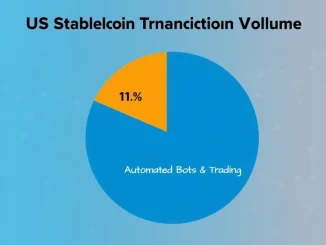
- Stablecoin Volume: The transfer volume of major stablecoins, such as USDC and USDT, which are native on Algorand, experienced an uptick. Stablecoin activity is often viewed as a proxy for financial utility and DeFi (Decentralized Finance) engagement, as these assets are commonly used for trading, lending, and as a settlement layer.
This synchronous growth across wallets, transactions, staking, and stablecoins suggests a holistic strengthening of the network, moving beyond speculative activity toward sustained utility.
The Technical Foundation: How Algorand’s Design Fosters This Growth
Algorand’s architectural choices have directly facilitated this period of growth. Its core innovation, the PPoS consensus, finalizes blocks in seconds with minimal energy expenditure, providing a user experience conducive to high-frequency applications. Furthermore, its split architecture, which separates the consensus layer from the application layer, allows for efficient and scalable smart contract execution. The recent growth in transactions and dApp activity is a stress test that the network’s underlying technology appears to be passing, handling increased load without compromising its hallmark speed and low transaction costs. This technical reliability underpins the confidence reflected in the rising staking numbers.
The Broader Implications for Blockchain Decentralization
Algorand’s crossing of the 2 billion ALGO staked threshold contributes to an ongoing industry-wide conversation about the true meaning and measurement of decentralization. For years, critics have pointed to the centralization of mining power in Bitcoin or the concentration of staked assets among a few large providers in other proof-of-stake networks as potential vulnerabilities.
Algorand’s model seeks to address this by design. Because every ALGO holder can participate in consensus simply by holding tokens in a non-custodial wallet, the power distribution is intrinsically linked to token distribution. The increase in total stake, assuming it is spread across a growing number of wallets, indicates a more diffuse and resilient security foundation. This progress is critical for a blockchain aspiring to host global financial systems and sovereign digital assets, where trustlessness and censorship-resistance are paramount.
Historical Context and Future Trajectory
To appreciate the current milestone, it is useful to view it within Algorand’s developmental timeline. Since its mainnet launch in 2019, the network has focused on building institutional-grade infrastructure, attracting enterprises, and fostering developer tools. Periods of growth have often followed key upgrades, such as the implementation of state proofs for cross-chain communication or enhancements to its virtual machine for smarter contracts.
The January 2026 data suggests these foundational efforts are translating into measurable network effects. The rising activity likely stems from a combination of factors: mature dApps gaining traction, increased institutional use cases for tokenization, and a general maturation of the blockchain developer ecosystem around Algorand. The challenge for the network will be to sustain this momentum by continuing to onboard new users and developers, ensuring that the increased stake is matched by increased utility and innovation.
Conclusion
The report that Algorand has crossed 2 billion ALGO staked is a definitive marker of the network’s advancing decentralization and collective stakeholder commitment. When combined with parallel growth in wallets, transactions, and stablecoin volume, the data from January 2026 presents a compelling narrative of a blockchain ecosystem transitioning from promise to practice. This Algorand staking milestone strengthens the network’s security proposition and validates its unique Pure Proof-of-Stake model. For observers, developers, and users, these metrics offer a data-driven confirmation that Algorand is building not just a technologically advanced platform, but a genuinely active and participatory economic community. The health of any blockchain ultimately rests on usage and security, and the latest figures indicate Algorand is making significant strides on both fronts.
FAQs
Q1: What does it mean to “stake” ALGO on the Algorand network?
Staking ALGO on Algorand involves holding the cryptocurrency in a non-custodial wallet that is connected to the network. This action automatically makes the holder part of the Pure Proof-of-Stake consensus mechanism, helping to secure the blockchain. In return, participants earn staking rewards, which are distributed by the protocol directly to their wallets.
Q2: Why is the 2 billion ALGO staked milestone important for decentralization?
In a proof-of-stake system like Algorand’s, network security is directly tied to the total value staked. A higher staked value makes it exponentially more expensive for a bad actor to attack the network. Furthermore, if this stake is widely distributed among many holders (as Algorand’s model encourages), it prevents the concentration of power, leading to a more decentralized and censorship-resistant system.
Q3: How does Algorand’s staking differ from staking on other blockchains?
Unlike many proof-of-stake blockchains that require users to delegate tokens to a specific validator node, often involving locking periods and technical setup, Algorand’s Pure Proof-of-Stake is non-custodial and permissionless. Any ALGO in a standard wallet is automatically eligible for consensus participation and rewards, with no need for delegation, locking, or minimum amounts, lowering the barrier to entry.
Q4: What other metrics, besides staking, indicate Algorand’s growth?
Key growth indicators include an increase in the number of active wallets (showing user adoption), a rise in daily transactions (showing network usage), and growing volumes of stablecoins and other assets on the chain (showing financial utility). The January 2026 report showed positive trends across all these areas alongside the staking milestone.
Q5: Does staking ALGO involve any risk?
The primary risk is the market volatility of the ALGO token itself, as with any cryptocurrency. From a protocol perspective, staking on Algorand is non-custodial (you retain control of your keys) and does not carry “slashing” risks—where tokens can be forfeited for misbehavior—common in some other staking models. The main consideration is ensuring your private keys are secure.