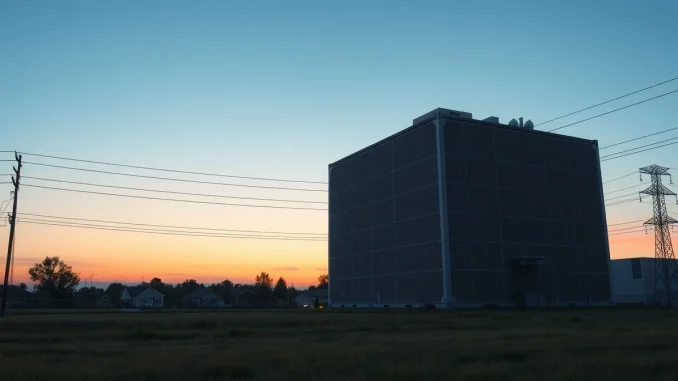
WASHINGTON, D.C. — As artificial intelligence accelerates, a U.S. senator is proposing a novel solution to the growing fear of widespread job displacement: tax the massive data centers powering the AI boom and use the revenue to fund worker retraining and community benefits. Senator Mark Warner (D-VA) outlined this concept, describing it as a way for communities to extract their “pound of flesh” from the infrastructure underpinning the very technology that threatens local employment.
The Palpable Fear of AI Job Displacement
Evidence of AI’s potential impact on the workforce continues to mount. According to economic data, entry-level job postings in the United States have declined by approximately 35% since 2023. Simultaneously, significant layoffs have occurred across the technology sector. Industry leaders themselves have issued warnings about the coming economic shifts. At the Axios AI Summit in Washington, D.C., in March 2026, Senator Warner shared anecdotes highlighting this trend. He reported that a venture capitalist told him they were writing down software investments to zero, largely due to the capabilities of AI models like Anthropic’s Claude. Furthermore, a major law firm indicated it had halted hiring for first-year associates because AI could now handle tasks traditionally assigned to junior lawyers.
Warner stated the anxiety is “palpable,” even as some AI company data suggests widespread job replacement has not yet begun. This fear is now influencing policy debates beyond traditional labor discussions, specifically centering on who should bear the financial responsibility for managing the transition.
Warner’s Proposal: Taxing the AI Infrastructure
Senator Warner’s emerging plan targets data centers—the energy-intensive facilities that house the computing hardware required for AI development and deployment. While he has not yet introduced formal legislation, the proposal gains urgency amid increasing public skepticism toward AI and local opposition to data center construction. Warner argues that while a moratorium on new data centers, as proposed by some colleagues, would cede technological ground to competitors like China, communities deserve compensation.
“I’ve thought for a long time there’s an obligation from the industry to help figure this out and help pay for it,” Warner told TechCrunch. He questioned whether the financial burden should fall on chip manufacturers like Nvidia, large language model companies, or the financial firms using AI to reduce entry-level hiring. He concluded the “easiest place to extract the pound of flesh is probably going to be from the data centers.”
Connecting Revenue to Community Benefit
The core of Warner’s idea is to directly link data center tax revenue to tangible local benefits. Potential uses include funding training programs for in-demand fields like healthcare or creating AI upskilling initiatives. This approach aims to balance the national imperative to build AI infrastructure with a duty to the communities that host it and may suffer its economic consequences. Warner cited a precedent in Henrico County, Virginia, where local data center tax revenue helped launch an affordable housing project.
He emphasized that creating this direct connection is essential for public acceptance. “Otherwise,” he warned, “the pitchforks are coming out.” Public sentiment appears to support this assessment. A recent NBC News poll found that only 26% of registered voters view AI positively, while 46% view it negatively—giving AI a lower approval rating than U.S. Immigration and Customs Enforcement (ICE).
Growing Resistance to Data Centers
The debate over data centers is intensifying nationwide. Concerns typically focus on noise, local pollution, and straining regional power grids, which can raise electricity costs for residents. However, Senator Warner identifies a deeper, underlying resentment: communities are increasingly unwilling to bear the local burdens of hosting infrastructure that powers a technology perceived as a threat to jobs.
This resistance is manifesting in policy. On March 25, 2026, Senator Bernie Sanders (D-VT) and Representative Alexandria Ocasio-Cortez (D-NY) introduced federal legislation calling for a moratorium on new data centers. At the state level, Virginia—home to one of the world’s largest concentrations of data centers—is considering a proposal to repeal generous tax breaks for the industry. These incentives are estimated to cost the state and localities nearly $2 billion annually in forgone revenue.
Warner predicts other states may follow Virginia’s lead, noting that AI and data centers are politically “easy to demonize.” His tax proposal offers a potential middle path, allowing development to continue while ensuring it contributes to a solution for the disruption it may cause.
The National Context of AI and Employment
The discussion occurs within a broader economic transformation. Analysts from institutions like the Brookings Institution and the MIT Task Force on the Work of the Future have long documented how automation affects labor markets. AI introduces a new, accelerated phase of this change, particularly affecting knowledge and white-collar entry-level positions. The proposed data center tax represents one of the first major legislative ideas aimed directly at generating revenue from the AI supply chain to mitigate its social costs.
Key points of the policy debate include:
- Targeting Infrastructure: Taxing data centers is administratively simpler than taxing intangible AI software or use.
- Geographic Fairness: Revenue would come from localities hosting physical infrastructure, often bearing the environmental cost.
- Transition Funding: Money could support worker retraining, education, and community stabilization programs.
- Political Viability: The concept may attract support from both parties concerned about local impacts and economic disruption.
Comparative Policy Approaches
Other policy ideas for managing AI’s economic impact have included expanding the social safety net, implementing robot taxes, and strengthening worker retraining programs. Warner’s focus on data centers is distinct because it ties the revenue source directly to the AI ecosystem’s physical footprint. Experts suggest this could make the policy more transparent and politically acceptable than broader corporate taxes.
Conclusion
Senator Mark Warner’s proposal to tax AI data centers marks a significant attempt to address the dual challenges of technological competition and workforce disruption. By seeking to fund worker transition programs directly from the infrastructure enabling AI, the plan acknowledges the deep-seated public fears about AI job loss and the growing backlash against data centers. As legislative efforts like the proposed moratorium and state tax break repeals gain traction, Warner’s “pound of flesh” concept may offer a pragmatic compromise. It aims to ensure the United States continues to build essential AI infrastructure while demanding that the industry contributes meaningfully to helping workers and communities navigate the economic transition it is driving.
FAQs
Q1: What is Senator Warner’s main proposal regarding AI and jobs?
Senator Mark Warner proposes implementing a tax on the data centers that power artificial intelligence. The revenue generated would be used to fund worker retraining programs and provide tangible benefits to communities affected by potential AI-driven job displacement.
Q2: Why target data centers instead of AI companies directly?
Warner has stated that data centers represent the “easiest place to extract the pound of flesh” because they are physical, localized assets. Taxing them is administratively straightforward and ties the financial contribution directly to the communities hosting the infrastructure, which often bear environmental and economic costs.
Q3: Is there precedent for using data center tax revenue for community benefits?
Yes. Warner pointed to Henrico County, Virginia, as an example where tax revenue from a local data center was used to help kickstart an affordable housing project, demonstrating a direct link between the infrastructure and community investment.
Q4: How are communities currently reacting to data center expansion?
There is significant and growing pushback across the U.S. due to concerns about noise, pollution, strain on power grids, and rising electricity costs. Underlying this is resentment about hosting infrastructure for a technology perceived as a threat to local jobs, leading to proposed moratoriums and the repeal of tax incentives.
Q5: What is the alternative policy being proposed by other lawmakers?
Senator Bernie Sanders and Representative Alexandria Ocasio-Cortez have introduced legislation calling for a moratorium on new data centers, reflecting a more restrictive approach. Warner opposes a moratorium, arguing it would hinder U.S. competitiveness, particularly with China.
Q6: What does public opinion say about AI?
Recent polling indicates significant public skepticism. An NBC News poll found that only 26% of registered voters view AI positively, while 46% view it negatively. This low approval rating is fueling political pressure to regulate the industry and address its societal impacts.
This article was produced with AI assistance and reviewed by our editorial team for accuracy and quality.