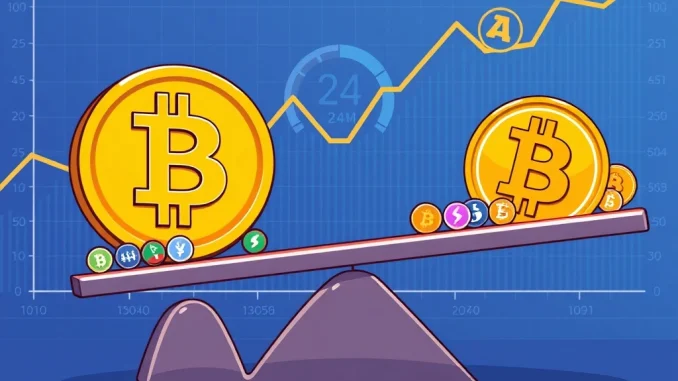
The cryptocurrency market is always in flux. Therefore, understanding key indicators becomes crucial for investors. Recently, the **Altcoin Season Index** registered a significant drop. This metric, provided by CoinMarketCap, currently stands at 27. It represents a decline of four points in just one day. This movement often signals a shift in broader **crypto market trends**. For many, it suggests a cooling period for alternative cryptocurrencies.
Understanding the Altcoin Season Index
The **Altcoin Season Index** serves as a vital barometer for market sentiment. It specifically measures the collective performance of altcoins against Bitcoin. This index compares Bitcoin’s price performance with the top 100 cryptocurrencies by market capitalization. Stablecoins and wrapped tokens are always excluded from this calculation. Essentially, it provides a snapshot of market dominance. A higher index score indicates altcoins are outperforming Bitcoin. Conversely, a lower score points to Bitcoin’s stronger performance.
An official “**altcoin season**” is declared when 75% of these top 100 altcoins outperform Bitcoin. This outperformance must occur over the preceding 90 days. Such a period often brings substantial gains for many smaller digital assets. On the other hand, the opposite scenario is termed a “Bitcoin season.” This occurs when Bitcoin leads the market. A reading closer to 100 indicates market conditions favor altcoins. Therefore, a reading closer to 0 highlights Bitcoin’s dominance. Investors often use this index to guide their portfolio adjustments. It helps them anticipate which segment of the market might offer better returns.
The Recent Plunge: Altcoin Season Index at 27
The recent four-point drop in the **Altcoin Season Index** is noteworthy. Moving from 31 to 27 in a single day highlights a swift market reaction. This decline indicates a strengthening position for Bitcoin relative to altcoins. A score of 27 means less than 27% of the top 100 altcoins have outperformed Bitcoin in the last 90 days. This clearly signals a “Bitcoin season.” Such a low reading suggests that capital is flowing away from altcoins. Instead, it is consolidating into Bitcoin. This trend has significant implications for **cryptocurrency performance** across the board.
Historically, drops in the index often precede periods of increased Bitcoin dominance. During these times, Bitcoin typically sees more robust price action. Altcoins, however, may experience stagnation or even declines. This is especially true for those with lower market capitalizations. Investors must therefore pay close attention. Such shifts can dramatically impact portfolio values. Consequently, re-evaluating strategies becomes essential. The current index reading suggests caution for altcoin-heavy portfolios.
Key Factors Driving Current Crypto Market Trends
Several factors contribute to prevailing **crypto market trends**. Macroeconomic conditions often play a significant role. Global inflation rates, interest rate decisions, and geopolitical events influence investor behavior. When uncertainty rises, investors often seek perceived safer assets. Bitcoin, being the largest and most liquid cryptocurrency, frequently benefits from this “safe-haven” narrative. This can lead to its outperformance.
Furthermore, institutional adoption also shapes these trends. Large investment firms and corporations entering the Bitcoin space can drive its price up. This sometimes happens at the expense of altcoins. Regulatory clarity or uncertainty also impacts market sentiment. Positive regulatory news for Bitcoin might bolster its appeal. Conversely, new regulations targeting altcoins could dampen their performance. Therefore, a complex interplay of economic, institutional, and regulatory forces dictates the market’s direction. Understanding these dynamics is crucial for any investor.
Analyzing Bitcoin vs Altcoins: Performance Implications
The current index reading suggests a strong period for **Bitcoin vs altcoins**. When Bitcoin outperforms, its market dominance typically increases. This means Bitcoin’s share of the total crypto market capitalization grows. For altcoin holders, this often translates into underperformance. Many altcoins are highly correlated with Bitcoin. However, during a “Bitcoin season,” they may not keep pace. In some cases, they might even lose value while Bitcoin gains.
This dynamic has clear implications for investment portfolios. Investors holding a significant portion of altcoins might see their overall portfolio value decline. Conversely, those with a higher allocation to Bitcoin could experience more stable or even positive returns. It highlights the importance of diversification. It also underscores the need for continuous market analysis. Different market cycles favor different asset classes. Recognizing these shifts helps investors make informed decisions. Consequently, they can better manage their exposure to market volatility.
Navigating a “Bitcoin Season”: Strategies for Optimal Cryptocurrency Performance
During a “Bitcoin season,” investors must adapt their strategies. Simply holding a diverse altcoin portfolio might not yield the best **cryptocurrency performance**. Here are some considerations:
- Re-evaluate Portfolio Allocation: Consider increasing your Bitcoin exposure. This can help stabilize your portfolio during periods of altcoin weakness.
- Focus on Fundamentals: Research projects with strong use cases and development teams. Even in a “Bitcoin season,” well-established altcoins might show resilience.
- Dollar-Cost Averaging (DCA): Continue to invest a fixed amount regularly. This strategy helps mitigate risk by averaging out your purchase price over time.
- Monitor Bitcoin Dominance: Keep an eye on the Bitcoin Dominance chart. An increasing dominance percentage reinforces the “Bitcoin season” narrative. A reversal could signal a potential shift back to altcoins.
- Consider Stablecoins: For those seeking to reduce volatility, moving some capital into stablecoins can be a temporary strategy. This allows for re-entry when market conditions become more favorable for altcoins.
These approaches help investors navigate challenging market conditions. They aim to protect capital and position for future growth. Remember, market cycles are a natural part of the crypto ecosystem.
Looking Ahead: When Could Altcoin Season Return?
While the **Altcoin Season Index** currently points to Bitcoin dominance, market cycles are rarely permanent. Several factors could trigger a return to an **altcoin season**. These include significant upgrades to major altcoin networks, such as Ethereum’s continued development. New technological breakthroughs or widespread adoption of specific altcoin projects could also shift sentiment. Additionally, a period of sustained stability or bullish momentum for Bitcoin often precedes an altcoin rally. Once Bitcoin establishes a new price floor or consolidates, investors often rotate profits into altcoins seeking higher returns.
Macroeconomic improvements, such as declining inflation or interest rates, could also foster a more risk-on environment. This typically benefits altcoins. Moreover, the emergence of innovative decentralized finance (DeFi) or non-fungible token (NFT) applications can ignite interest in specific altcoin sectors. Therefore, investors should remain vigilant. Continuously monitoring market indicators and fundamental developments is key. This prepares them for the eventual return of altcoin outperformance. The crypto market remains dynamic and full of opportunities for those who stay informed.
Conclusion
The drop in the **Altcoin Season Index** to 27 represents a clear signal. It indicates that current **crypto market trends** favor Bitcoin. This shift from **altcoin season** to a “Bitcoin season” impacts **cryptocurrency performance** across the board. While altcoins might face headwinds, informed investors can adapt. Understanding the factors driving these changes is paramount. By adjusting strategies and focusing on robust projects, investors can navigate this period effectively. The crypto market is cyclical. Staying informed and agile remains the best approach to capitalize on future opportunities, whether in Bitcoin or altcoins.
Frequently Asked Questions (FAQs)
1. What is the Altcoin Season Index?
The Altcoin Season Index is a metric from CoinMarketCap. It measures the performance of the top 100 cryptocurrencies (excluding stablecoins and wrapped tokens) against Bitcoin over the preceding 90 days. It helps indicate whether altcoins or Bitcoin are currently dominating the market.
2. How is an “altcoin season” declared?
An “altcoin season” is officially declared when 75% of the top 100 altcoins (by market capitalization) outperform Bitcoin over the previous 90-day period. This signifies a broad-based rally in altcoins.
3. What does an index reading of 27 signify?
An Altcoin Season Index reading of 27 means that less than 27% of the top 100 altcoins have outperformed Bitcoin in the last 90 days. This indicates a strong “Bitcoin season,” where Bitcoin is generally outperforming most altcoins.
4. How does this drop in the Altcoin Season Index affect investors?
The drop suggests that altcoins are currently underperforming Bitcoin. Investors with altcoin-heavy portfolios might see slower growth or even declines. It often prompts a re-evaluation of portfolio allocation, potentially favoring Bitcoin or more resilient altcoins.
5. What are common factors influencing altcoin performance?
Altcoin performance is influenced by several factors. These include Bitcoin’s dominance, broader macroeconomic conditions, institutional interest, regulatory developments, and specific project developments (e.g., network upgrades, new partnerships, adoption).
6. When could altcoin season potentially return?
Altcoin season could return with a sustained period of Bitcoin stability or bullish consolidation. Other triggers include major altcoin network upgrades, significant technological advancements, increased institutional adoption of specific altcoins, or a more risk-on global economic environment.