Urgent Binance Delisting: Crucial Update for BAKE, HIFI, SLF Holders
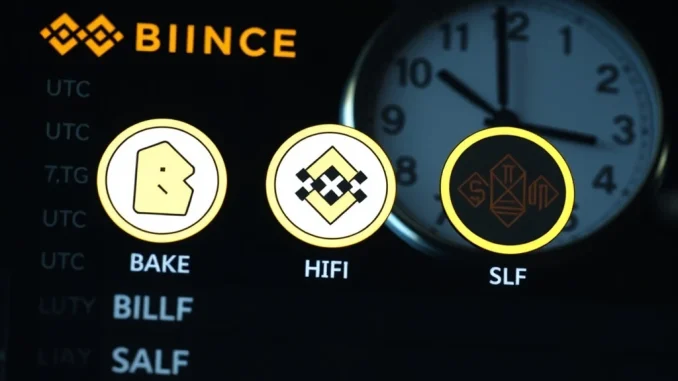
The cryptocurrency market often experiences rapid shifts. Today, a significant announcement from Binance, one of the world’s largest crypto exchanges, has captured widespread attention. Specifically, Binance has confirmed the **Binance delisting** of three prominent altcoins: BakeryToken (BAKE), Hifi Finance (HIFI), and SLF. This decision carries important implications for traders and investors holding these assets.
Urgent Binance Delisting: What You Need to Know
Binance officially announced its decision to delist BAKE, HIFI, and SLF. This action will take effect at 3:00 a.m. UTC on September 17. Consequently, all trading pairs associated with these tokens will be removed from the platform. This includes pairs like BAKE/USDT, HIFI/USDT, and SLF/USDT, among others. Such announcements are critical for market participants, as they directly impact asset liquidity and accessibility.
Users holding these tokens on Binance must take prompt action. Typically, an exchange provides a window for users to manage their assets post-delisting. Therefore, understanding the timeline and available options is paramount. Ignoring these updates could result in potential losses or complications in accessing funds. This **crypto delisting news** underscores the dynamic nature of digital asset trading platforms.
Understanding the Impact on BAKE Crypto
BakeryToken (BAKE) is a well-known token within the DeFi space, particularly associated with the BakerySwap decentralized exchange. Its upcoming delisting from Binance raises questions for its community. Holders of **BAKE crypto** on Binance should prepare for the cessation of trading services. This means users will no longer be able to buy or sell BAKE through Binance’s spot trading. Instead, they will need to consider alternative strategies.
Possible actions for BAKE holders include:
- Withdrawing tokens: Transferring BAKE to a personal wallet or another exchange that supports the token.
- Converting to other assets: Selling BAKE for a stablecoin or another cryptocurrency before the deadline.
- Transferring to Binance Convert: Binance often provides a ‘Convert’ option for delisted assets, allowing users to exchange them for other cryptocurrencies, though this is not always guaranteed or at favorable rates.
This delisting might influence BAKE’s price volatility leading up to September 17. Consequently, investors should monitor market conditions closely and make informed decisions.
HIFI Crypto Holders: Preparing for the Change
Hifi Finance (HIFI), formerly known as Mainframe (MFT), focuses on decentralized lending protocols. The news of its **Binance delisting** similarly impacts its user base on the exchange. Holders of **HIFI crypto** must recognize the urgency of this situation. After the specified time, HIFI trading pairs will cease to exist on Binance.
To prepare, HIFI holders should:
- Review withdrawal options: Ensure their HIFI tokens are moved to a secure wallet or another exchange.
- Consider alternative trading platforms: Research other reputable exchanges that list HIFI.
- Stay informed: Follow official Hifi Finance and Binance announcements for any further updates.
The impact of a major exchange delisting can sometimes be significant for a token’s liquidity. Therefore, proactive management of HIFI assets is essential for all affected users.
The Future of SLF Crypto After Delisting
SLF crypto, while perhaps less widely known than BAKE or HIFI, also faces a similar fate on Binance. The **Binance delisting** decision means that trading pairs involving SLF will be removed. Users holding SLF on Binance will experience the same limitations as BAKE and HIFI holders. This highlights a broader trend in the crypto space where exchanges continuously review and adjust their listed assets.
For SLF holders, the key steps are:
- Verify token compatibility: Confirm which wallets or exchanges support SLF for withdrawal or continued trading.
- Act before the deadline: Initiate any necessary transfers or conversions well in advance of September 17.
- Evaluate project status: Investigate the SLF project’s ongoing development and community support to gauge its future viability.
Such delistings serve as a reminder for all crypto participants to diversify their holdings and avoid over-reliance on a single exchange for specific assets. This helps mitigate risks associated with unexpected platform decisions.
Why Exchanges Delist Tokens: Common Reasons
Cryptocurrency exchanges delist tokens for various reasons. These decisions are often part of a routine review process designed to maintain a healthy and compliant trading environment. Understanding these factors provides context for the recent **Binance delisting** announcement. Common justifications include:
- Poor Liquidity: Tokens with low trading volume can lead to poor user experience and make price manipulation easier.
- Lack of Project Development: If a project shows minimal updates, declining community engagement, or failure to meet roadmap goals, it may be delisted.
- Regulatory Concerns: Changes in regulations or a token’s failure to comply with existing legal frameworks can necessitate delisting.
- Security Issues: Vulnerabilities in the token’s smart contract or network can pose risks to users.
- Ethical or Fraudulent Activity: Any indication of deceptive practices or unethical behavior by the project team.
- Meeting Listing Criteria: Exchanges periodically re-evaluate whether listed tokens continue to meet their initial listing standards.
Binance, like other major exchanges, strives to protect its users and maintain market integrity. Therefore, these reviews are a necessary part of operating a large-scale trading platform. While specific reasons for BAKE, HIFI, and SLF were not detailed, these general criteria often apply.
Navigating Crypto Delisting News: Best Practices
When faced with **crypto delisting news**, users should adopt a structured approach. Firstly, always verify the information from official sources, such as the exchange’s announcement page or official social media channels. Secondly, assess the immediate impact on your portfolio. Identify which assets are affected and quantify your exposure. Thirdly, understand the deadline for action. Missing a withdrawal or trading deadline can lead to complications.
Furthermore, consider the long-term implications. A delisting from a major exchange can affect a token’s price and future prospects. However, it does not necessarily mean the project is dead. Many tokens continue to trade on other platforms or decentralized exchanges. Always conduct your own research (DYOR) into the project’s fundamentals and community support before making any decisions about holding or selling your assets. Being prepared is key to navigating such market events effectively.
In conclusion, the upcoming **Binance delisting** of BAKE, HIFI, and SLF on September 17 at 3:00 a.m. UTC requires immediate attention from affected users. Prompt action, whether withdrawing, converting, or transferring, is crucial. Staying informed through official channels and understanding the broader reasons behind such decisions will help you navigate the dynamic cryptocurrency landscape successfully.
Frequently Asked Questions (FAQs)
Q1: What does it mean when Binance delists a cryptocurrency?
When Binance delists a cryptocurrency, it means the exchange will remove all trading pairs for that token. Users will no longer be able to buy, sell, or trade the delisted asset on Binance’s spot market after the specified date and time. However, withdrawal services usually remain open for a period.
Q2: What should I do if I hold BAKE crypto, HIFI crypto, or SLF crypto on Binance?
You should take action before September 17, 3:00 a.m. UTC. Options include withdrawing your tokens to a personal wallet or another exchange that supports them, or converting them into other cryptocurrencies or stablecoins on Binance before trading ceases.
Q3: Will I lose my funds if my tokens are delisted from Binance?
Not necessarily. While trading will stop, Binance typically allows users a period to withdraw their delisted tokens. However, if you fail to withdraw within this timeframe, accessing your funds might become challenging or impossible. It’s crucial to act promptly.
Q4: Why did Binance decide on this delisting?
Binance’s official announcement did not specify the exact reasons for delisting BAKE, HIFI, and SLF. Generally, exchanges delist tokens due to factors like poor liquidity, lack of project development, regulatory concerns, security issues, or failure to meet listing criteria.
Q5: Can I still trade BAKE, HIFI, or SLF after they are delisted from Binance?
Yes, potentially. Delisting from Binance does not mean the token ceases to exist. These cryptocurrencies may still be available for trading on other centralized exchanges, decentralized exchanges (DEXs), or through peer-to-peer (P2P) platforms. You would need to research and find alternative venues.
Q6: How long do I have to withdraw my delisted tokens from Binance?
Binance typically provides a grace period for withdrawals after a delisting. This period can vary, but it’s usually several weeks or even months. Always check the official Binance announcement for the precise withdrawal deadline for BAKE, HIFI, and SLF to ensure you do not miss it.
Related News
- Simon Gerovich's Bold Defense: Metaplanet Bitcoin Strategy Under Microscope as Shares Slide
- Pivotal Thumzup Dogehash Acquisition: XDOG Poised for Nasdaq Listing
- Crypto Fundraising Events: How Novig, Kresus, and NEWITY Secured Dominant Positions
Related: Bitcoin Stalls Below $70K as Institutional Demand Falters, Wintermute Analysis Reveals
Related: Strategic: Bitget and Arkis Forge Partnership to Revolutionize Institutional Crypto Trading
Related: Strategic Move: Smarter Web Secures $30M Coinbase Credit Line to Accelerate Bitcoin Treasury Buys