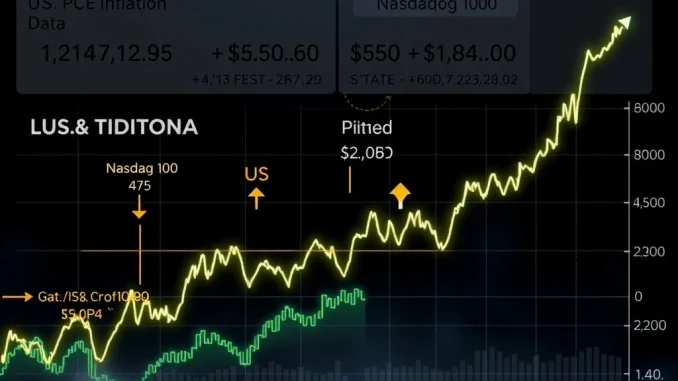
The latest U.S. PCE inflation data has sent shockwaves through financial markets. Core PCE inflation rose 0.2% in May, surpassing expectations of 0.1%. While the Nasdaq 100 continues its record-breaking rally, Bitcoin and gold prices tumbled by 2% on June 27. What does this mean for investors?
Why is PCE inflation data important?
The Personal Consumption Expenditures (PCE) index is the Federal Reserve’s preferred inflation gauge. The May report shows:
- Core PCE rose 0.2% month-over-month
- Annual inflation remains elevated at 2.6%
- Services inflation continues to drive price increases
How did markets react to the PCE inflation report?
The financial markets showed divergent reactions:
| Asset | Performance |
|---|---|
| Nasdaq 100 | +0.8% (new all-time high) |
| Bitcoin | -2.1% |
| Gold | -1.9% |
Is the U.S. economy heading toward stagflation?
Some analysts warn the PCE data suggests stagflation risks:
- Persistent inflation despite slowing growth
- Weak consumer spending trends
- Divergence between tech stocks and other assets
What does this mean for Bitcoin investors?
The cryptocurrency market showed surprising sensitivity to traditional economic data:
- Bitcoin price dropped despite Nasdaq gains
- Potential shift in correlation patterns
- Increased focus on macroeconomic indicators
The May PCE report reveals ongoing inflation pressures that could shape Fed policy and market trends through 2024. While tech stocks celebrate, Bitcoin and gold investors face new challenges in this uncertain economic environment.
Frequently Asked Questions
What is core PCE inflation?
Core PCE inflation measures price changes in consumer goods and services excluding food and energy, used by the Fed to gauge underlying inflation trends.
Why did Bitcoin fall after the PCE report?
Bitcoin’s drop suggests investors may be pricing in potential Fed hawkishness despite the Nasdaq’s rally, showing complex market dynamics.
How does PCE differ from CPI?
PCE has broader coverage of expenditures and different weighting methods, typically showing lower inflation than CPI.
What are stagflation warning signs?
Stagflation concerns arise when inflation persists alongside slowing economic growth and weakening employment trends.