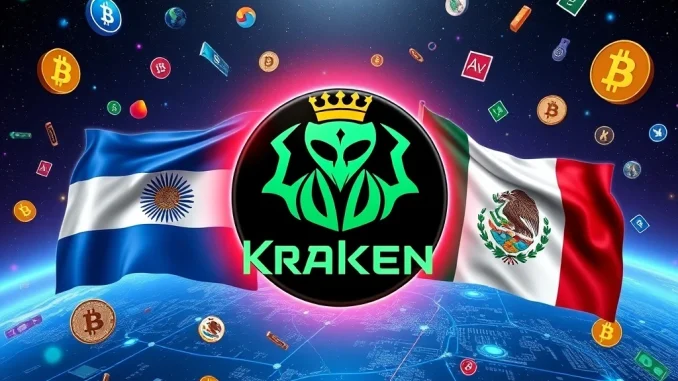
Global crypto giant Kraken has just made a monumental announcement that’s set to revolutionize how users in Argentina and Mexico engage with the digital asset space. By introducing comprehensive Kraken Argentina Mexico local currency support, the exchange is breaking down significant barriers, making cryptocurrency more accessible than ever before. This move isn’t just about adding new features; it’s about fostering financial inclusion and empowering millions in two key Latin American markets, signaling a bold step forward for global crypto adoption.
Why is Kraken Argentina Mexico Support a Game-Changer?
For too long, residents in many emerging markets, including Argentina and Mexico, have faced significant hurdles when trying to enter the cryptocurrency ecosystem. These challenges often included:
- High Costs: Expensive international wire transfers and unfavorable foreign exchange rates.
- Complexity: Intricate processes for converting local fiat into stablecoins or other cryptocurrencies.
- Delays: Protracted transaction times, sometimes taking days to clear.
- Limited Options: A scarcity of reliable and regulated channels for fiat on-ramps.
Kraken’s latest initiative directly addresses these pain points. By enabling customers in both countries to deposit their local currencies through domestic payment methods, Kraken is streamlining the entire process. This means users can now fund their accounts directly from their local bank accounts, bypassing the complexities and costs associated with international transfers. This strategic enhancement for Kraken Argentina Mexico users significantly reduces friction, lowers transaction costs, and speeds up the entire deposit process, making crypto ownership a far more attainable reality.
The Power of Local Currency Deposits: What Does This Mean for Users?
The introduction of local currency deposits is more than just a technical upgrade; it’s a paradigm shift for users in Argentina and Mexico. Here’s what this means for the everyday crypto enthusiast or newcomer:
- Simplified Onboarding: New users can now fund their Kraken accounts with their domestic currency, eliminating the need for complex and often costly international wire transfers.
- Cost Savings: Users will avoid the hefty fees and less favorable exchange rates typically associated with converting pesos (ARS) or Mexican pesos (MXN) into USD or other major currencies before sending them to an exchange. This puts more money in their pockets to invest in crypto.
- Increased Speed: Domestic transfers are generally much faster than international ones, allowing users to seize market opportunities more quickly. Funds can often be available within minutes or hours, rather than days.
- Enhanced Convenience: By utilizing familiar local payment systems, the process becomes intuitive and less intimidating, encouraging broader participation in the crypto market.
This move democratizes access to digital assets, making it easier for individuals to participate in the global crypto economy, whether for investment, remittances, or simply exploring new financial technologies. The ability to make seamless local currency deposits is a critical step towards mass adoption.
Expanding Horizons: Crypto Exchange Latin America’s Growing Significance
Latin America has emerged as a hotbed for cryptocurrency adoption, driven by several unique factors:
- Inflationary Pressures: Many countries in the region face high inflation, leading citizens to seek alternative stores of value like Bitcoin and other cryptocurrencies.
- Underbanked Populations: A significant portion of the population remains unbanked or underserved by traditional financial institutions, finding crypto a more accessible and inclusive alternative.
- Remittances: Cryptocurrencies offer a faster and cheaper way for diasporas to send money back home, bypassing expensive traditional remittance services.
- Technological Savvy: A young, tech-savvy population is eager to embrace new digital solutions.
Kraken’s strategic expansion into these markets underscores the growing importance of crypto exchange Latin America operations. By establishing a robust local presence, Kraken is not only tapping into a burgeoning user base but also contributing to the overall maturity and legitimacy of the crypto industry in the region. This move positions Kraken competitively against other global and local exchanges vying for market share in this dynamic landscape.
Navigating the Fiat On-Ramp: A Closer Look at the Process
For users eager to take advantage of this new feature, understanding the fiat on-ramp process is key. While specific details may vary, the general steps involve:
- Account Verification: Users must complete Kraken’s Know Your Customer (KYC) verification process, which typically involves providing identification documents and proof of address.
- Selecting Deposit Method: Within the Kraken platform, users will select their local currency (ARS or MXN) and choose from available domestic payment methods. These could include bank transfers (e.g., SPEI in Mexico, local bank transfers in Argentina) or other popular local payment networks.
- Initiating Transfer: Users will then follow instructions to initiate a transfer from their personal bank account to Kraken’s designated local account.
- Confirmation and Funding: Once the transfer is confirmed by Kraken, the funds will be credited to the user’s account, ready for trading into cryptocurrencies.
Kraken is known for its robust security measures and compliance standards, ensuring that these fiat on-ramp processes are not only convenient but also secure and compliant with local regulations. This commitment to security builds trust and encourages wider adoption among users who might be hesitant about digital asset platforms.
Boosting Cryptocurrency Access: A Step Towards Financial Inclusion
Ultimately, Kraken’s expansion into Argentina and Mexico is a significant stride towards boosting overall cryptocurrency access. Financial inclusion is a global challenge, and digital assets offer a powerful solution for individuals who are unbanked, underbanked, or living in economies with unstable traditional financial systems. By making it easier for people to convert their local fiat into crypto, Kraken is:
- Empowering Economic Participation: Enabling more individuals to participate in the global digital economy, regardless of their access to traditional banking services.
- Providing Inflationary Hedge: Offering a viable alternative for preserving wealth in economies struggling with high inflation.
- Facilitating Remittances: Streamlining the process of sending and receiving money across borders, benefiting families and economies reliant on international transfers.
- Driving Innovation: Fostering a more vibrant and competitive crypto ecosystem in the region.
This initiative aligns with the broader vision of a decentralized financial future where economic opportunities are available to everyone, everywhere. It’s a testament to Kraken’s commitment to global expansion and its understanding of the unique needs of diverse markets.
Kraken’s introduction of local currency support in Argentina and Mexico marks a pivotal moment for cryptocurrency adoption in Latin America. By simplifying local currency deposits and creating a seamless fiat on-ramp, Kraken is not just expanding its market reach but also empowering millions with easier and more affordable cryptocurrency access. This strategic move solidifies Kraken’s position as a leading crypto exchange Latin America, paving the way for greater financial inclusion and a more robust digital economy in the region. It’s a clear win for users and a significant step forward for the global crypto landscape.
Frequently Asked Questions (FAQs)
1. What is Kraken’s new announcement regarding Argentina and Mexico?
Kraken has announced the addition of local currency support for customers in Argentina and Mexico. This allows users in these countries to deposit their domestic currencies (Argentine Pesos and Mexican Pesos) directly into their Kraken accounts using local payment methods.
2. How do local currency deposits benefit users in these countries?
Local currency deposits offer several benefits, including simplified onboarding, reduced transaction costs (by avoiding international wire fees and unfavorable exchange rates), faster deposit times, and increased convenience through the use of familiar domestic payment systems.
3. What payment methods can users expect to use for fiat on-ramps?
While specific methods may vary, users can typically expect to use common domestic payment methods such as local bank transfers (e.g., SPEI in Mexico, local bank transfers in Argentina) for their fiat on-ramps. These methods are designed to be convenient and integrated with local financial systems.
4. Why is Latin America a significant market for crypto exchanges like Kraken?
Latin America is a significant market due to factors such as high inflation driving demand for alternative assets, a large unbanked population seeking accessible financial services, the need for efficient cross-border remittances, and a growing tech-savvy demographic eager to adopt new digital solutions.
5. Does this expansion mean more cryptocurrencies are available in Argentina and Mexico?
The primary announcement is about local currency deposit support, which makes it easier to fund an account. Once funded, users can access the full range of cryptocurrencies already available on the Kraken platform, subject to Kraken’s global offerings and any local regulatory restrictions.
6. How does this initiative contribute to financial inclusion?
By simplifying access to cryptocurrency through local currency deposits, Kraken is helping to bridge the gap between traditional finance and the digital economy. This empowers individuals who may be unbanked or underserved by traditional systems to participate in global markets, hedge against inflation, and access more efficient financial services, thus fostering greater financial inclusion.