In the dynamic world of finance, where every whisper from a major economic player can send ripples through markets, former U.S. President Donald Trump has once again stirred the pot. His recent, emphatic call for an immediate Trump rate cut by the Federal Reserve has ignited a fresh debate about the true state of US inflation and the future direction of Fed interest rates. For cryptocurrency enthusiasts and investors, understanding these macro shifts is crucial, as they often dictate the broader appetite for risk assets.
Why the Urgent Call for a Trump Rate Cut?
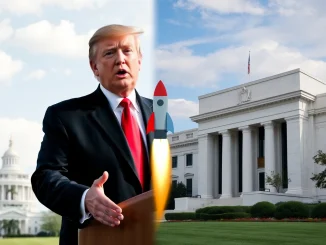
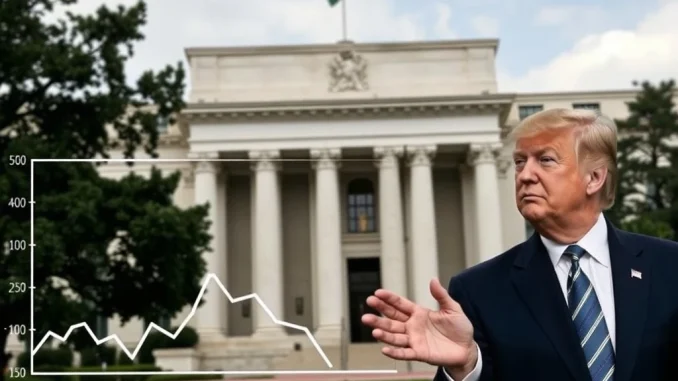
Donald Trump’s consistent stance has been one of advocating for lower interest rates, often clashing with the Federal Reserve’s independent mandate. His latest demand for a Trump rate cut stems from his assessment of consumer inflation, which he described as low. This perspective suggests a belief that the economy needs further stimulus to thrive, and that high borrowing costs are an unnecessary drag.
From a political standpoint, lower interest rates can be seen as beneficial for several reasons:
- They reduce the cost of borrowing for businesses and consumers, potentially stimulating investment and spending.
- They can boost asset prices, including stocks and real estate, which often correlates with positive public sentiment.
- They make government debt servicing cheaper, offering more fiscal flexibility.
However, the Federal Reserve operates independently of political pressures, focusing on its dual mandate. This creates an inherent tension between political desires and the central bank’s economic objectives.
Decoding US Inflation: Is It Really Low?
Trump’s call for a rate cut hinges on his interpretation of inflation data. But what do the official numbers tell us? A recent Labor Department report provided key insights into US inflation:
- The Consumer Price Index (CPI) rose 2.7% year-over-year in June. This was slightly above the 2.6% forecast.
- Month-over-month, CPI increased by 0.3%, matching market expectations.
While 2.7% is significantly lower than the peak inflation rates observed in recent years, it’s important to remember that the Federal Reserve’s long-term target for inflation is 2%. Therefore, while the rate of increase has slowed, it remains marginally above the Fed’s comfort zone. The table below offers a quick comparison:
| Metric | Trump’s Stance (Implied) | Actual June CPI Data | Federal Reserve Target |
|---|---|---|---|
| Year-over-Year CPI | “Low” | 2.7% (vs. 2.6% forecast) | 2.0% |
| Month-over-Month CPI | Implied “Low” | 0.3% (matched expectations) | N/A (focus on YoY) |
This discrepancy highlights the different lenses through which economic data can be viewed – a political lens focused on perceived economic health versus a central bank’s analytical approach focused on specific targets.
The Fed’s Dilemma: Navigating Fed Interest Rates
The Federal Reserve faces a constant balancing act. Its primary responsibilities, known as the dual mandate, are to achieve maximum employment and maintain stable prices (i.e., control inflation). Setting Fed interest rates is their most potent tool to achieve these goals.
If inflation is running above target, the Fed typically raises rates to cool down the economy, making borrowing more expensive and thus reducing demand. Conversely, if the economy is slowing down or facing recessionary pressures, the Fed might cut rates to stimulate activity.
The current situation presents a complex challenge: while inflation has moderated, it’s not yet firmly at the 2% target. Cutting rates too soon could risk reigniting inflationary pressures, undoing the progress made. Waiting too long, however, could stifle economic growth or exacerbate a slowdown. The Fed’s decisions on Fed interest rates are data-dependent, meaning they scrutinize a wide range of economic indicators beyond just headline CPI numbers, including employment figures, wage growth, and global economic conditions.
Understanding Monetary Policy’s Ripple Effect
At its core, monetary policy refers to the actions undertaken by a central bank, like the Federal Reserve, to control the money supply and credit conditions to stimulate or restrain economic activity. When the Fed adjusts interest rates, it sends a powerful signal through the entire financial system, creating ripple effects across various asset classes, including the volatile cryptocurrency markets.
Here’s how changes in monetary policy can impact different areas:
Borrowing Costs: Lower interest rates translate to cheaper loans for consumers (mortgages, car loans) and businesses (investment, expansion). This can spur spending and economic growth.
Savings Returns: Conversely, lower rates mean lower returns on savings accounts and fixed-income investments like bonds, which can encourage investors to seek higher yields elsewhere.
Investment Appetite: When traditional safe assets offer low returns, investors often shift towards riskier assets in search of better yields. This can include equities, real estate, and significantly, cryptocurrencies.
Currency Strength: Lower interest rates can weaken the U.S. dollar relative to other currencies, making U.S. exports cheaper and imports more expensive. A weaker dollar can sometimes be seen as bullish for Bitcoin, which is often viewed as a hedge against currency debasement.
For the crypto market, a looser monetary policy environment, characterized by lower rates and increased liquidity, often correlates with increased investor interest and capital flows into digital assets. Bitcoin and altcoins, being higher-risk, higher-reward investments, tend to benefit when the cost of capital is low and the appetite for risk is high.
What Does This Economic Outlook Mean for Your Portfolio?
The ongoing debate around Fed interest rates and the broader economic outlook creates a landscape of both uncertainty and potential opportunity for investors. While Donald Trump’s calls are influential, the Federal Reserve maintains its independence, making decisions based on its assessment of complex economic data.
For those navigating financial markets, particularly the cryptocurrency space, understanding these macro currents is paramount. Here are some actionable insights:
Stay Informed: Closely monitor official Federal Reserve announcements, inflation reports (like CPI and PCE), and employment data. These are the key indicators the Fed uses to guide its policy decisions.
Diversify Your Portfolio: In times of economic uncertainty, a diversified portfolio across different asset classes (traditional and digital) can help mitigate risk. Don’t put all your eggs in one basket, especially in volatile markets.
Consider Long-Term Strategies: While short-term market reactions to economic news can be dramatic, a long-term investment perspective can help weather fluctuations. For crypto, this might involve dollar-cost averaging or focusing on projects with strong fundamentals.
Understand Risk: Lower interest rates can make riskier assets more appealing, but they don’t eliminate the inherent risks. Always invest within your risk tolerance and conduct thorough research.
The interplay between political commentary, inflation trends, and central bank policy will continue to be a dominant theme shaping the financial landscape. Being prepared and informed is your best defense in navigating these complex waters.
Conclusion
Donald Trump’s assertive call for an immediate Trump rate cut highlights the ongoing tension between political aspirations and the independent mandate of the Federal Reserve. While he cites low US inflation, the official CPI data, though moderating, remains slightly above the Fed’s target, presenting a delicate balancing act for policymakers. The decisions regarding Fed interest rates are critical, as they form the bedrock of monetary policy, influencing everything from borrowing costs to investment appetite across all markets, including the dynamic world of cryptocurrency.
As the global economic outlook continues to evolve, the Fed’s data-driven approach will be key in determining the path forward. For investors, staying attuned to these macro developments and understanding their potential ripple effects is crucial for making informed decisions and navigating the ever-changing financial tides.
Frequently Asked Questions (FAQs)
What is the Consumer Price Index (CPI)?
The Consumer Price Index (CPI) is a measure of the average change over time in the prices paid by urban consumers for a market basket of consumer goods and services. It is a key indicator used to gauge inflation and the cost of living.
Why is Donald Trump advocating for a rate cut?
Donald Trump has consistently pushed for lower interest rates, believing they stimulate economic growth by making borrowing cheaper for businesses and consumers. He often claims that current inflation levels are low enough to warrant such a cut.
How do changes in Fed interest rates influence the economy?
Changes in Fed interest rates affect borrowing costs, savings returns, and the overall availability of credit. Lower rates generally encourage spending and investment, while higher rates tend to slow down economic activity to combat inflation.
What is the Federal Reserve’s dual mandate regarding monetary policy?
The Federal Reserve’s dual mandate is to achieve maximum employment and maintain price stability (i.e., keep inflation at a healthy, low level, typically around 2%). Their monetary policy decisions aim to balance these two objectives.
How might a potential Fed rate cut affect cryptocurrency prices?
A Fed rate cut generally leads to increased liquidity in the financial system and can make riskier assets, like cryptocurrencies, more attractive. Lower returns on traditional savings and bonds might push investors towards higher-yield, higher-risk assets, potentially boosting crypto prices.
Is 2.7% inflation considered “low” by the Federal Reserve?
While 2.7% is lower than recent peaks, it is still above the Federal Reserve’s long-term inflation target of 2%. Therefore, from the Fed’s perspective, inflation is not yet at its desired stable level, making a rate cut a more complex decision.