Binance’s Pivotal Move: Seed Tag Removal Signals Maturation for BONK, EIGEN, ETHFI, PENGU, and PEPE
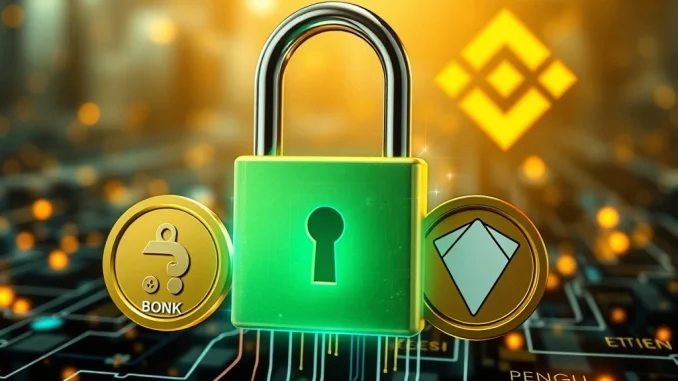
Are you keeping a close eye on your crypto portfolio? Then you’ve likely heard about the latest announcement from Binance, the world’s largest crypto exchange. In a significant move, Binance is set to remove the **Binance Seed Tag** from five prominent digital assets: Bonk (BONK), EigenLayer (EIGEN), Ether.fi (ETHFI), Pudgy Penguins (PENGU), and Pepe (PEPE). This update, effective July 21, isn’t just a technical tweak; it carries substantial implications for investors and the perceived maturity of these projects. But what exactly does a seed tag mean, and why is its removal such a big deal?
Understanding the **Binance Seed Tag**: What It Means for Investors
For those new to the crypto space or even seasoned traders, the concept of a ‘seed tag’ on an exchange might seem a bit obscure. Simply put, a seed tag is Binance’s way of signaling caution. It’s applied to tokens that represent relatively new, innovative projects. While innovation is exciting, it often comes with higher volatility and inherent risk compared to more established assets. Think of it as a warning label: “Proceed with caution, this asset might be more volatile and carry higher risk.”
When a token has a seed tag, Binance typically implements certain measures to protect users. These might include:
- Mandatory Quizzes: Users may need to pass a quiz to confirm they understand the risks associated with trading such assets.
- Risk Disclosures: Prominent warnings are displayed to ensure traders are aware of the potential for significant price fluctuations.
- Trading Restrictions: In some cases, access might be limited to specific trading pairs or functionalities.
The primary goal of the seed tag is to foster responsible trading and ensure that users are fully informed about the speculative nature of these emerging digital assets. It’s a testament to Binance’s commitment to investor protection in a rapidly evolving market.
The Spotlight on **BONK PEPE News** and Other Notables
The latest announcement specifically highlights five tokens, each with its unique story in the crypto landscape:
- Bonk (BONK): A popular Solana-based meme coin that gained massive traction in late 2023.
- EigenLayer (EIGEN): A pivotal player in the Ethereum restaking narrative, offering innovative ways to secure other protocols.
- Ether.fi (ETHFI): A liquid restaking protocol, also deeply embedded in the Ethereum ecosystem’s evolution.
- Pudgy Penguins (PENGU): The token associated with the iconic NFT collection, venturing into broader Web3 utility.
- Pepe (PEPE): Another high-profile meme coin that has seen meteoric rises and falls, capturing significant market attention.
Each of these projects, in its own right, has demonstrated significant innovation, community engagement, or market impact since its inception. Their journey from nascent projects to having their seed tags removed suggests a level of maturation and stability that Binance now acknowledges. For investors following **BONK PEPE News**, this is particularly significant, as meme coins are often associated with extreme volatility, and a signal of reduced risk from a major exchange could be a game-changer.
What Does This Mean for **Crypto Exchange News** and Market Perception?
The removal of seed tags from these assets is a significant piece of **Crypto Exchange News** for several reasons. It indicates that Binance’s internal risk assessment models now view these tokens as having matured beyond their initial high-risk phase. This doesn’t mean they are risk-free, but rather that they have met certain criteria, perhaps related to liquidity, trading volume, project development, community stability, or regulatory clarity, that warrant a re-evaluation of their risk profile.
From a market perception standpoint, this move can:
- Boost Investor Confidence: A major exchange signaling reduced risk can encourage more conservative investors to consider these assets.
- Increase Liquidity: With fewer restrictions or warnings, more traders might enter these markets, potentially increasing trading volumes and liquidity.
- Enhance Legitimacy: For the projects themselves, shedding the seed tag is a badge of honor, signaling a step towards mainstream acceptance and perceived stability.
It’s a clear signal that the crypto market, while still dynamic, is continuously evolving, and exchanges are refining their frameworks to reflect the growth and development of various projects.
Navigating **Digital Asset Risk** in a Maturing Market
While the removal of a seed tag is positive, it’s crucial for investors to remember that all crypto investments carry inherent **Digital Asset Risk**. No asset is entirely risk-free, and market conditions can change rapidly. The crypto space remains highly volatile, and even established assets can experience significant price swings.
Here are some actionable insights for navigating the market, especially concerning assets that have had their seed tags removed:
- Do Your Own Research (DYOR): Always look beyond exchange classifications. Understand the project’s fundamentals, team, technology, use case, and roadmap.
- Assess Market Conditions: Pay attention to broader market trends, macroeconomic factors, and regulatory developments that could impact asset prices.
- Risk Management: Never invest more than you can afford to lose. Diversify your portfolio and consider dollar-cost averaging to mitigate volatility.
- Stay Informed: Follow official announcements from exchanges and projects, and be wary of hype.
The removal of a seed tag should be seen as one data point in your overall investment thesis, not the sole determinant. It’s a positive sign, but vigilance remains key.
The Future of **Token Listings** and Exchange Vigilance
This development also sheds light on the evolving landscape of **Token Listings** and how exchanges manage their vast array of digital assets. Binance, like other major exchanges, is constantly evaluating the thousands of tokens listed on its platform. The application and subsequent removal of seed tags demonstrate a dynamic approach to risk management, adapting to the maturity and performance of individual projects.
This process of re-evaluation is vital for maintaining a healthy trading environment. It reassures users that exchanges are not just listing tokens but are also actively monitoring their development and market behavior. As the crypto industry matures, we can expect more sophisticated risk assessment frameworks and clearer communication from exchanges regarding the status of various digital assets.
The ability of projects like BONK, EIGEN, ETHFI, PENGU, and PEPE to graduate from the ‘seed’ category is a testament to their development and resilience within the ecosystem. It sets a precedent for other emerging projects to strive for similar milestones, signaling their long-term viability and reduced speculative nature.
Conclusion: A New Chapter for Five Key Assets
Binance’s decision to remove the seed tags from BONK, EIGEN, ETHFI, PENGU, and PEPE marks a significant moment for these projects and their communities. It reflects a growing confidence from one of the industry’s most influential players, suggesting these assets have achieved a greater degree of stability and market acceptance. While the inherent volatility of the crypto market persists, this move by Binance is a positive indicator of maturation within specific sectors of the digital asset space. For investors, it means potentially fewer barriers to entry and a perceived reduction in immediate, acute risk, though diligent research and prudent risk management remain paramount in this exciting yet unpredictable frontier.
Frequently Asked Questions (FAQs)
Q1: What exactly is a Binance Seed Tag?
A1: A Binance Seed Tag is a label applied to new, innovative, and potentially high-volatility projects listed on the exchange. It serves as a warning to users that these assets carry higher risk and may require specific acknowledgements (like passing a quiz) before trading.
Q2: Why is Binance removing seed tags from these specific tokens?
A2: Binance removes seed tags when a project is deemed to have matured sufficiently, demonstrating increased stability, liquidity, development progress, and overall reduced risk compared to its initial listing. It indicates that these tokens have met certain internal criteria for a re-evaluation of their risk profile.
Q3: Does the removal of a seed tag mean an asset is now risk-free?
A3: No, absolutely not. The removal of a seed tag indicates a *reduced* level of risk compared to its initial listing as a nascent project. However, all cryptocurrencies carry inherent volatility and market risk. Investors should always conduct their own research and exercise caution.
Q4: How does this affect my trading experience for BONK, EIGEN, ETHFI, PENGU, and PEPE?
A4: After July 21, you will likely no longer see the prominent ‘seed tag’ warning or be required to complete specific quizzes before trading these assets on Binance. This could potentially lead to increased trading volume and liquidity as more users may feel comfortable investing in them.
Q5: Will Binance add seed tags to other new tokens in the future?
A5: Yes, it is highly probable. Binance continuously evaluates new token listings, and if a project is deemed highly innovative, new, or particularly volatile, it is likely to be assigned a seed tag upon its initial listing to ensure user awareness and protection.
Related News
- ColorPool Launch: Revolutionary Chromia DEX is Live
- U.S. Spot Bitcoin ETFs Record $244.99M in Net Inflows Amid Mixed Trends
- SHIB’s Golden Cross Forms—The Last Time This Happened, It Pumped 377%! Could XYZ Be Next as It Hits a $7M Presale Milestone?
Related: Hyperliquid Policy Center Launches in Washington D.C. to Champion Decentralized Finance
Related: AGNT Connect: How ChainAware.ai and AGNT Hub Are Pivoting X Into a Web3 Interface
Related: UQUID Simplifies Web3 Shopping: A New Era for Crypto Payments and Global Commerce