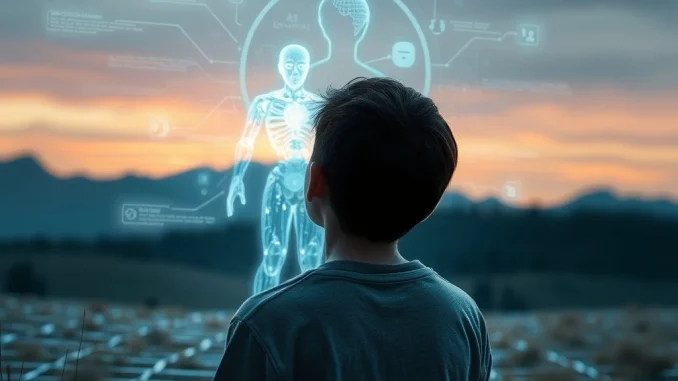
In an era increasingly shaped by technological advancements, the lines between human interaction and digital engagement are blurring faster than ever. For those deeply immersed in the world of cryptocurrencies and decentralized technologies, the concept of a digital-first future is already a reality. But what happens when this digital evolution extends to our most intimate relationships? The astonishing rise of AI companions is now sparking a profound debate about the very nature of human connection, particularly among the younger generation. Just as blockchain promises new forms of trust and interaction in finance, AI is redefining trust and intimacy in personal relationships. Are we witnessing a revolutionary leap in how we connect, or a concerning shift away from authentic human bonds?
The Unprecedented Surge of AI Companions Among Teens
The landscape of social interaction is undergoing a dramatic transformation, with artificial intelligence playing a central role. Companies like Replika, Character AI, and Nomi AI are no longer niche curiosities but mainstream platforms, especially among young Americans. A striking 72% of U.S. teens are reportedly engaging with these AI platforms, often seeking emotional connection and support. This isn’t just about casual chat; many users report forming deep, even romantic, bonds with large language models. This trend echoes themes from science fiction, notably the film Her, where a man falls in love with an operating system. While some critics voice concerns about a future where AI might replace human love, proponents argue that these tools represent an evolutionary step in how humans seek connection.
What makes these AI companions so appealing? Here are a few key factors:
- Consistent Availability: AI is always there, 24/7, offering support whenever needed.
- Non-Judgmental Listening: Users often feel more comfortable sharing vulnerabilities with AI, as there’s no fear of judgment.
- Personalized Interaction: AI learns and adapts to individual communication styles and preferences, creating a highly customized experience.
Redefining Human Connection: An Evolution or Erosion?
The debate around AI’s role in relationships is complex and multifaceted. A recent discussion hosted by Open To Debate in New York City brought these tensions to the forefront. Thao Ha, a psychology professor and co-founder of the Modern Love Collective, passionately defended AI’s potential to enhance empathy and well-being. She highlighted how AI offers consistent, judgment-free emotional support, a stark contrast to the often imperfect nature of human relationships. Ha asserted, “AI listens without ego, adapts without judgment, and learns to love in ways that are consistent and responsive.” This perspective suggests that AI can foster feelings of being understood and valued, potentially filling gaps that human interactions sometimes leave.
Conversely, Justin Garcia, an evolutionary biologist and chief scientific adviser for Match.com, voiced significant caution. He argued that trust, a fundamental cornerstone of genuine human connection, is inherently absent in AI interactions. Garcia pointed to polls indicating that 65% of Americans distrust AI for ethical decisions, underscoring a broader societal skepticism. While acknowledging AI’s utility as “training wheels” for neurodivergent individuals to learn social skills, he firmly rejected it as a permanent relationship model. A Match.com study further revealed that nearly 70% of respondents would view a partner’s AI intimacy as infidelity, highlighting the profound societal tensions between perceived authenticity and technological dependency.
Navigating the Nuances of AI Relationships
The discussion around AI relationships extends beyond mere emotional support to the realm of physical intimacy and trust. Thao Ha believes that advancements in haptic technology and virtual reality could eventually bridge the gap between digital and physical touch. Imagine VR experiences so immersive, they simulate the warmth and pressure of a human embrace. However, Justin Garcia strongly emphasized the biological necessity of human touch, citing studies that link touch deprivation to significant mental health issues. This concern is particularly relevant in an increasingly digitally isolated world.
The debate also brought forth critical warnings about the inherent risks of AI, especially regarding ethical boundaries. Both experts highlighted the potential for AI to reinforce aggressive behaviors if trained on non-consensual content. Ha advocated for robust ethical AI design and regulation, noting the White House’s recent AI Action Plan, while a step in the right direction, still lacks comprehensive transparency measures. The development of ethical AI, much like the development of secure blockchain protocols, is paramount for public trust and safety.
The Divide in Public Sentiment: Are We Ready for Digital Intimacy?
Public sentiment regarding digital intimacy is clearly split, reflecting a generational divide in how technology mediates emotional needs. A Match.com survey found that 20% of daters already use AI for crafting their dating profiles, leveraging AI to present their best digital selves. Even more strikingly, a quarter of young adults believe AI could potentially replace human relationships altogether. These figures underscore a significant shift in perception, where younger generations are more open to integrating AI into their emotional lives.
However, despite the innovative solutions AI offers for loneliness and social anxiety, the ethical and psychological challenges remain largely unresolved. The implications for trust, intimacy, and societal norms are profound. While AI can mimic human qualities, its lack of genuine reciprocity raises fundamental questions about the future of human bonds. Can a relationship truly thrive without mutual vulnerability, shared experiences, and the unpredictable complexities that define human interaction?
The Impact of Teen AI Use on Future Generations
The current widespread teen AI use for emotional connection is not just a passing trend; it’s a formative experience for a generation. This early exposure to AI companions could shape their expectations for future relationships, their understanding of intimacy, and even their social development. While AI can provide a safe space for experimentation and learning social cues, especially for neurodivergent individuals, over-reliance could hinder the development of crucial real-world social skills like conflict resolution, empathy, and genuine vulnerability.
Consider the potential benefits and challenges:
| Potential Benefits of Teen AI Use | Potential Challenges of Teen AI Use |
|---|---|
| Accessible emotional support and companionship. | Risk of social isolation and reduced real-world interaction. |
| Safe space for exploring identity and emotions. | Unrealistic expectations for human relationships. |
| Practice for social skills in a low-stakes environment. | Dependence on AI for emotional regulation. |
| Reduced feelings of loneliness and anxiety. | Concerns about data privacy and ethical AI design. |
As Thao Ha optimistically concluded, “AI is an exciting new form of connection, not a threat to love, but an evolution of it.” Yet, Justin Garcia’s skepticism serves as a crucial reminder of the complexity involved in integrating AI into emotional landscapes traditionally reserved for human interaction. This ongoing debate highlights a pivotal moment in the digital age: how societies will balance technological innovation with the irreplaceable value of genuine human connection. The choices we make today about AI’s role in our personal lives will profoundly shape the emotional and social fabric of tomorrow.
Frequently Asked Questions (FAQs)
Q1: What exactly are AI companions?
AI companions are artificial intelligence programs designed to simulate human-like conversation and provide emotional support. They use advanced language models to interact with users, remember past conversations, and adapt their responses to create a personalized and engaging experience, often mimicking friendship, companionship, or even romantic relationships.
Q2: Why are so many U.S. teens engaging with AI companions?
Teens are drawn to AI companions for various reasons, including readily available emotional support, a non-judgmental listening ear, and a safe space to explore their feelings without fear of social repercussions. The personalized nature of AI interactions also makes them highly appealing to a generation that has grown up with digital technology.
Q3: What are the main concerns about AI relationships?
Key concerns include the absence of genuine trust and reciprocity in AI interactions, the potential for over-reliance leading to social isolation, the risk of developing unrealistic expectations for human relationships, and ethical issues related to data privacy, AI bias, and the use of non-consensual content in AI training.
Q4: Can AI companions replace human connection?
Experts hold differing views. Proponents argue AI can enhance well-being and offer unique forms of support, evolving how we connect. Critics, however, emphasize that AI lacks the capacity for genuine human trust, empathy, and the complex, reciprocal nature essential for deep human bonds. The consensus leans towards AI being a tool for support rather than a complete replacement for human relationships.
Q5: How does this trend relate to the broader digital age, including cryptocurrencies?
While not directly related to crypto, the rise of AI companions signifies a broader societal shift towards integrating advanced digital technologies into fundamental aspects of life, including personal relationships. Just as blockchain aims to redefine trust and transactions in finance, AI is redefining trust and interaction in human connection, showcasing the pervasive influence of digital innovation across all sectors.
Q6: What ethical considerations are important for AI companion development?
Ethical considerations are paramount, including ensuring data privacy and security, preventing the reinforcement of harmful behaviors through AI training, designing AI to promote healthy psychological well-being rather than dependence, and establishing clear transparency and accountability mechanisms for AI development and deployment.