Exclusive: Senator Blumenthal Launches Explosive Inquiry into $1.7B Binance Transfers
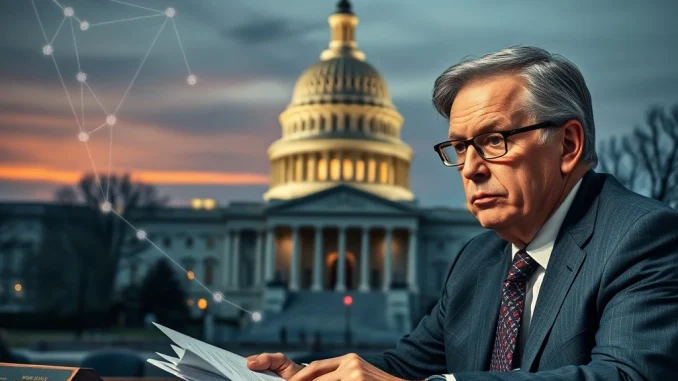
Washington, D.C., March 2025: U.S. Senator Richard Blumenthal (D-CT) has launched a formal inquiry into cryptocurrency giant Binance, demanding answers over reports alleging the platform processed approximately $1.7 billion in transactions with entities linked to Iran. This explosive development revives intense scrutiny of the exchange’s historical anti-money laundering (AML) failures and places its standing with American regulators under a powerful new microscope. The request for internal documents and detailed explanations marks a significant escalation in congressional oversight of the digital asset industry’s compliance with international sanctions.
Senator Blumenthal’s Formal Inquiry into Binance Transfers
Senator Blumenthal, a senior member of the Senate Permanent Subcommittee on Investigations, has dispatched a detailed letter to Binance’s leadership. The letter formally requests a comprehensive account of the exchange’s policies, procedures, and internal reviews concerning the alleged $1.7 billion in transfers. Specifically, the inquiry seeks to determine the exact nature, volume, and timeline of these transactions, which reportedly occurred between 2018 and 2022. The senator’s office has given Binance a strict deadline to comply, underscoring the urgency and seriousness with which Congress views the allegations. This action follows a series of investigative reports from blockchain analytics firms and financial journalists that first brought the scale of the potential sanctions evasion to light.
Historical Context of Binance’s AML Violations and Legal Settlements
This new probe cannot be viewed in isolation. It directly connects to Binance’s extensive history of compliance shortcomings. In November 2023, the U.S. Department of Justice (DOJ), the Financial Crimes Enforcement Network (FinCEN), and the Commodity Futures Trading Commission (CFTC) announced a landmark $4.3 billion settlement with Binance. The settlement resolved charges related to wilful violations of the Bank Secrecy Act (BSA) and apparent failures to implement an effective AML program. As part of that agreement, Binance admitted to facilitating transactions between U.S. users and individuals in sanctioned jurisdictions, including Iran. The exchange also agreed to a five-year monitorship and the implementation of rigorous new compliance controls. Senator Blumenthal’s inquiry explicitly references this past, questioning whether the alleged $1.7 billion in transfers represent a continuation of the very conduct the 2023 settlement was meant to rectify.
The Mechanics of Sanctions Evasion in Cryptocurrency
Understanding the allegations requires a grasp of how cryptocurrency networks can be exploited to bypass traditional financial sanctions. Unlike banks, which are centralized and must screen transactions against government lists, decentralized crypto exchanges (DEXs) and certain centralized platforms with lax controls can allow users to trade pseudo-anonymously. Entities under sanctions may use a combination of techniques:
- Obfuscation Tools: Utilizing privacy coins or mixers to conceal the origin and destination of funds.
- Geographic Evasion: Accessing exchanges through virtual private networks (VPNs) to mask their true location.
- Layered Transactions: Moving funds through multiple wallets and intermediary exchanges to create a complex trail that is difficult to trace.
Blockchain analytics firms like Chainalysis and Elliptic specialize in deconstructing these trails. Their forensic tools analyze public blockchain data to cluster wallet addresses and identify patterns linking them to illicit actors or sanctioned entities. It is this type of analysis that reportedly underpins the $1.7 billion figure now central to the Senate inquiry.
Implications for Binance’s U.S. Standing and Regulatory Future
The political and regulatory consequences for Binance are potentially severe. The 2023 settlement was predicated on the company’s commitment to a “new chapter” of compliance. A congressional finding that significant problematic transactions persisted would severely undermine that narrative and could trigger several outcomes:
- Enhanced Regulatory Scrutiny: The DOJ-appointed monitor would likely intensify their review, potentially leading to further penalties or operational restrictions.
- Reputational Damage: Institutional and retail user confidence, crucial for Binance’s growth, could erode further.
- Legislative Action: The inquiry may fuel support for stricter cryptocurrency regulations currently under consideration in Congress, such as bills explicitly extending BSA and sanctions obligations to all digital asset service providers.
Furthermore, Binance.US, the independent American affiliate, operates under intense scrutiny from the Securities and Exchange Commission (SEC). Any negative findings from the Senate inquiry could complicate its already challenging regulatory environment.
A Timeline of Binance’s Regulatory Challenges
The following table outlines key events leading to the current Senate inquiry:
| Date | Event | Key Outcome |
|---|---|---|
| 2020-2022 | Multiple CFTC, DOJ, and IRS investigations begin | Probes into potential BSA violations and sanctions evasion |
| Nov 2023 | DOJ, FinCEN, CFTC $4.3B Settlement | Binance admits guilt, agrees to monitorship and exit of key executives |
| Early 2025 | Independent Reports Surface | Blockchain analysts allege ~$1.7B in Iran-linked transfers post-2018 |
| March 2025 | Senator Blumenthal Launches Inquiry | Formal request for documents and explanations sent to Binance |
Conclusion
Senator Richard Blumenthal’s explosive inquiry into the alleged $1.7 billion in Binance transfers linked to Iran represents a critical inflection point for cryptocurrency regulation. It tests the efficacy of past settlements and challenges the entire industry’s commitment to robust AML and sanctions compliance frameworks. The outcome of this congressional scrutiny will not only shape Binance’s future operations but also set a powerful precedent for how U.S. lawmakers and regulators oversee global digital asset platforms. As the deadline for Binance’s response approaches, the financial and crypto worlds await answers that will clarify whether systemic compliance failures have been truly resolved or merely repackaged.
FAQs
Q1: What exactly is Senator Blumenthal investigating regarding Binance?
Senator Blumenthal is investigating reports that Binance processed approximately $1.7 billion in cryptocurrency transactions linked to Iranian entities, potentially violating U.S. sanctions laws. His inquiry seeks internal documents to understand the scope, timing, and Binance’s handling of these alleged transfers.
Q2: Didn’t Binance already settle these kinds of issues in 2023?
Yes, Binance settled with U.S. authorities for $4.3 billion in November 2023 for historical AML and sanctions violations. This new inquiry focuses on whether the alleged $1.7 billion in transfers occurred during or after the period covered by that settlement, raising questions about the effectiveness of the company’s reformed compliance programs.
Q3: How do investigators trace cryptocurrency to a sanctioned country like Iran?
Blockchain analytics firms use sophisticated software to analyze the public ledger. They trace transaction flows, cluster wallet addresses controlled by the same entity, and use known intelligence (like wallets identified with Iranian exchanges) to map networks. Patterns of behavior and digital fingerprints can link funds to sanctioned jurisdictions.
Q4: What could happen to Binance as a result of this Senate inquiry?
Potential outcomes include further penalties from the existing DOJ monitor, intensified operational restrictions, severe reputational damage affecting user trust, and providing momentum for Congress to pass stricter cryptocurrency regulatory laws.
Q5: Does this affect Binance.US, the American affiliate?
Indirectly, yes. While Binance.US is a separate legal entity, any findings of ongoing systemic compliance failures at the global Binance level would increase regulatory and political pressure on all related entities, including its U.S. affiliate which is already engaged in its own legal battles with the SEC.
Related: Bitcoin Neo-Bank Breakthrough: Core's SatPay Aims to Redefine BTC Financial Infrastructure
Related: UK FCA Stablecoins: Regulator Reveals Four Firms for Critical Sandbox Testing Before 2027 Rules
Related: $SHOLA Token Launch: Shola's Strategic Collaboration with Pump.fun on Solana