Step Finance Hack Forces Devastating Shutdown of SolanaFloor and Remora
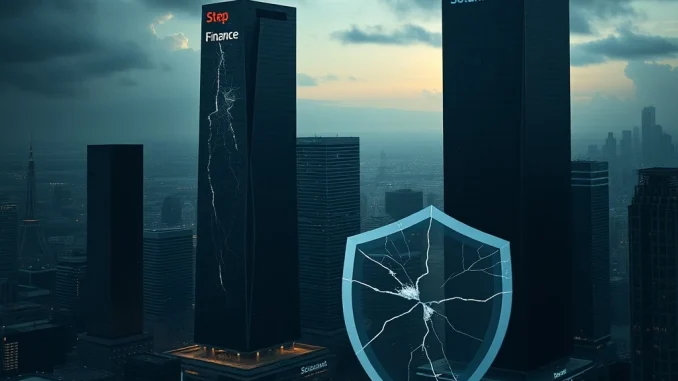
Global, May 2025: The Solana decentralized finance (DeFi) ecosystem faces a significant contraction as Step Finance, alongside its affiliated platforms SolanaFloor and Remora, confirms a complete and permanent shutdown. This devastating decision comes directly in the wake of a crippling security breach last month that resulted in losses estimated at $40 million. The team’s statement revealed that exhaustive efforts to secure emergency funding or facilitate a rescue acquisition ultimately proved unsuccessful, leaving a structured wind-down, token buyback, and rToken redemption process as the only viable path forward for users.
Step Finance Hack Triggers Ecosystem Collapse
The closure marks a sobering endpoint for what was once a promising suite of tools within the Solana network. Step Finance functioned as a prominent portfolio dashboard and analytics platform, often described as “the front page of Solana DeFi.” SolanaFloor served as a leading NFT marketplace aggregator and data source, while Remora was a specialized yield aggregator. Their interconnected nature meant that the security vulnerability exploited in the Step Finance hack had catastrophic ripple effects, compromising the operational and financial integrity of all three entities. The incident underscores a critical vulnerability in the DeFi space: the concentration of risk when platforms share underlying infrastructure or governance.
Anatomy of a $40 Million Security Breach
While the full technical post-mortem from the teams remains pending, blockchain analysts and security firms have pieced together a likely sequence of events. The attack appears to have been a sophisticated smart contract exploit, potentially involving a flaw in the protocol’s liquidity pool or vault mechanisms. Unlike simple phishing attacks, this breach targeted the core protocol logic, allowing the attacker to drain funds directly from pooled assets. The $40 million figure, confirmed by on-chain analytics, places this incident among the more significant DeFi hacks of the past year, though not the largest. The table below contextualizes this event within recent blockchain security incidents.
| Platform | Blockchain | Estimated Loss (USD) | Year | Outcome |
|---|---|---|---|---|
| Step Finance | Solana | $40 Million | 2025 | Full Shutdown |
| Euler Finance | Ethereum | $197 Million | 2023 | Funds Recovered, Protocol Resumed |
| Nomad Bridge | Multiple | $190 Million | 2022 | Gradual User Reimbursement |
| Mango Markets | Solana | $117 Million | 2022 | Exploiter Negotiated, Protocol Survived |
The key differentiator in the Step Finance case is the ultimate outcome. Other major exploits, such as those on Euler Finance or Mango Markets, saw the protocols survive through complex negotiations, partial recoveries, or robust treasury reserves. The Step Finance team’s inability to mount a similar recovery highlights potential shortcomings in treasury management, insurance, or the sheer scale of the loss relative to the project’s size.
The Failed Rescue and Funding Efforts
In the weeks following the hack, the core team engaged in a frantic, behind-the-scenes campaign to salvage the operations. This involved two primary avenues:
- Emergency Funding Rounds: The team approached venture capital firms and private investors who had previously backed Solana ecosystem projects. The goal was to raise capital to cover user losses, patch the security flaw, and restart operations. These efforts failed, with investors citing the reputational damage, regulatory scrutiny, and technical debt as insurmountable risks.
- Acquisition Talks: Parallel discussions were held with larger entities in the crypto space, including other DeFi aggregators and infrastructure providers, regarding a potential acquisition of the technology and user base. These talks also collapsed, likely due to the liabilities associated with the hack and the cost of reimbursing users.
The failure of these efforts left the wind-down as the only responsible, albeit grim, option. The team has emphasized that a structured closure is preferable to an abrupt, chaotic collapse, as it allows for a defined process to return remaining value to token holders and users.
Token Buybacks and rToken Redemption: The Wind-Down Plan
The closure announcement included initial details on how the team intends to handle the remaining value within the ecosystem. This process is critical for maintaining trust and minimizing further losses for the community. The plan centers on two main actions:
- STEP Token Buyback: The team has committed to using any remaining treasury assets (non-compromised funds) to initiate a buyback program for the native STEP token. This would be executed on the open market over a defined period, aiming to provide some liquidity and value recovery for token holders who saw their assets plummet post-hack.
- rToken Redemptions: Remora’s yield aggregator vaults issued rTokens (representative tokens) to users who deposited assets. The wind-down plan involves allowing users to redeem these rTokens for the underlying assets that remain in the vaults. This is a complex accounting process, as the hack likely depleted these vaults unevenly. The team must provide a clear, auditable snapshot of the remaining balances to facilitate fair redemptions.
The success and fairness of this wind-down will be closely watched by the broader DeFi community. It sets a precedent for how projects can fail responsibly, a reality that becomes more important as the industry matures and not every project can survive.
Broader Implications for Solana and DeFi
The shutdown of these three platforms represents more than just the failure of individual companies; it is a stress test for the Solana DeFi ecosystem. In the immediate term, users and liquidity providers are migrating to alternative platforms like Jupiter, Orca, and Marinade Finance, demonstrating the ecosystem’s resilience and depth. However, the event raises longer-term questions:
- Security Audits and Standards: How rigorous were the smart contract audits for these platforms? The incident will increase scrutiny on audit firms and may push projects toward more conservative, time-tested code or formal verification methods.
- Protocol Interdependence: The domino effect leading to three shutdowns highlights the risks of deep integration. Future ecosystem design may prioritize modularity and isolation to contain the blast radius of any single point of failure.
- User Trust and Onboarding: For newcomers, high-profile failures can be a significant deterrent. The industry must improve its communication about risks, the non-custodial nature of DeFi, and the importance of using audited, established protocols.
Conclusion
The Step Finance hack and the consequent shutdown of SolanaFloor and Remora constitute a pivotal moment for decentralized finance on Solana. It is a stark reminder of the persistent technical and financial risks inherent in a rapidly innovating space, even as it highlights the ecosystem’s growing capacity to absorb such shocks. The focus now shifts to the execution of the wind-down plan. The manner in which the team handles the STEP token buyback and rToken redemptions will significantly impact the lasting legacy of these projects. Ultimately, this event will likely accelerate trends toward enhanced security practices, more robust risk disclosure, and a clearer framework for project failure—all essential components for the sustainable growth of DeFi.
FAQs
Q1: What exactly was hacked in the Step Finance incident?
The exploit targeted a vulnerability within Step Finance’s smart contract code, likely in a liquidity pool or vault mechanism. This allowed an attacker to illegitimately withdraw approximately $40 million in user-deposited cryptocurrencies from the protocol.
Q2: I hold STEP tokens. What should I do now?
The Step Finance team has announced a planned buyback program using remaining treasury funds. You should monitor the project’s official communication channels (now likely its former X/Twitter account and blog) for specific instructions, timelines, and the mechanism for the buyback. Exercise extreme caution regarding scams promising instant reimbursements.
Q3: Why did SolanaFloor and Remora also have to shut down?
The three platforms were closely affiliated, sharing teams, technology, and potentially treasury resources. The financial and reputational damage from the Step Finance hack was insurmountable for the entire interconnected operation, making continued service for SolanaFloor and Remora financially impossible.
Q4: How does this affect the overall health of the Solana blockchain?
While a significant setback for the applications involved, the Solana network itself continues to operate. Liquidity and users are migrating to other DeFi protocols on Solana. The event is a blow to ecosystem morale but also serves as a catalyst for improving security standards across all Solana-based projects.
Q5: Are my funds safe on other Solana DeFi platforms?
No decentralized finance protocol can guarantee 100% safety, as all involve smart contract risk. This event underscores the importance of using well-audited, established protocols with large total value locked (TVL), diversifying your investments, and never depositing more than you can afford to lose. Always conduct your own research.
Related News
- Circle and Polymarket Forge Pivotal Partnership to Anchor Onchain Financial Markets with USDC
- Ethereum Network Activity Surge: Alarming Link to Widespread Address Poisoning Attacks
- BNB Chain’s Breakthrough Maxwell Hard Fork Hits Testnet
Related: Ethereum Price Confronts Critical $1.5K Risk Following Sharp Rejection at $2,300
Related: Nym Now Accepts Cardano (ADA) for Private Payments: A Strategic Boost for Network Privacy
Related: Ethereum Price Analysis: Decoding the Critical $1,866 Liquidity Sweep and the Pivotal $1,962 Level