MWX Staking Portal Launches, Unlocking Revolutionary DeFi Utility for MWXT Token
Global, April 2025: The MWX ecosystem has taken a significant step in its development roadmap with the official launch of its dedicated staking portal. This strategic move directly expands the decentralized finance (DeFi) utility for its native MWXT token, providing existing holders with a new mechanism to participate in network security and earn potential returns. The launch represents a pivotal evolution from a pure utility token to one integrated into the broader yield-generating landscape of Web3.
MWX Staking Portal Transforms Token Utility
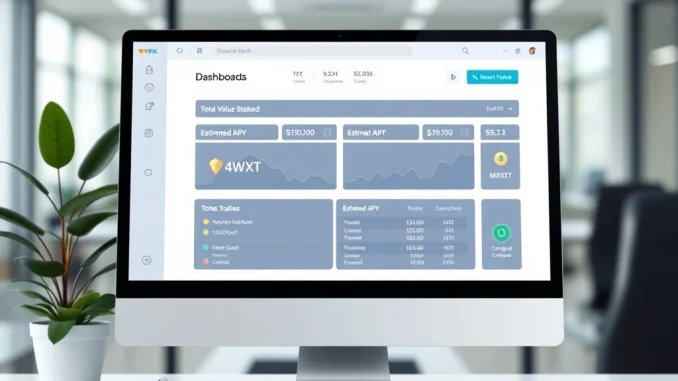
The newly operational MWX staking portal serves as a dedicated platform where users can commit, or “stake,” their MWXT tokens. This process involves locking tokens in a smart contract—a self-executing agreement on the blockchain—for a predetermined period. In return for contributing their tokens to the network’s security and operational framework, participants earn rewards, typically distributed in additional MWXT. This model aligns with a proven mechanism in blockchain ecosystems, where staking helps secure proof-of-stake (PoS) or similar consensus networks while incentivizing long-term holding. The portal’s interface is designed for clarity, offering users real-time visibility into metrics such as staking duration options, current reward rates (often expressed as Annual Percentage Yield or APY), and the total value of tokens currently locked in the protocol.
Deepening the DeFi Use Case for MWXT
Prior to this launch, the MWXT token primarily facilitated transactions and access within the MWX platform. The introduction of staking fundamentally broadens its financial utility, placing it firmly within the DeFi sector. Decentralized finance aims to recreate traditional financial systems—like lending, borrowing, and earning interest—without centralized intermediaries. Staking is a cornerstone of this vision. By enabling MWXT staking, the project directly addresses two core demands from the cryptocurrency community: capital efficiency and governance participation. Token holders are no longer limited to speculative trading or basic utility; their assets can now work for them, generating a yield. Furthermore, staking often forms the basis for future governance models, where the amount staked can correlate to voting power on protocol upgrades and treasury management.
- Yield Generation: Provides a method for passive income, appealing to long-term investors.
- Network Security: Increases the economic cost of attacking the network, as more value is locked and secured.
- Reduced Volatility: By incentivizing locking tokens, circulating supply on exchanges can decrease, potentially reducing sell-side pressure.
- Community Alignment: Rewards users who believe in the project’s long-term success, fostering a more dedicated holder base.
The Technical and Strategic Implications of the Launch
From a technical standpoint, a successful staking portal launch requires robust smart contract security. Industry standards dictate that such contracts undergo multiple audits by independent cybersecurity firms to mitigate risks like code exploits or flash loan attacks, which have plagued other DeFi projects. The strategic implication for MWX is substantial. By expanding MWXT’s functionality, the project enhances its competitiveness within the crowded altcoin market. It signals to the market that the development team is executing its roadmap and building tangible, value-adding features. This can attract not only retail stakers but also institutional entities looking for structured yield opportunities in the digital asset space. The move follows a broader industry trend where successful projects gradually layer on DeFi features to increase user retention and total value locked (TVL), a key metric for gauging a protocol’s health and popularity.
Expanding and Empowering the Global MWX Community
The launch is strategically framed as a tool for community growth. By offering a clear value proposition—staking rewards—the platform can attract new users interested in yield farming and DeFi participation. It also provides existing community members with a stronger reason to maintain and increase their MWXT holdings. Successful staking programs often create a positive feedback loop: as more tokens are staked, the network becomes more secure and decentralized, which in turn can increase investor confidence and drive further adoption. Community education will be critical; the project must provide clear resources on staking mechanics, reward distribution schedules, and the associated risks, such as potential slashing (penalties for malicious behavior by validators) or smart contract vulnerabilities. Empowering users with knowledge is essential for sustainable, trust-based growth.
Conclusion
The launch of the MWX staking portal marks a definitive expansion of the MWXT token‘s role within the evolving DeFi landscape. It transitions the asset from a medium of exchange into a productive, yield-generating instrument, aligning holder incentives with the long-term security and success of the MWX network. This development is significant not merely as a new feature but as a strategic commitment to building a more robust, utility-driven, and community-owned financial ecosystem. As the platform matures and the total value staked grows, the true impact of this utility expansion on the global MWX community will become fully evident.
FAQs
Q1: What is the MWX staking portal?
The MWX staking portal is a dedicated platform within the MWX ecosystem that allows holders of the MWXT token to lock their assets in a secure smart contract to help support network operations and, in return, earn staking rewards.
Q2: How do I earn rewards by staking MWXT?
Rewards are distributed to participants based on the amount of MWXT they stake and the duration of the staking period. Rewards are typically paid out in additional MWXT tokens, with the rate often expressed as an Annual Percentage Yield (APY).
Q3: Is staking MWXT safe?
All staking involves risk. The primary risks include smart contract vulnerabilities (though audited contracts mitigate this), potential slashing penalties in certain validator models, and the inherent volatility of the cryptocurrency market. Users should only stake funds they are prepared to lock for the required period.
Q4: Does staking MWXT give me governance rights?
While the current launch focuses on yield generation, staking mechanisms are commonly used as a foundation for decentralized governance. Future implementations may grant voting power proportional to the amount of MWXT staked, allowing holders to influence project decisions.
Q5: How does staking expand DeFi utility for MWXT?
Before staking, MWXT’s utility was primarily transactional. Staking introduces a core DeFi function—earning yield on idle assets. This transforms MWXT from a simple utility token into a productive financial asset, integrating it into the wider decentralized finance economy of lending, borrowing, and yield farming.
Related News
- Altcoin Season Index Plummets to 26: Bitcoin Dominance Returns as Market Shifts
- Crypto Futures Liquidated: Brutal $145M Long Position Carnage Rocks Digital Asset Markets
- Binance Futures Unveils Exciting TOSHI & STBL Perpetual Contracts
Related: Xyber's Revolutionary Integration with Base Launches Essential On-Chain Payment Rails for AI Agents
Related: Crypto Market Plunges: Bitcoin and Ethereum Slide as Fear Grips Investors
Related: SEC Stablecoin Risk Repricing: The Game-Changing Move Accelerating TradFi Integration